Zhao Wei, Han Cheng, Shi Xiaoguang, Xiong Chuhui, Sun Jie, Shan Zhongyan, Teng Weiping
Department of Endocrinology and Metabolism, Institute of Endocrinology, Liaoning Provincial Key Laboratory of Endocrine Diseases, the First Affiliated Hospital of China Medical University, Shenyang, Liaoning Province, People's Republic of China.
PLoS One. 2014 Oct 14;9(10):e109549. doi: 10.1371/journal.pone.0109549. eCollection 2014.
We comprehensively estimated the prevalence of goiter and thyroid nodules (TNs) before and after the implementation of the Universal Salt Iodization (USI) program in mainland China and provided information for creating effective health policies.
PubMed, Google Scholar, CNKI, Chinese Wanfang and Chongqing VIP databases were searched for relevant studies from Jan 1985 to Feb 2014. Data from eligible citations were extracted by two independent reviewers. All analyses were performed with Stata 11.0 and SPSS 17.0.
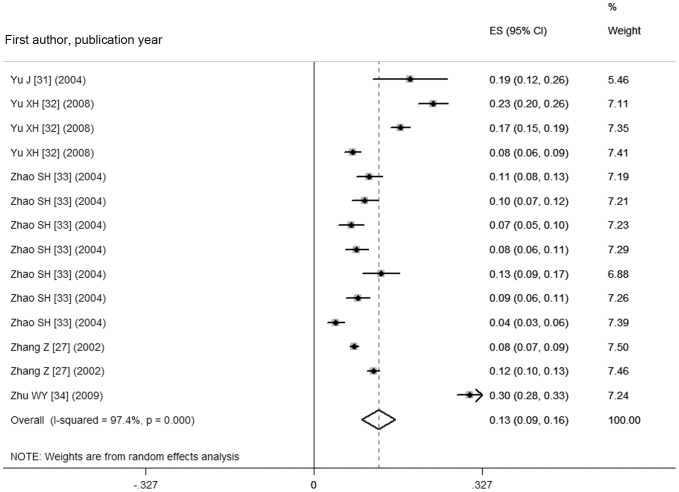
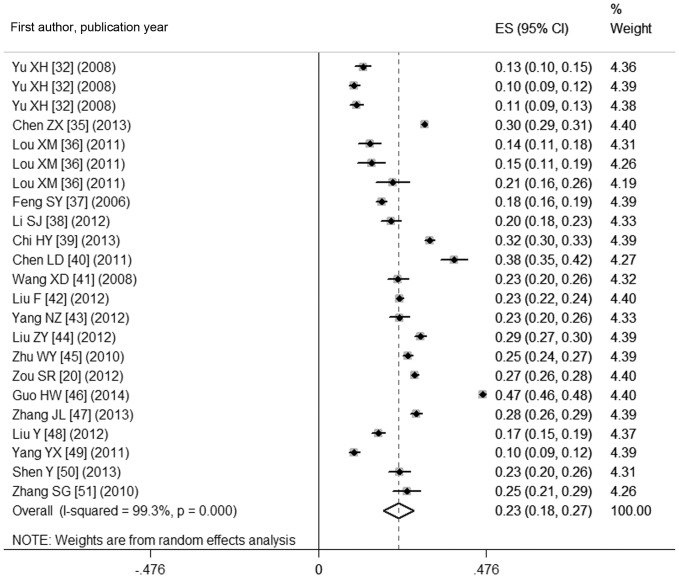
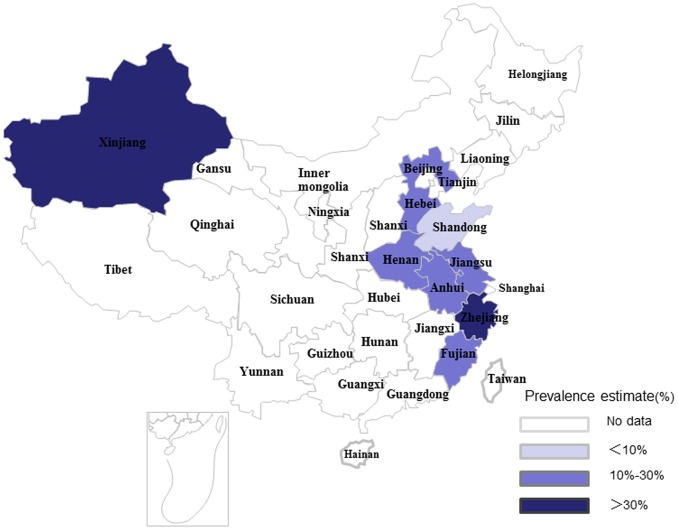
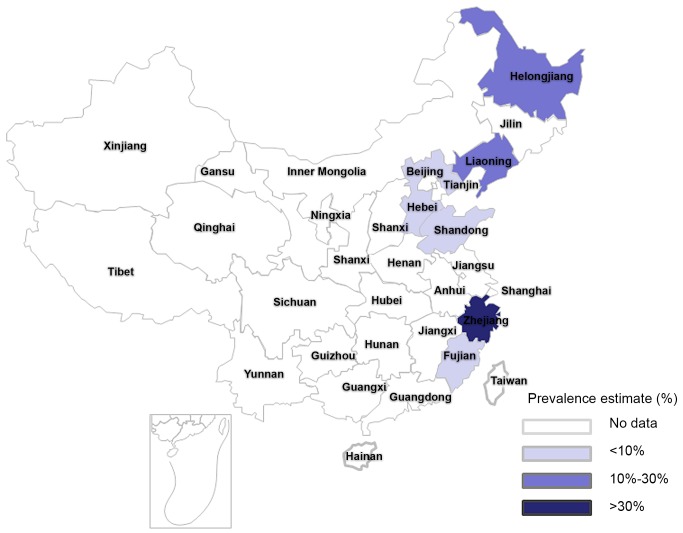
Eligible articles (N = 31; 4 in English and 27 in Chinese) included 52 studies (15 about goiter rates made before 1996 and 14 afterwards, and 23 about TNs). Our meta-analysis suggests a pooled prevalence for goiter before and after 1996 and for TNs of 22.8% (95% CI: 15.3%, 30.3%), 12.6% (95% CI: 9.4%, 15.8%) and 22.7% (95% CI: 18.3%, 27.0%), respectively. Egger's test of three independent categories revealed no evidence of publication bias (p = 0.101, 0.148 and 0.113, respectively).
The prevalence of goiter was reduced by almost half after 1996 in mainland China, so the USI program was considered beneficial. However, subgroup analysis suggests that both insufficient and excess iodine may be associated with goiter. The prevalence of goiter and TNs increased significantly after 2002, suggesting a risk of excessive iodine intake. Thus, salt iodization standardizations should be set according to local conditions.
我们全面评估了中国大陆实施全民食盐加碘(USI)计划前后甲状腺肿和甲状腺结节(TNs)的患病率,并为制定有效的卫生政策提供信息。
检索了PubMed、谷歌学术、中国知网、万方数据库和维普数据库,查找1985年1月至2014年2月的相关研究。两名独立的评审员提取符合条件的文献数据。所有分析均使用Stata 11.0和SPSS 17.0进行。
符合条件的文章(N = 31;4篇英文,27篇中文)包括52项研究(15项关于1996年前的甲状腺肿患病率,14项关于1996年后的,23项关于甲状腺结节)。我们的荟萃分析表明,1996年前后甲状腺肿的合并患病率以及甲状腺结节的合并患病率分别为22.8%(95%CI:15.3%,30.3%)、12.6%(95%CI:9.4%,15.8%)和22.7%(95%CI:18.3%,27.0%)。对三个独立类别进行的Egger检验未发现发表偏倚的证据(p分别为0.101、0.148和0.113)。
1996年后中国大陆甲状腺肿患病率几乎降低了一半,因此全民食盐加碘计划被认为是有益的。然而,亚组分析表明碘摄入不足和过量都可能与甲状腺肿有关。2002年后甲状腺肿和甲状腺结节的患病率显著增加,提示存在碘摄入过量的风险。因此,应根据当地情况制定食盐加碘标准化方案。