Zhang Guoliang, Zhou Boping, Li Shaoyuan, Yue Jun, Yang Hui, Wen Yuxin, Zhan Senlin, Wang Wenfei, Liao Mingfeng, Zhang Mingxia, Zeng Gucheng, Feng Carl G, Sassetti Christopher M, Chen Xinchun
Guangdong Key Lab of Emerging Infectious Diseases, Guangdong Medical College, Shenzhen, China; Shenzhen Key Lab of Infection and Immunity, Shenzhen Third People's Hospital, Guangdong Medical College, Shenzhen, China.
Guangdong Key Lab of Emerging Infectious Diseases, Guangdong Medical College, Shenzhen, China.
PLoS Pathog. 2014 Oct 16;10(10):e1004426. doi: 10.1371/journal.ppat.1004426. eCollection 2014 Oct.
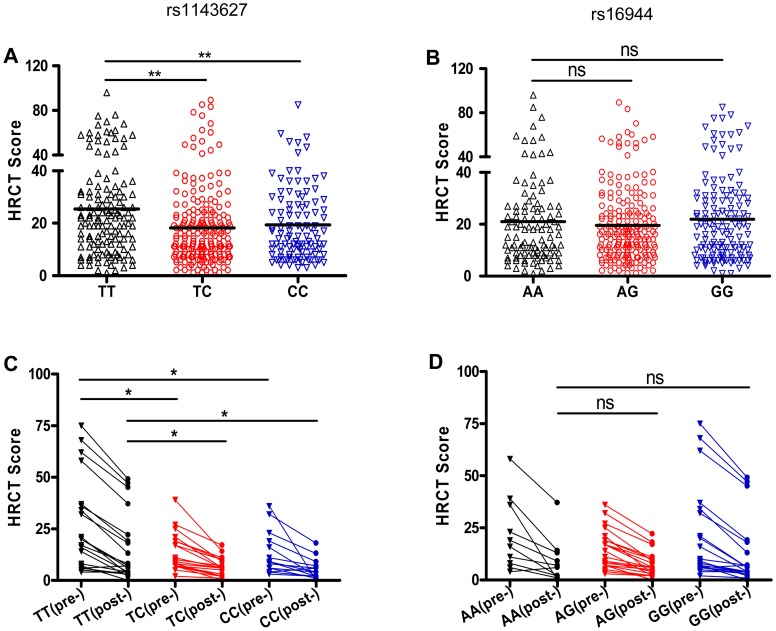
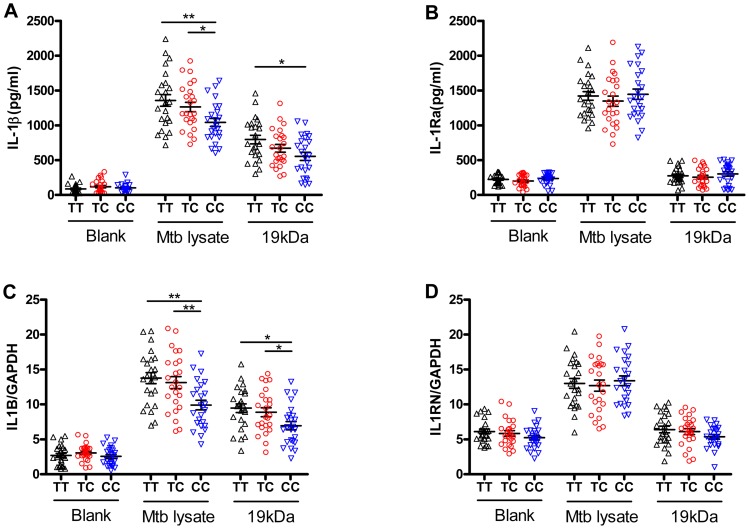
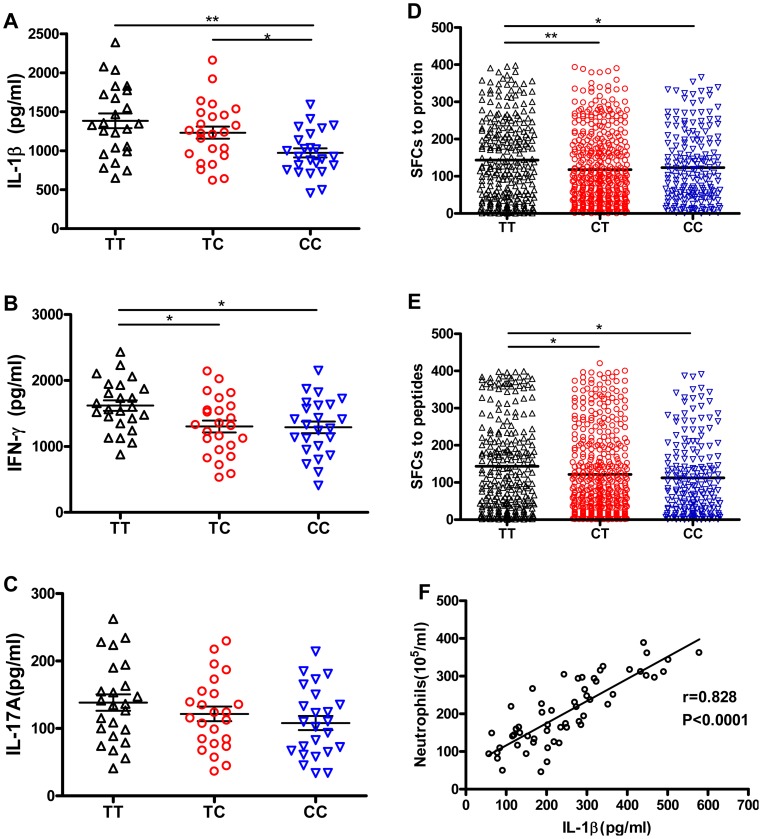
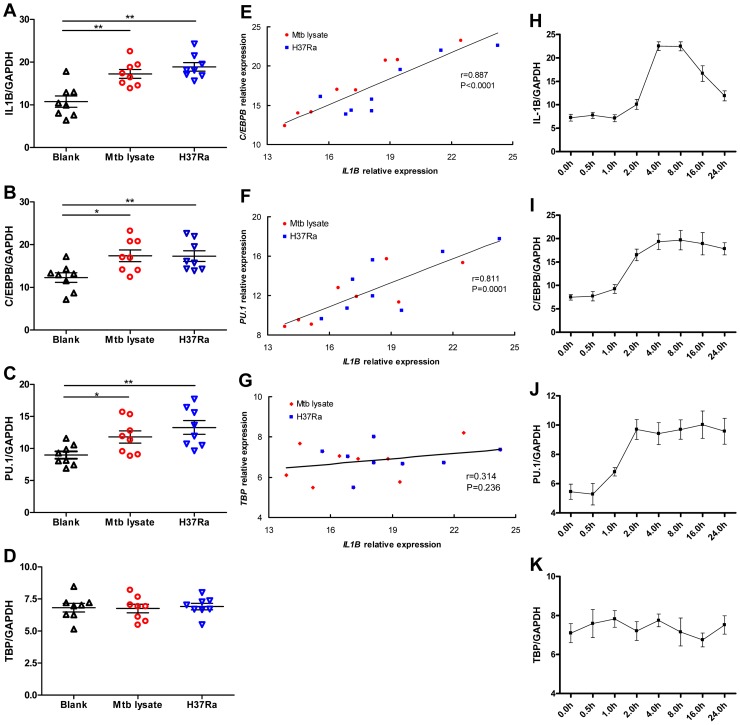
Mycobacterium tuberculosis infection is associated with a spectrum of clinical outcomes, from long-term latent infection to different manifestations of progressive disease. Pro-inflammatory pathways, such as those controlled by IL-1β, have the contrasting potential both to prevent disease by restricting bacterial replication, and to promote disease by inflicting tissue damage. Thus, the ultimate contribution of individual inflammatory pathways to the outcome of M. tuberculosis infection remains ambiguous. In this study, we identified a naturally-occurring polymorphism in the human IL1B promoter region, which alters the association of the C/EBPβ and PU.1 transcription factors and controls Mtb-induced IL-1β production. The high-IL-1β expressing genotype was associated with the development of active tuberculosis, the severity of pulmonary disease and poor treatment outcome in TB patients. Higher IL-1β expression did not suppress the activity of IFN-γ-producing T cells, but instead correlated with neutrophil accumulation in the lung. These observations support a specific role for IL-1β and granulocytic inflammation as a driver of TB disease progression in humans, and suggest novel strategies for the prevention and treatment of tuberculosis.
结核分枝杆菌感染与一系列临床结果相关,从长期潜伏感染到进展性疾病的不同表现。促炎途径,如那些由白细胞介素-1β控制的途径,具有限制细菌复制从而预防疾病以及通过造成组织损伤促进疾病发展的相反潜力。因此,个体炎症途径对结核分枝杆菌感染结果的最终贡献仍不明确。在本研究中,我们在人类白细胞介素-1β启动子区域鉴定出一种自然发生的多态性,它改变了C/EBPβ和PU.1转录因子的结合并控制结核分枝杆菌诱导的白细胞介素-1β产生。高白细胞介素-1β表达基因型与活动性肺结核的发生、肺部疾病的严重程度以及结核病患者的不良治疗结果相关。较高的白细胞介素-1β表达并未抑制产生干扰素-γ的T细胞的活性,反而与肺中中性粒细胞的积聚相关。这些观察结果支持白细胞介素-1β和粒细胞炎症作为人类结核病疾病进展驱动因素的特定作用,并提示了预防和治疗结核病的新策略。