Froeter Paul, Huang Yu, Cangellaris Olivia V, Huang Wen, Dent Erik W, Gillette Martha U, Williams Justin C, Li Xiuling
Department of Electrical and Computer Engineering, Micro and Nanotechnology Laboratory, ‡Department of Bioengineering, and §Department of Cell and Developmental Biology, University of Illinois at Urbana-Champaign , Urbana, Illinois 61801, United States.
ACS Nano. 2014 Nov 25;8(11):11108-17. doi: 10.1021/nn504876y. Epub 2014 Nov 3.
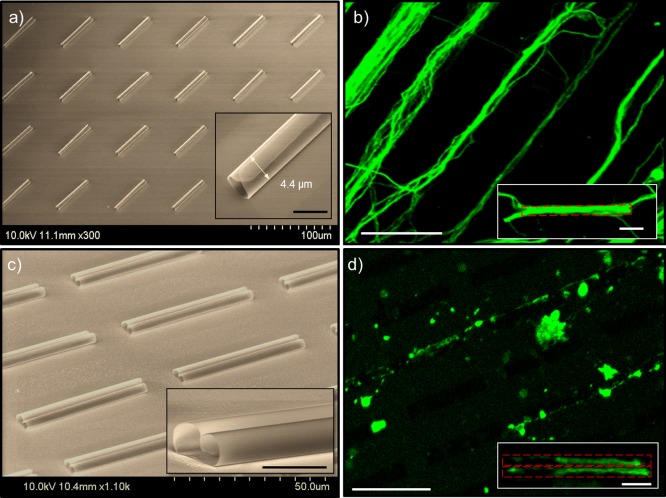
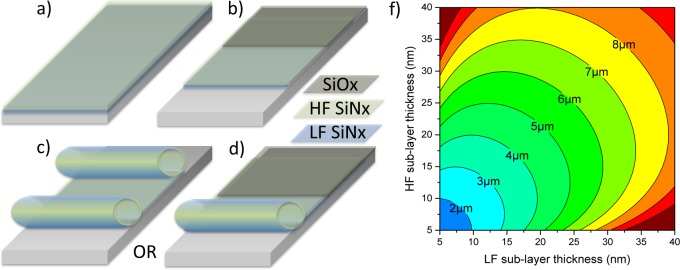
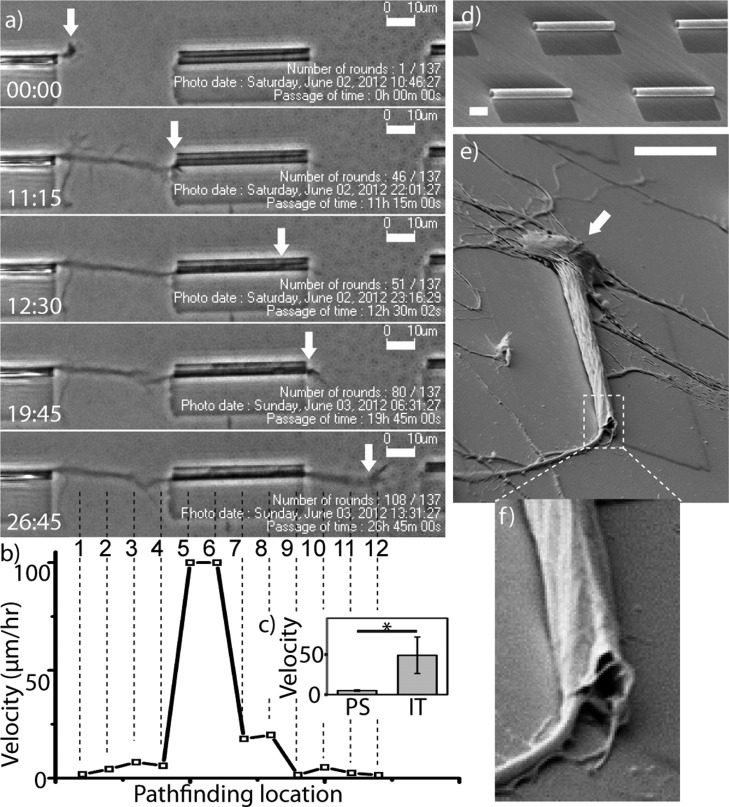
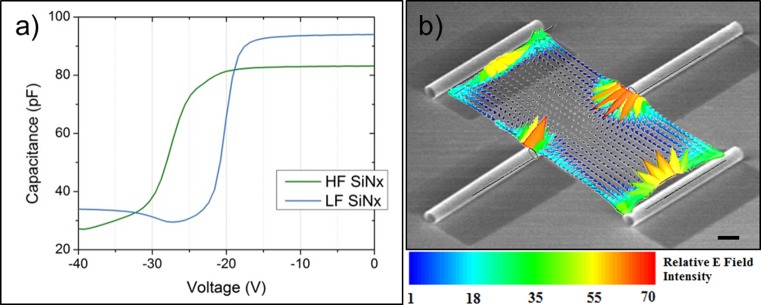
In neural interface platforms, cultures are often carried out on a flat, open, rigid, and opaque substrate, posing challenges to reflecting the native microenvironment of the brain and precise engagement with neurons. Here we present a neuron cell culturing platform that consists of arrays of ordered microtubes (2.7-4.4 μm in diameter), formed by strain-induced self-rolled-up nanomembrane (s-RUM) technology using ultrathin (<40 nm) silicon nitride (SiNx) film on transparent substrates. These microtubes demonstrated robust physical confinement and unprecedented guidance effect toward outgrowth of primary cortical neurons, with a coaxially confined configuration resembling that of myelin sheaths. The dynamic neural growth inside the microtube, evaluated with continuous live-cell imaging, showed a marked increase (20×) of the growth rate inside the microtube compared to regions outside the microtubes. We attribute the dramatic accelerating effect and precise guiding of the microtube array to three-dimensional (3D) adhesion and electrostatic interaction with the SiNx microtubes, respectively. This work has clear implications toward building intelligent synthetic neural circuits by arranging the size, site, and patterns of the microtube array, for potential treatment of neurological disorders.
在神经接口平台中,培养物通常在平坦、开放、刚性且不透明的基质上进行,这对反映大脑的天然微环境以及与神经元的精确接触提出了挑战。在此,我们展示了一种神经元细胞培养平台,它由有序微管阵列组成(直径2.7 - 4.4μm),这些微管通过应变诱导自卷曲纳米膜(s - RUM)技术,利用透明基板上的超薄(<40nm)氮化硅(SiNx)膜形成。这些微管对原代皮层神经元的生长表现出强大的物理限制和前所未有的引导作用,其同轴限制结构类似于髓鞘。通过连续活细胞成像评估微管内的动态神经生长,结果显示与微管外区域相比,微管内的生长速率显著提高(20倍)。我们将微管阵列的显著加速作用和精确引导分别归因于与SiNx微管的三维(3D)粘附和静电相互作用。这项工作对于通过排列微管阵列的尺寸、位置和模式来构建智能合成神经回路具有明确意义,有望用于治疗神经疾病。