Wilke Marko
Department of Pediatric Neurology and Developmental Medicine, Children's Hospital, University of Tübingen, Tübingen, Germany; Experimental Pediatric Neuroimaging group, Pediatric Neurology & Department of Neuroradiology, University Hospital, Tübingen, Germany.
PLoS One. 2014 Oct 21;9(10):e106498. doi: 10.1371/journal.pone.0106498. eCollection 2014.
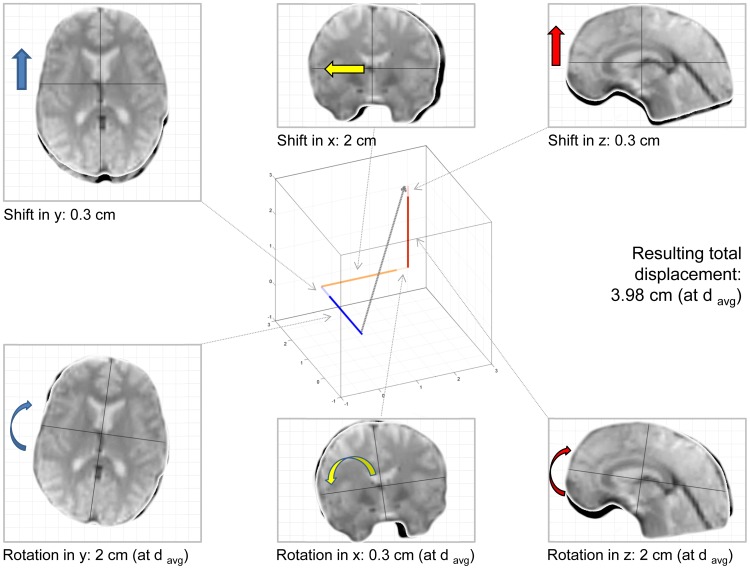
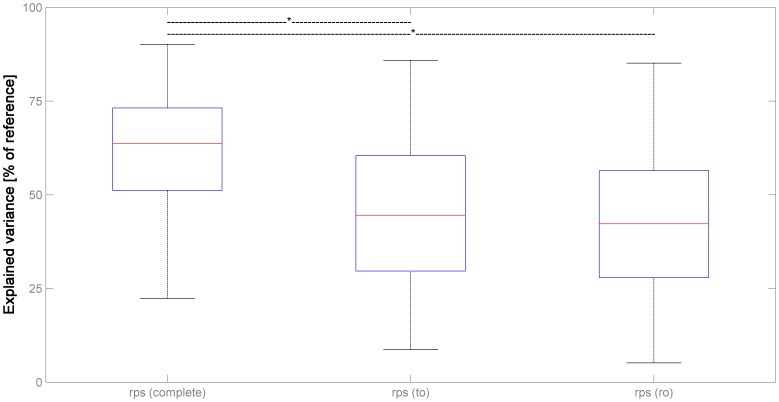
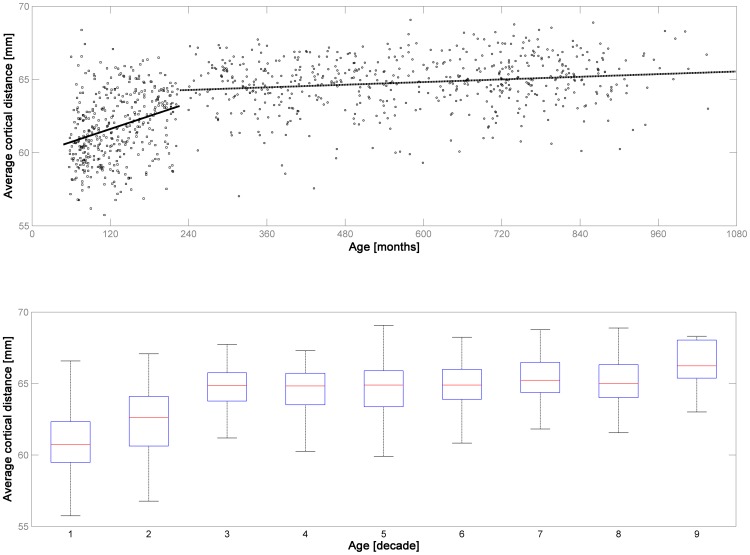
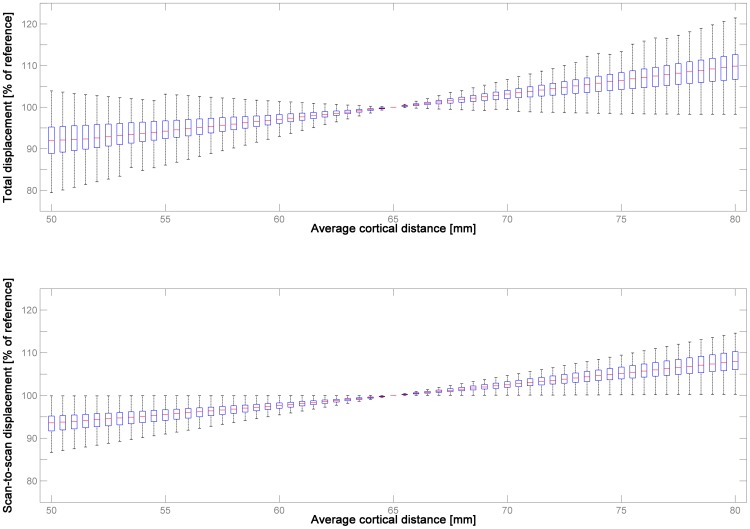
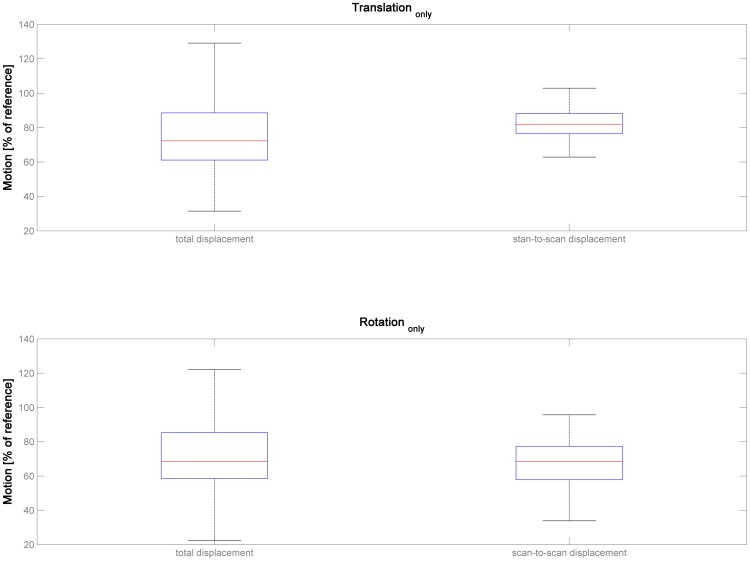
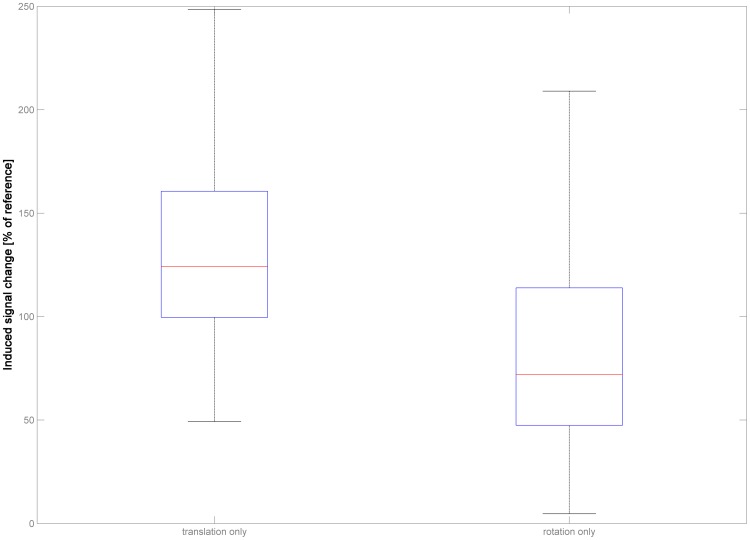
Subject motion has long since been known to be a major confound in functional MRI studies of the human brain. For resting-state functional MRI in particular, data corruption due to motion artefacts has been shown to be most relevant. However, despite 6 parameters (3 for translations and 3 for rotations) being required to fully describe the head's motion trajectory between timepoints, not all are routinely used to assess subject motion. Using structural (n = 964) as well as functional MRI (n = 200) data from public repositories, a series of experiments was performed to assess the impact of using a reduced parameter set (translationonly and rotationonly) versus using the complete parameter set. It could be shown that the usage of 65 mm as an indicator of the average cortical distance is a valid approximation in adults, although care must be taken when comparing children and adults using the same measure. The effect of using slightly smaller or larger values is minimal. Further, both translationonly and rotationonly severely underestimate the full extent of subject motion; consequently, both translationonly and rotationonly discard substantially fewer datapoints when used for quality control purposes ("motion scrubbing"). Finally, both translationonly and rotationonly severely underperform in predicting the full extent of the signal changes and the overall variance explained by motion in functional MRI data. These results suggest that a comprehensive measure, taking into account all available parameters, should be used to characterize subject motion in fMRI.
长期以来,人们都知道受试者的运动是人类大脑功能磁共振成像(fMRI)研究中的一个主要干扰因素。特别是对于静息态功能磁共振成像,因运动伪影导致的数据损坏已被证明是最相关的问题。然而,尽管需要6个参数(3个用于平移,3个用于旋转)来全面描述时间点之间头部的运动轨迹,但并非所有参数都常规用于评估受试者的运动。利用来自公共数据库的结构磁共振成像数据(n = 964)以及功能磁共振成像数据(n = 200),进行了一系列实验,以评估使用简化参数集(仅平移和仅旋转)与使用完整参数集的影响。结果表明,使用65毫米作为平均皮质距离的指标在成年人中是一个有效的近似值,不过在使用相同测量方法比较儿童和成年人时必须谨慎。使用稍小或稍大的值的影响很小。此外,仅平移和仅旋转都严重低估了受试者运动的全部范围;因此,在用于质量控制目的("运动清理")时,仅平移和仅旋转丢弃的数据点要少得多。最后,仅平移和仅旋转在预测功能磁共振成像数据中信号变化的全部范围以及由运动解释的总体方差方面都严重表现不佳。这些结果表明,应该使用一种综合的测量方法,考虑所有可用参数,来表征功能磁共振成像中的受试者运动。