Eid Ahmad M, El-Enshasy Hesham A, Aziz Ramlan, Elmarzugi Nagib A
Research and Innovation Department, Institute of Bioproduct Development, Universiti Teknologi Malaysia, Johor, Malaysia.
Research and Innovation Department, Institute of Bioproduct Development, Universiti Teknologi Malaysia, Johor, Malaysia ; Department of Industrial Pharmacy, Faculty of Pharmacy, Tripoli University and Biotechnology Research Center, Libyan Authority for Research, Science and Technology (LARST), Tripoli, Libya.
Int J Nanomedicine. 2014 Oct 7;9:4685-95. doi: 10.2147/IJN.S66180. eCollection 2014.
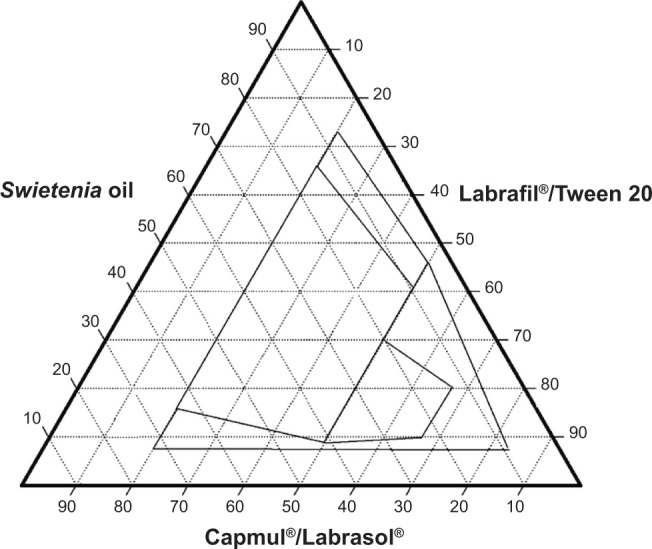
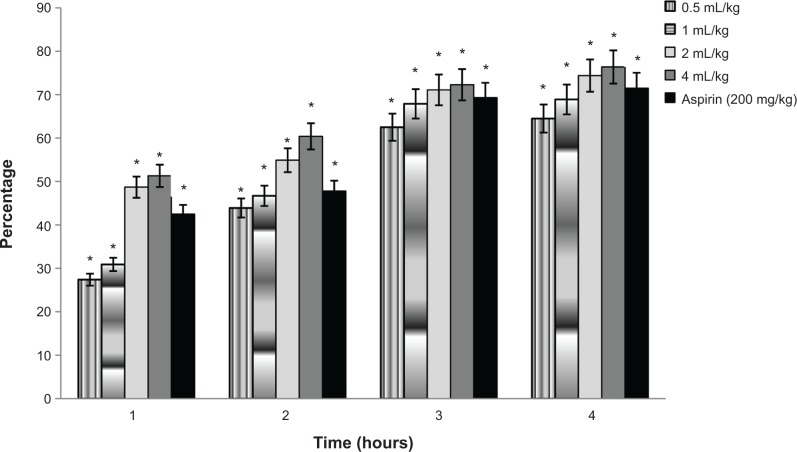
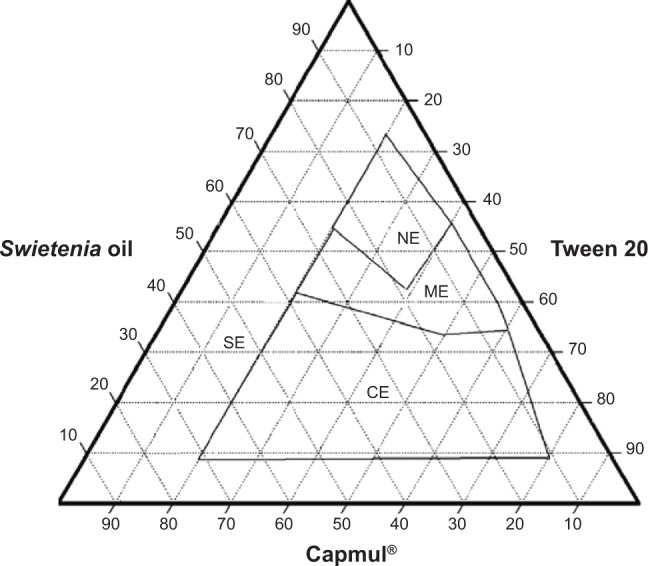
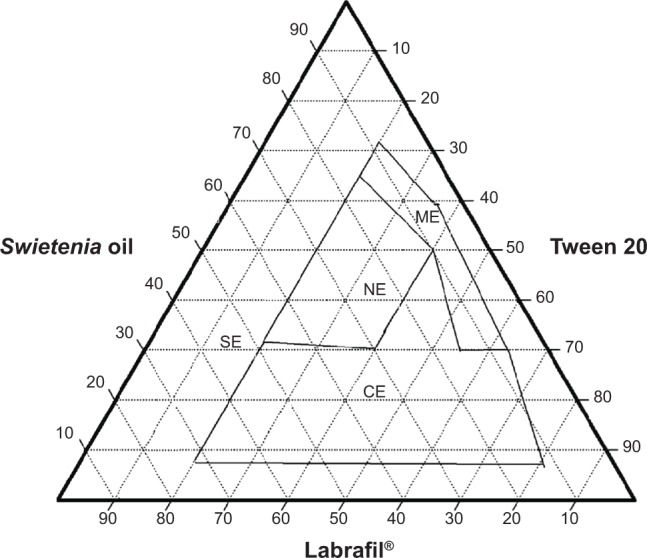
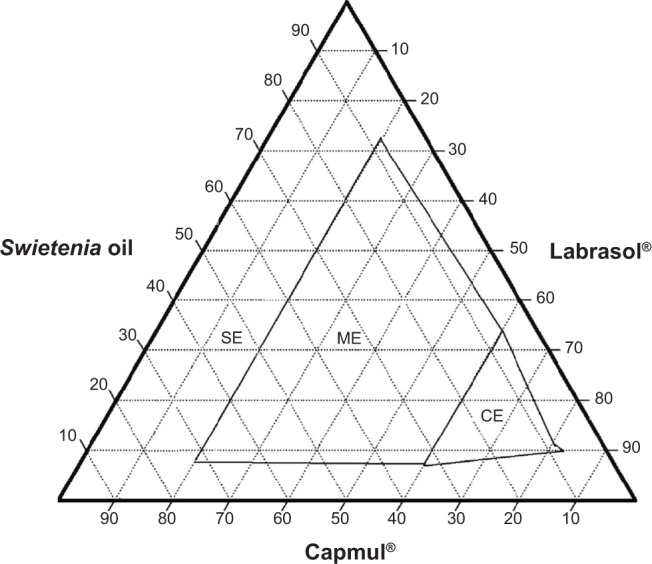
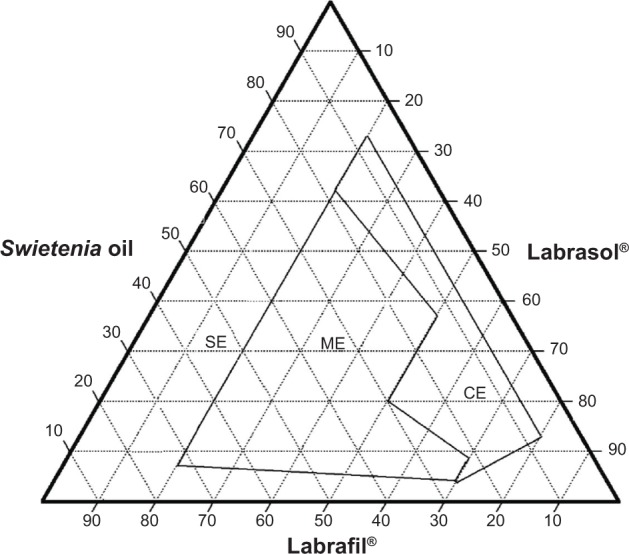
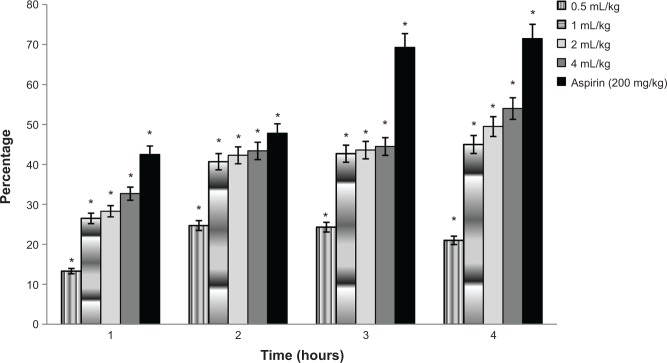
There is an increasing trend among pharmaceutical industries to use natural bioactive materials as medicinal agents and to use new technologies such as self-nanoemulsifying systems. The solubility and bioavailability of poorly soluble drugs can be enhanced by self-nanoemulsifying systems. Swietenia oil is frequently used because of its antimicrobial, antimutagenic, and anticancer bioactive medical properties. This study was conducted to develop self-nanoemulsifying systems for Swietenia oil that will enhance the anti-inflammatory activity of the oil. The self-emulsifying systems developed for Swietenia oil in this study were constructed using ternary phase diagrams and contained the nonionic surfactants Labrasol(®), Tween 20, Capmul(®), and Labrafil(®). The effect of these surfactants on the formulation was examined. The mean droplet size of Swietenia oil as well as their distribution, appearance, viscosity, and spreading times were studied to find the optimum formula, which contained droplets that were less than 200 nm. The next step was to test the anti-inflammatory properties of the optimum formula using a carrageenan-induced rat paw edema test. The results from this test were compared to the oil solution. Different oil/surfactants mixtures had various emulsification properties that were related to the size of their droplets. Tween 20 is a good surfactant to use in self-emulsifying systems because it produces droplets of nano-size. Mixtures of Capmul/Labrasol at a ratio of 2:1 and Labrafil/Tween 20 at a ratio of 1:2 were able to produce self-nanoemulsifying formulations containing Swietenia oil concentrations that ranged from 20%-50%. Nanoemulsion occurred when the size of the droplets fell below 200 nm with low size distribution (<0.3) after being gently mixed with water. It was found that the hydrophilic/lipophilic balance value affected the ternary phase diagram behavior of Swietenia oil and surfactants. In addition, the anti-inflammatory properties of Swietenia oil were greater in the self-nanoemulsifying systems than in the oil solution.
制药行业越来越倾向于使用天然生物活性材料作为药物制剂,并采用自纳米乳化系统等新技术。自纳米乳化系统可以提高难溶性药物的溶解度和生物利用度。由于具有抗菌、抗诱变和抗癌的生物活性医疗特性,桃花心木油经常被使用。本研究旨在开发桃花心木油的自纳米乳化系统,以增强该油的抗炎活性。本研究中为桃花心木油开发的自乳化系统是使用三元相图构建的,包含非离子表面活性剂Labrasol(®)、吐温20、Capmul(®)和Labrafil(®)。研究了这些表面活性剂对制剂的影响。研究了桃花心木油的平均液滴大小及其分布、外观、粘度和铺展时间,以找到最佳配方,该配方的液滴小于200纳米。下一步是使用角叉菜胶诱导的大鼠足肿胀试验来测试最佳配方的抗炎特性。将该试验的结果与油溶液进行比较。不同的油/表面活性剂混合物具有各种与液滴大小相关的乳化特性。吐温20是自乳化系统中一种很好的表面活性剂,因为它能产生纳米尺寸的液滴。Capmul/Labrasol比例为2:1和Labrafil/吐温20比例为1:2的混合物能够生产出含有浓度范围为20%-50%桃花心木油的自纳米乳化制剂。当液滴大小低于200纳米且与水轻轻混合后尺寸分布较低(<0.3)时,会形成纳米乳液。发现亲水/亲脂平衡值影响桃花心木油和表面活性剂的三元相图行为。此外,桃花心木油在自纳米乳化系统中的抗炎特性比在油溶液中更强。