Sawamoto R, Nozaki T, Furukawa T, Tanahashi T, Morita C, Hata T, Komaki G, Sudo N
Department of Psychosomatic Medicine, Graduate School of Medical Sciences, Kyushu University, Fukuoka, Japan.
School of Health Sciences Fukuoka, International University of Health and Welfare, Fukuoka, Japan.
Nutr Diabetes. 2014 Oct 27;4(10):e144. doi: 10.1038/nutd.2014.41.
Sleep has been identified as having an influence on the success of weight-loss interventions; however, knowledge of the mechanisms and the extent to which sleep disturbances affect the magnitude of weight reduction is inconclusive.
To determine if sleep duration and quality can predict the magnitude of weight reduction in a weight-loss intervention program for overweight and obese women.
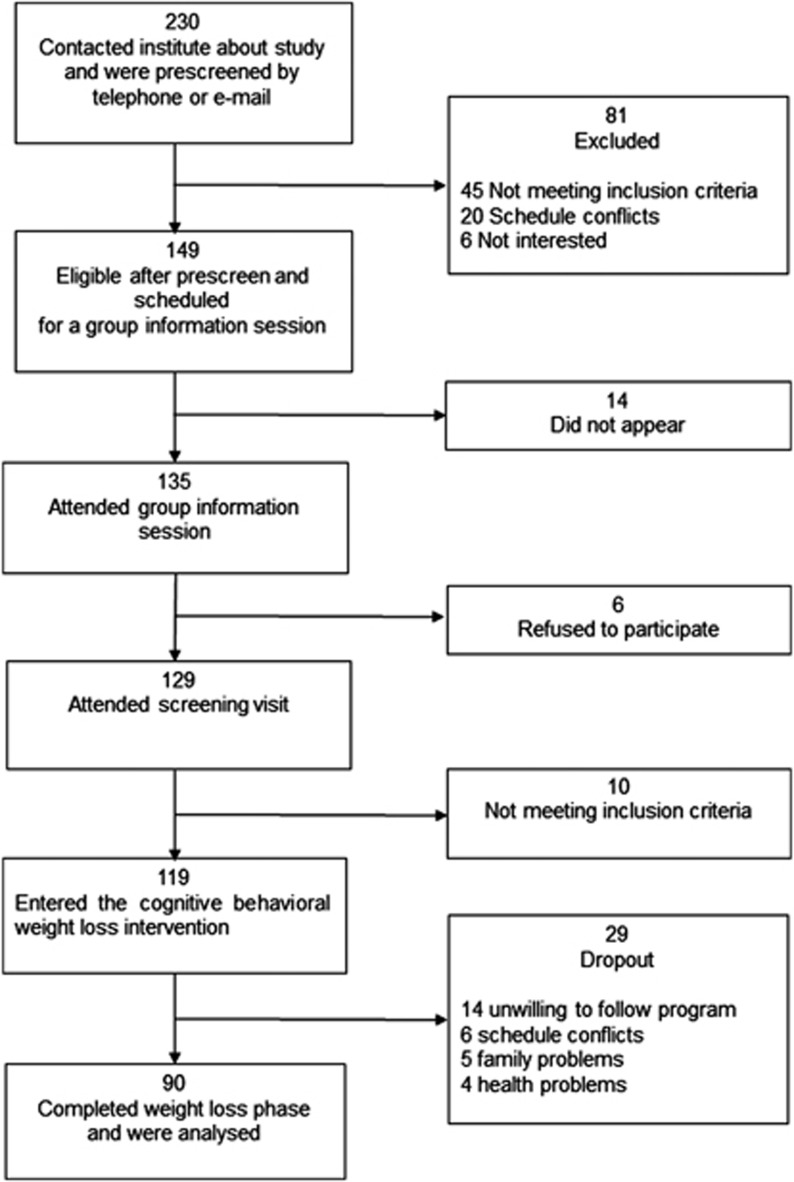
Ninety overweight and obese women aged 25-65 years completed the 7-month weight-loss phase of our weight-loss intervention. Sleep duration and quality were evaluated before the intervention by the Pittsburg Sleep Quality Index (PSQI), a self-report questionnaire, and by actigraphy. Serum levels of ghrelin, leptin, cortisol and insulin also were measured at baseline. Insulin resistance was measured by the homeostasis model assessment of insulin resistance (HOMA-IR).
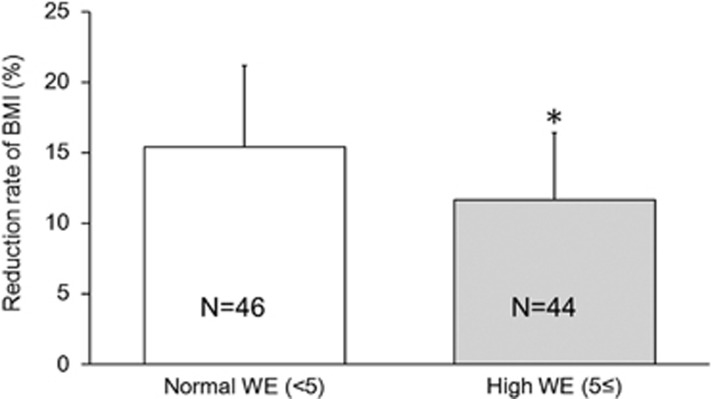
The mean reduction rate of body mass index (BMI) after the intervention was 13.6%. Multiple linear regression revealed that the number of wake episodes (WEs) per night had a significant relationship with the reduction of BMI even after adjusting for other clinical variables (β=-0.341, P=0.001). The participants with five or more WEs per night (high-WE group) had a significantly lower reduction in BMI compared with those with fewer than five (normal-WE group), after adjusting for confounding variables. In contrast, the PSQI-assessed parameters, reflecting the subjective assessments of sleep quality and duration, failed to detect an association with the reduction in BMI. Baseline HOMA-IR was significantly higher in the high-WE group than in the normal-WE group after adjusting for confounding variables.
Higher sleep fragmentation, as manifested by the increased number of WEs, predicts a lower magnitude of weight reduction in persons participating in weight-loss programs.
睡眠已被确定对减肥干预的成效有影响;然而,关于睡眠障碍影响体重减轻幅度的机制及程度的认识尚无定论。
确定睡眠时间和质量是否能够预测超重和肥胖女性减肥干预项目中的体重减轻幅度。
90名年龄在25 - 65岁的超重和肥胖女性完成了我们减肥干预项目为期7个月的减肥阶段。在干预前,通过匹兹堡睡眠质量指数(PSQI,一种自我报告问卷)和活动记录仪评估睡眠时间和质量。同时在基线时测量血清胃饥饿素、瘦素、皮质醇和胰岛素水平。通过胰岛素抵抗稳态模型评估(HOMA-IR)测量胰岛素抵抗。
干预后体重指数(BMI)的平均降低率为13.6%。多元线性回归显示,即使在调整其他临床变量后,每晚觉醒次数(WEs)与BMI降低仍有显著关系(β = -0.341,P = 0.001)。在调整混杂变量后,每晚有5次或更多次WEs的参与者(高WE组)与少于5次的参与者(正常WE组)相比,BMI降低幅度显著更低。相比之下,反映睡眠质量和时长主观评估的PSQI评估参数未能检测到与BMI降低的关联。在调整混杂变量后,高WE组的基线HOMA-IR显著高于正常WE组。
以觉醒次数增加为表现的更高睡眠碎片化程度预示着参与减肥项目的人群体重减轻幅度更低。