Dotson Vonetta M, Szymkowicz Sarah M, Kirton Joshua W, McLaren Molly E, Green Mackenzie L, Rohani Jessica Y
Department of Clinical & Health Psychology, University of Florida ; Department of Neuroscience, University of Florida.
Department of Clinical & Health Psychology, University of Florida.
J Depress Anxiety. 2014 Jan 24;Suppl 1. doi: 10.4172/2167-1044.S1-003.
Depression and anxiety and are associated with cognitive deficits and brain changes, especially in older adults. Despite the frequent co-occurrence of these conditions, cognitive neuroscience studies examining comorbid depression and anxiety are limited. The goal of the present study was to examine the unique and combined effect of depressive and anxiety symptoms on cognitive and brain functioning in young and older adults.
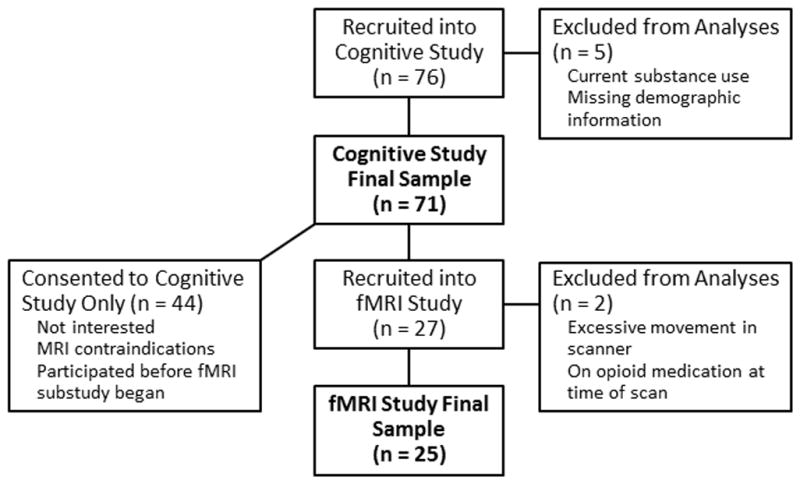
Seventy-one healthy, community-dwelling adults between the ages of 18 and 81 were administered a neuropsychological battery and completed the Center for Epidemiologic Studies Depression Scale (CES-D) and the trait form of the State-Trait Anxiety Inventory (STAI-T). A subset of 25 participants also underwent functional magnetic resonance imaging (fMRI) scanning while completing the n-back working memory task.
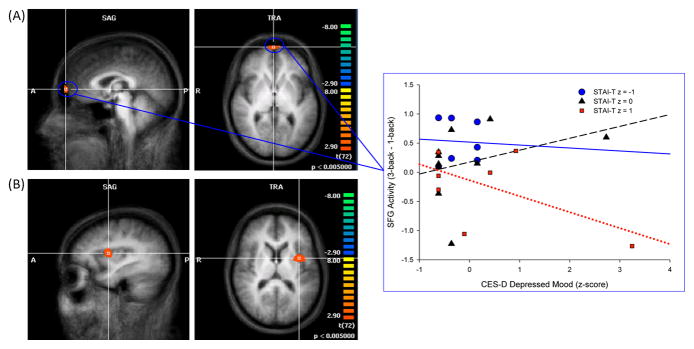
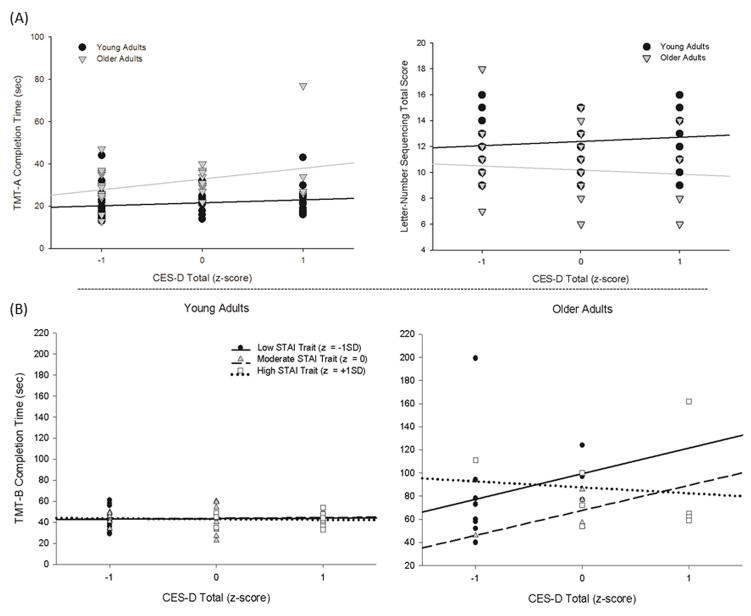
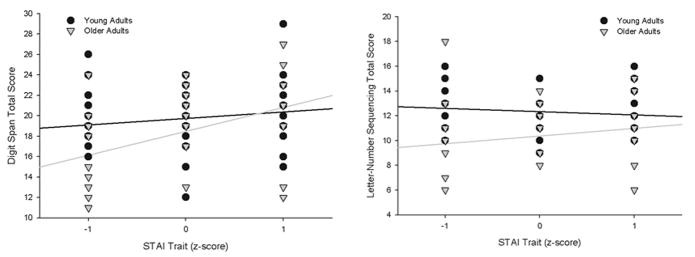
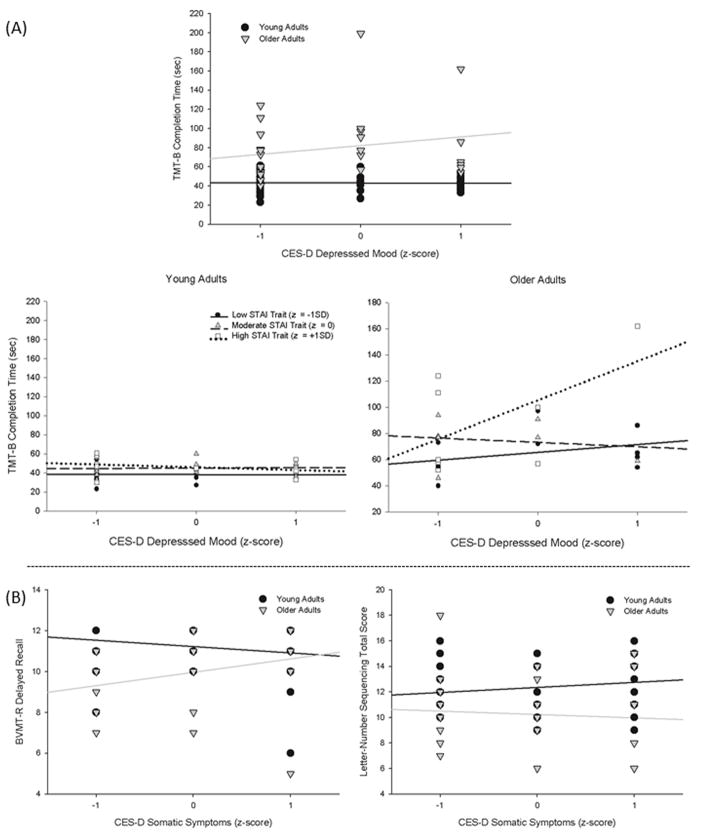
Total depressive symptoms, depressed mood symptoms, and somatic symptoms were associated with deficits in speed, working memory and executive functions, especially in older adults. Symptoms of lack of well-being were not associated with any neuropsychological test. Anxiety was associated with better attention and working memory. Moreover, anxiety modified the relationship between depressive symptoms and executive functioning in older adults, as elevated depressive symptoms were associated with worse performance at low levels of anxiety, but not at higher anxiety levels. Similarly, analysis of fMRI data showed that total depressive symptoms and depressed mood symptoms were associated with decreased activity in the superior frontal gyrus at low anxiety levels, but not at high anxiety levels.
Results confirm previous reports that subthreshold depression and anxiety impact cognitive and brain functioning and suggest that the interaction of depression and anxiety results in distinct cognitive and brain changes. Findings highlight the importance of assessing and controlling for symptoms of depression and anxiety in research studies of either condition.
抑郁和焦虑与认知缺陷及大脑变化相关,尤其在老年人中。尽管这些情况经常同时出现,但研究共病抑郁和焦虑的认知神经科学研究有限。本研究的目的是检验抑郁和焦虑症状对年轻人和老年人认知及大脑功能的独特及综合影响。
对71名年龄在18至81岁之间、居住在社区的健康成年人进行了神经心理测试,并完成了流行病学研究中心抑郁量表(CES-D)和状态-特质焦虑量表(STAI-T)的特质形式。25名参与者的一个子集在完成n-back工作记忆任务时还接受了功能磁共振成像(fMRI)扫描。
总的抑郁症状、抑郁情绪症状和躯体症状与速度、工作记忆和执行功能缺陷相关,尤其是在老年人中。幸福感缺失症状与任何神经心理测试均无关联。焦虑与更好的注意力和工作记忆相关。此外,焦虑改变了老年人抑郁症状与执行功能之间的关系,因为在低焦虑水平下,抑郁症状加重与表现变差相关,但在高焦虑水平下则不然。同样,fMRI数据分析表明,在低焦虑水平下,总的抑郁症状和抑郁情绪症状与额上回活动减少相关,但在高焦虑水平下则不然。
结果证实了先前的报告,即阈下抑郁和焦虑会影响认知和大脑功能,并表明抑郁和焦虑的相互作用会导致不同的认知和大脑变化。研究结果凸显了在对任何一种情况进行研究时评估和控制抑郁和焦虑症状的重要性。