Chen Yi-Ju, Lu Cheng-Tsung, Su Min-Gang, Huang Kai-Yao, Ching Wei-Chieh, Yang Hsiao-Hsiang, Liao Yen-Chen, Chen Yu-Ju, Lee Tzong-Yi
Institute of Chemistry, Academia Sinica, Taipei 115, Taiwan.
Department of Computer Science and Engineering, Yuan Ze University, Taoyuan 320, Taiwan.
Nucleic Acids Res. 2015 Jan;43(Database issue):D503-11. doi: 10.1093/nar/gku1176. Epub 2014 Nov 15.
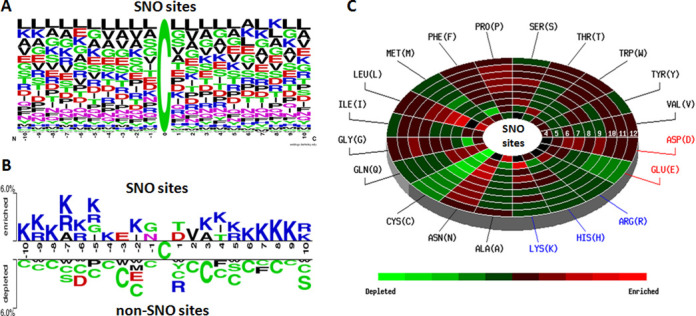
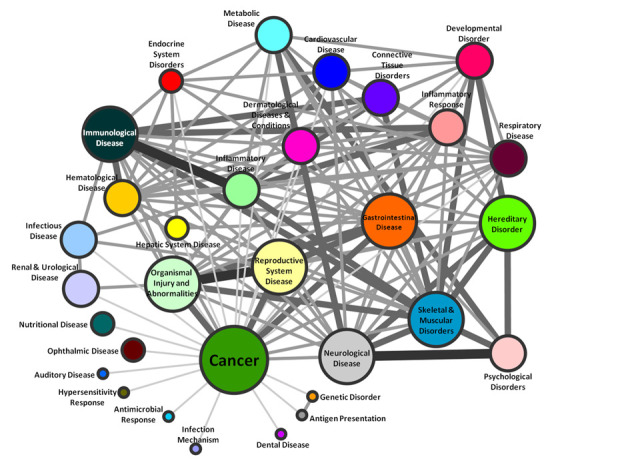
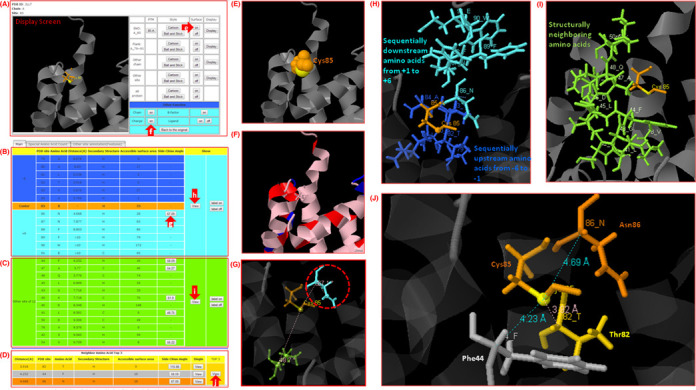
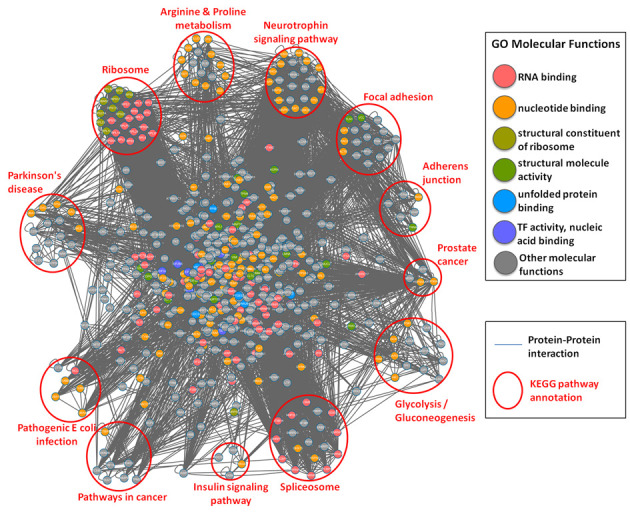
Given the increasing number of proteins reported to be regulated by S-nitrosylation (SNO), it is considered to act, in a manner analogous to phosphorylation, as a pleiotropic regulator that elicits dual effects to regulate diverse pathophysiological processes by altering protein function, stability, and conformation change in various cancers and human disorders. Due to its importance in regulating protein functions and cell signaling, dbSNO (http://dbSNO.mbc.nctu.edu.tw) is extended as a resource for exploring structural environment of SNO substrate sites and regulatory networks of S-nitrosylated proteins. An increasing interest in the structural environment of PTM substrate sites motivated us to map all manually curated SNO peptides (4165 SNO sites within 2277 proteins) to PDB protein entries by sequence identity, which provides the information of spatial amino acid composition, solvent-accessible surface area, spatially neighboring amino acids, and side chain orientation for 298 substrate cysteine residues. Additionally, the annotations of protein molecular functions, biological processes, functional domains and human diseases are integrated to explore the functional and disease associations for S-nitrosoproteome. In this update, users are allowed to search a group of interested proteins/genes and the system reconstructs the SNO regulatory network based on the information of metabolic pathways and protein-protein interactions. Most importantly, an endogenous yet pathophysiological S-nitrosoproteomic dataset from colorectal cancer patients was adopted to demonstrate that dbSNO could discover potential SNO proteins involving in the regulation of NO signaling for cancer pathways.
鉴于据报道受S-亚硝基化(SNO)调节的蛋白质数量不断增加,它被认为以类似于磷酸化的方式发挥作用,作为一种多效性调节剂,通过改变各种癌症和人类疾病中的蛋白质功能、稳定性和构象变化来引发双重效应,从而调节多种病理生理过程。由于其在调节蛋白质功能和细胞信号传导方面的重要性,dbSNO(http://dbSNO.mbc.nctu.edu.tw)被扩展为一个资源,用于探索SNO底物位点的结构环境和S-亚硝基化蛋白质的调控网络。对PTM底物位点结构环境的兴趣日益浓厚,促使我们通过序列同一性将所有人工策划的SNO肽(2277种蛋白质中的4165个SNO位点)映射到PDB蛋白质条目中,这提供了298个底物半胱氨酸残基的空间氨基酸组成、溶剂可及表面积、空间相邻氨基酸和侧链取向的信息。此外,整合了蛋白质分子功能、生物学过程、功能结构域和人类疾病的注释,以探索S-亚硝基蛋白质组的功能和疾病关联。在本次更新中,允许用户搜索一组感兴趣的蛋白质/基因,系统会根据代谢途径和蛋白质-蛋白质相互作用的信息重建SNO调控网络。最重要的是,采用了来自结直肠癌患者的内源性但病理生理的S-亚硝基蛋白质组数据集,以证明dbSNO可以发现参与癌症途径NO信号调节的潜在SNO蛋白质。