Manayi Azadeh, Kurepaz-Mahmoodabadi Mahdieh, Gohari Ahmad R, Ajani Yousef, Saeidnia Soodabeh
Medicinal Plants Research Center, Faculty of Pharmacy, Tehran University of Medical Sciences, P.O. Box 14155-6451, Tehran, Iran.
Institute of Medicinal Plants (IMP), Iranian Academic Centre for Education, Culture and Research (ACECR), Karaj, Iran.
Daru. 2014 Nov 28;22(1):78. doi: 10.1186/s40199-014-0078-1.
Phthalate, esters of phthalic acid, are mainly applied as plasticizers and cause several human health and environment hazards. The essential oils of Achillea species have attracted a great concern, since several biological activities have been reported from varieties of these medicinal species. On the other side, due to the problems regarding the waste disposal in developing countries, phthalate derivatives can easily release from waste disposal to the water and soil resulting in probable absorption and accumulation by medicinal and dietary plants. As a matter of fact, although the toxicity of phthalate derivatives in human is well-known, food crops and medicinal plants have been exposing to phthalates that can be detected in their extracts and essential oils. Achillea tenuifolia (Compositea) is one of these herbaceous plants with traditional applications which widely growing in Iran.
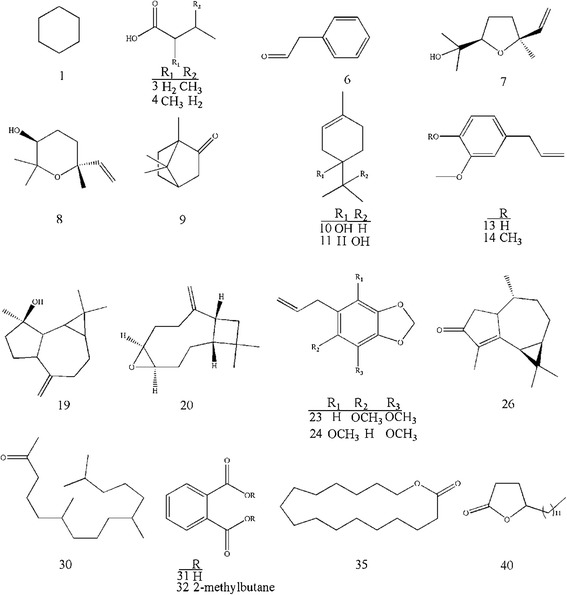
The plant root was subjected to hydro-distillation for 4 h using Clevenger type apparatus to obtain its essential oil before and after acid treatment. Both of the hydro-distilled essential oils were analysed by GC-MS method resulted in recognition of their constituent. Phthalate contamination as (1, 2-benzenedicarboxylic acid, bis (2-methylpropyl) ester (5.4%) and phthalic acid (4.5%), were identified in the first and second extracted oils, respectively.
As a warning, due to the potential role of phthalates to cause reproductive toxicity, disturb of endocrine system and causing cancers, medicinal plants have to be considered through quality control for detection of these compounds.
邻苯二甲酸酯是邻苯二甲酸的酯类,主要用作增塑剂,会对人类健康和环境造成多种危害。蓍草属植物的精油引起了极大关注,因为已报道这些药用植物的多个品种具有多种生物活性。另一方面,由于发展中国家存在废物处理问题,邻苯二甲酸酯衍生物很容易从废物处理中释放到水和土壤中,导致药用植物和食用植物可能吸收和积累这些物质。事实上,尽管邻苯二甲酸酯衍生物对人类的毒性众所周知,但粮食作物和药用植物一直暴露于可在其提取物和精油中检测到的邻苯二甲酸盐中。细叶蓍(菊科)是伊朗广泛种植的具有传统用途的草本植物之一。
使用克莱文杰型装置对植物根部进行4小时水蒸馏,以获得酸处理前后的精油。对两种水蒸馏精油均采用气相色谱-质谱法进行分析,以识别其成分。在第一次和第二次提取的油中分别鉴定出邻苯二甲酸酯污染物,即邻苯二甲酸二异丁酯(5.4%)和邻苯二甲酸(4.5%)。
作为一个警示,由于邻苯二甲酸盐可能导致生殖毒性、干扰内分泌系统并引发癌症,必须通过质量控制来检测药用植物中这些化合物的含量。