Bogachev Mikhail I, Kayumov Airat R, Bunde Armin
Radio Systems Department & Biomedical Engineering Research Center, Saint Petersburg Electrotechnical University, Saint Petersburg, Russia.
Department of Genetics & Institute of Fundamental Medicine and Biology, Kazan (Volga Region) Federal University, Kazan, Tatarstan, Russia.
PLoS One. 2014 Dec 1;9(12):e112534. doi: 10.1371/journal.pone.0112534. eCollection 2014.
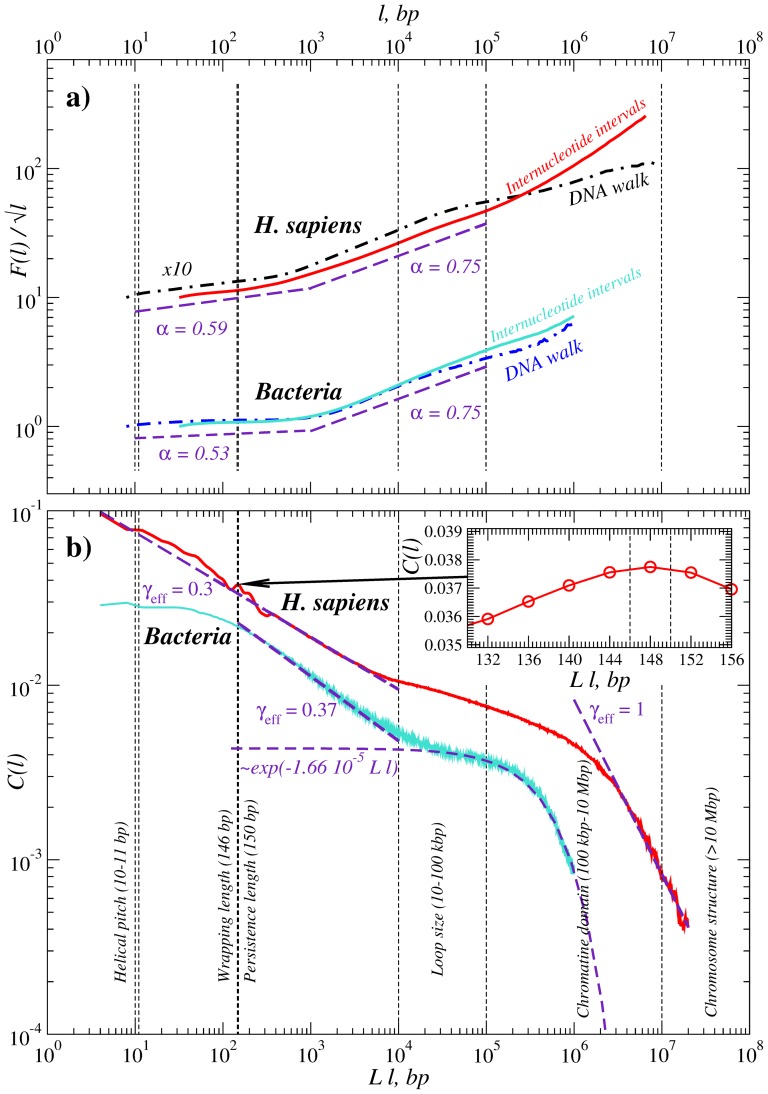
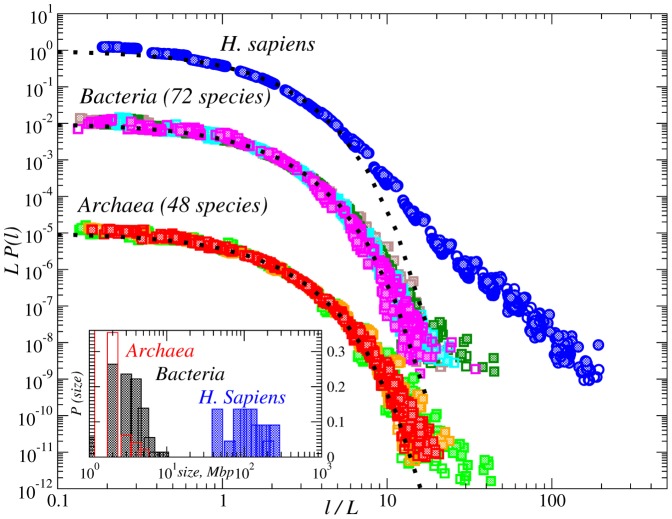
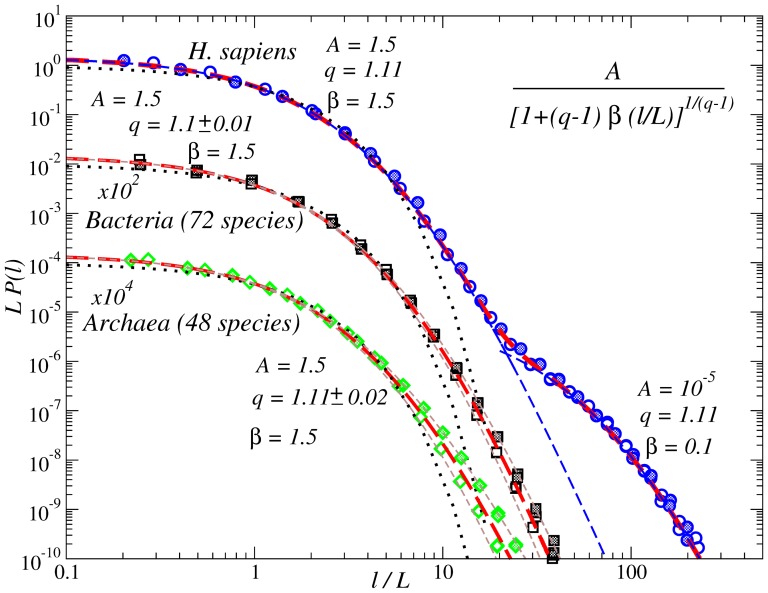
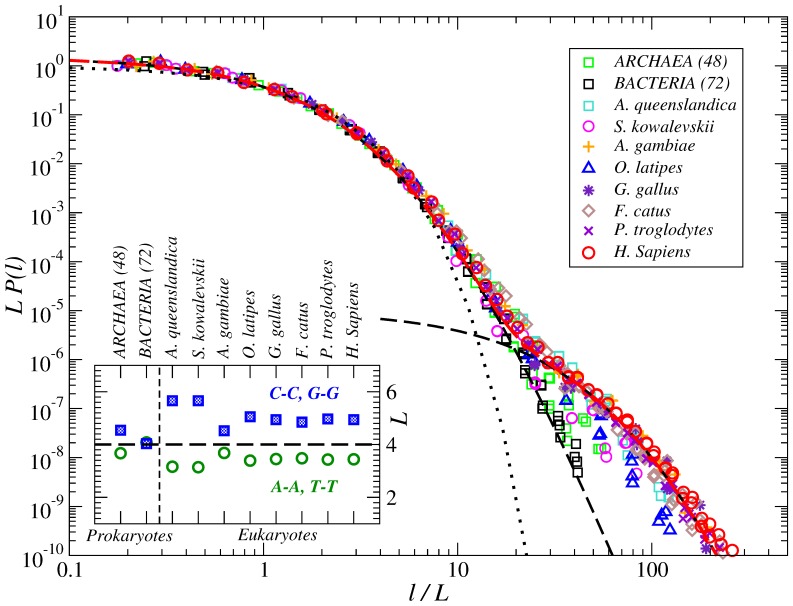
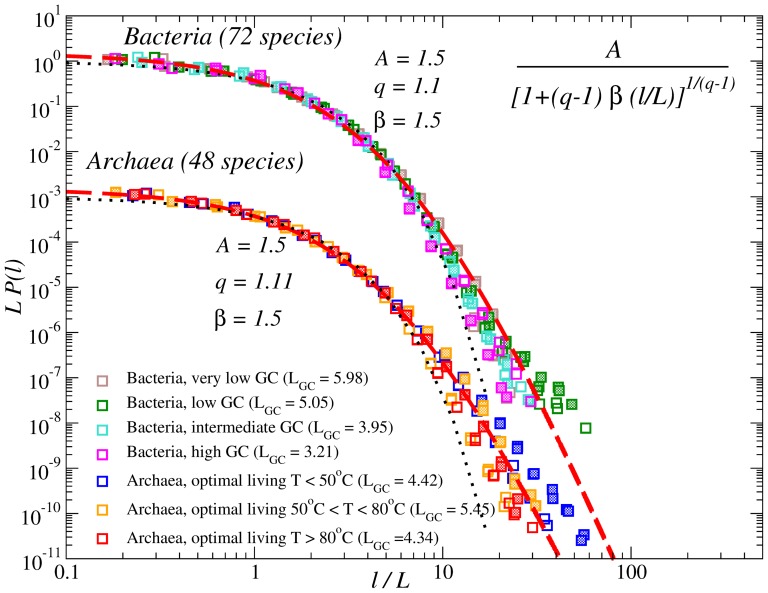
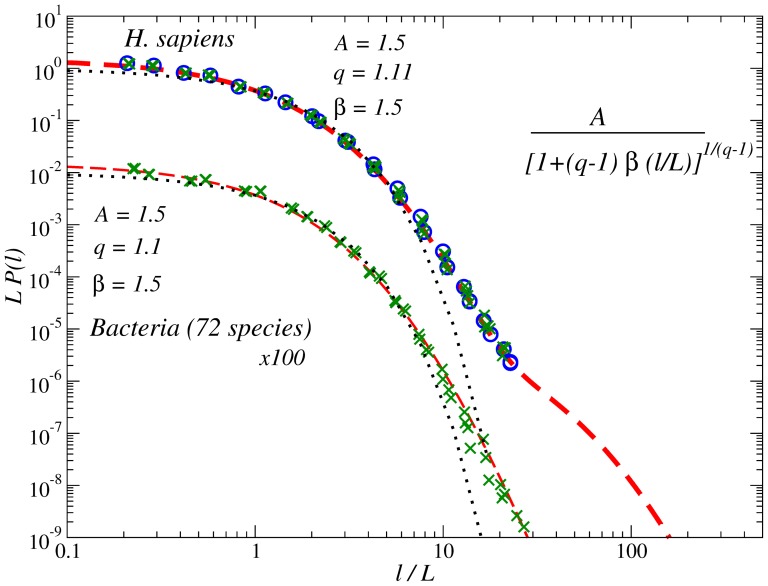
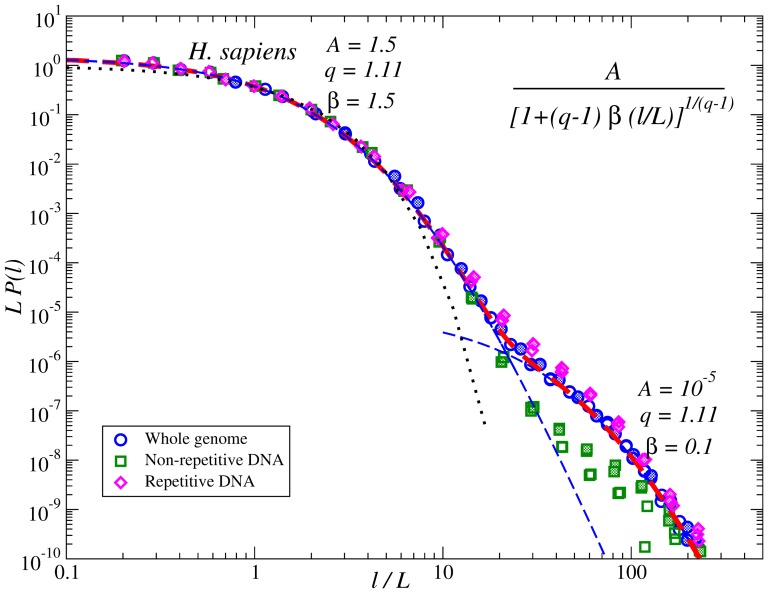
Uncovering the fundamental laws that govern the complex DNA structural organization remains challenging and is largely based upon reconstructions from the primary nucleotide sequences. Here we investigate the distributions of the internucleotide intervals and their persistence properties in complete genomes of various organisms from Archaea and Bacteria to H. Sapiens aiming to reveal the manifestation of the universal DNA architecture. We find that in all considered organisms the internucleotide interval distributions exhibit the same [Formula: see text]-exponential form. While in prokaryotes a single [Formula: see text]-exponential function makes the best fit, in eukaryotes the PDF contains additionally a second [Formula: see text]-exponential, which in the human genome makes a perfect approximation over nearly 10 decades. We suggest that this functional form is a footprint of the heterogeneous DNA structure, where the first [Formula: see text]-exponential reflects the universal helical pitch that appears both in pro- and eukaryotic DNA, while the second [Formula: see text]-exponential is a specific marker of the large-scale eukaryotic DNA organization.
揭示支配复杂DNA结构组织的基本规律仍然具有挑战性,并且很大程度上基于从初级核苷酸序列进行的重构。在这里,我们研究了从古细菌、细菌到智人的各种生物体完整基因组中核苷酸间隔的分布及其持续性特性,旨在揭示通用DNA结构的表现形式。我们发现,在所有考虑的生物体中,核苷酸间隔分布呈现相同的[公式:见正文]指数形式。虽然在原核生物中,单一的[公式:见正文]指数函数拟合效果最佳,但在真核生物中,概率密度函数(PDF)还额外包含第二个[公式:见正文]指数,在人类基因组中,它在近10个数量级上实现了完美近似。我们认为这种函数形式是异质DNA结构的一个印记,其中第一个[公式:见正文]指数反映了在原核和真核DNA中都出现的通用螺旋间距,而第二个[公式:见正文]指数是大规模真核DNA组织的一个特定标记。