Department of Biochemistry, Faculty of Pharmaceutical Sciences, Fukuoka University, 8-19-1 Nanakuma, Jonan-ku, Fukuoka 814-0180, Japan.
Faculty of Medicine, Kyoto Prefectural University of Medicine, 1-5 Shimogamohangi-Cho, Sakyo-Ku, Kyoto 606-0823, Japan.
Molecules. 2014 Dec 4;19(12):20295-313. doi: 10.3390/molecules191220295.
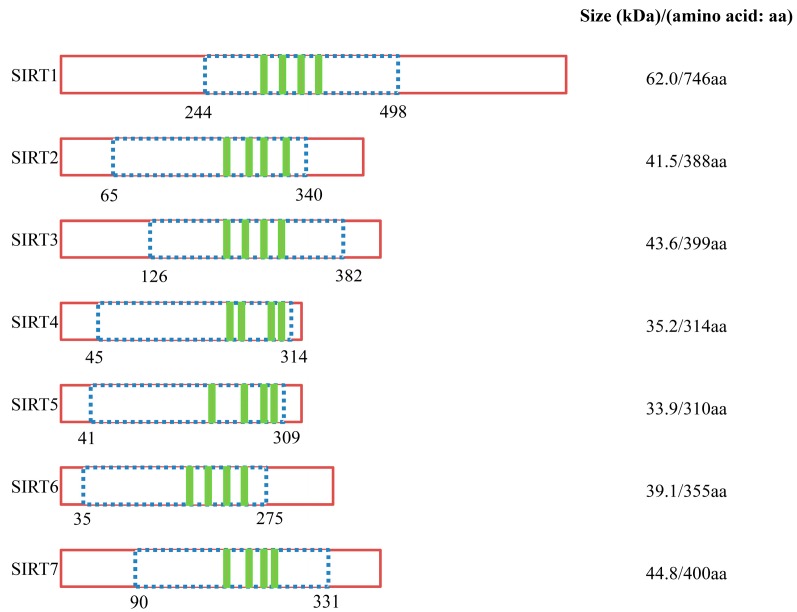
Sirtuins are nicotinamide adenine dinucleotide+-dependent deacetylases of which there are seven isoforms (SIRT1-7). Sirtuin activity is linked to gene expression, lifespan extension, neurodegeneration, and age-related disorders. Numerous studies have suggested that sirtuins could be of great significance with regard to both antiaging and tumorigenesis, depending on its targets in specific signaling pathways or in specific cancers. Recent studies have identified small chemical compounds that modulate sirtuins, and these modulators have enabled a greater understanding of the biological function and molecular mechanisms of sirtuins. This review highlights the possibility of sirtuins, especially SIRT1 and SIRT2, for cancer therapy targets, and focuses on the therapeutic potential of sirtuin modulators both in cancer prevention and treatment.
Sirtuins 是烟酰胺腺嘌呤二核苷酸依赖性去乙酰化酶,有 7 种同工酶(SIRT1-7)。Sirtuin 的活性与基因表达、寿命延长、神经退行性变和与年龄相关的疾病有关。许多研究表明,取决于其在特定信号通路或特定癌症中的靶点,sirtuins 对抗衰老和肿瘤发生可能具有重要意义。最近的研究已经确定了调节 sirtuins 的小分子化合物,这些调节剂使人们对 sirtuins 的生物学功能和分子机制有了更深入的了解。本文综述了 sirtuins(尤其是 SIRT1 和 SIRT2)作为癌症治疗靶点的可能性,并重点探讨了 sirtuin 调节剂在癌症预防和治疗中的治疗潜力。