Light Sharee N, Moran Zachary D, Swander Lena, Le Van, Cage Brandi, Burghy Cory, Westbrook Cecilia, Greishar Larry, Davidson Richard J
Center for Investigating Healthy Minds at the Waisman Center, University of Wisconsin-Madison, 1500 Highland Avenue, Madison, WI 53705, United States.
Center for Investigating Healthy Minds at the Waisman Center, University of Wisconsin-Madison, 1500 Highland Avenue, Madison, WI 53705, United States.
Biol Psychol. 2015 Jan;104:116-29. doi: 10.1016/j.biopsycho.2014.11.015. Epub 2014 Dec 5.
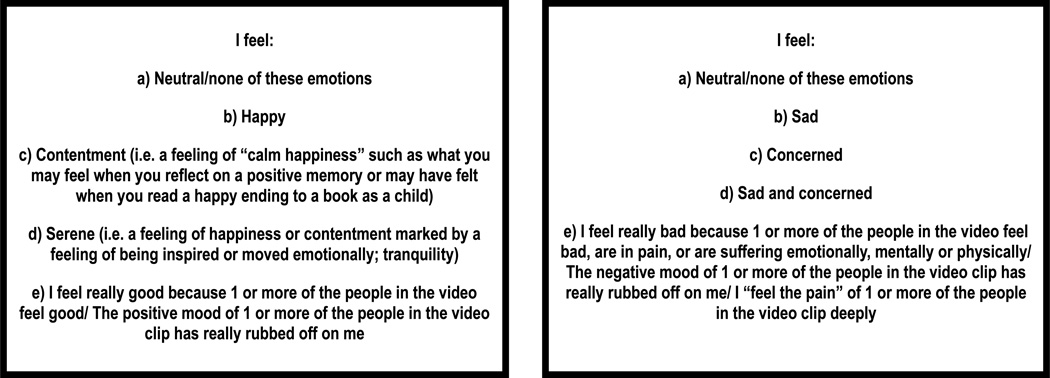
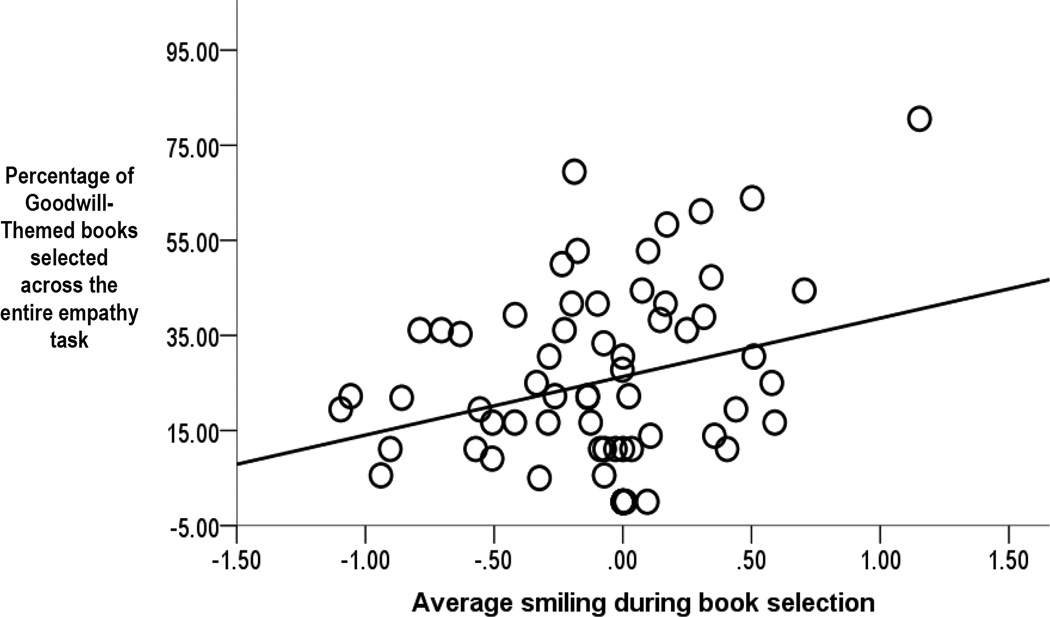
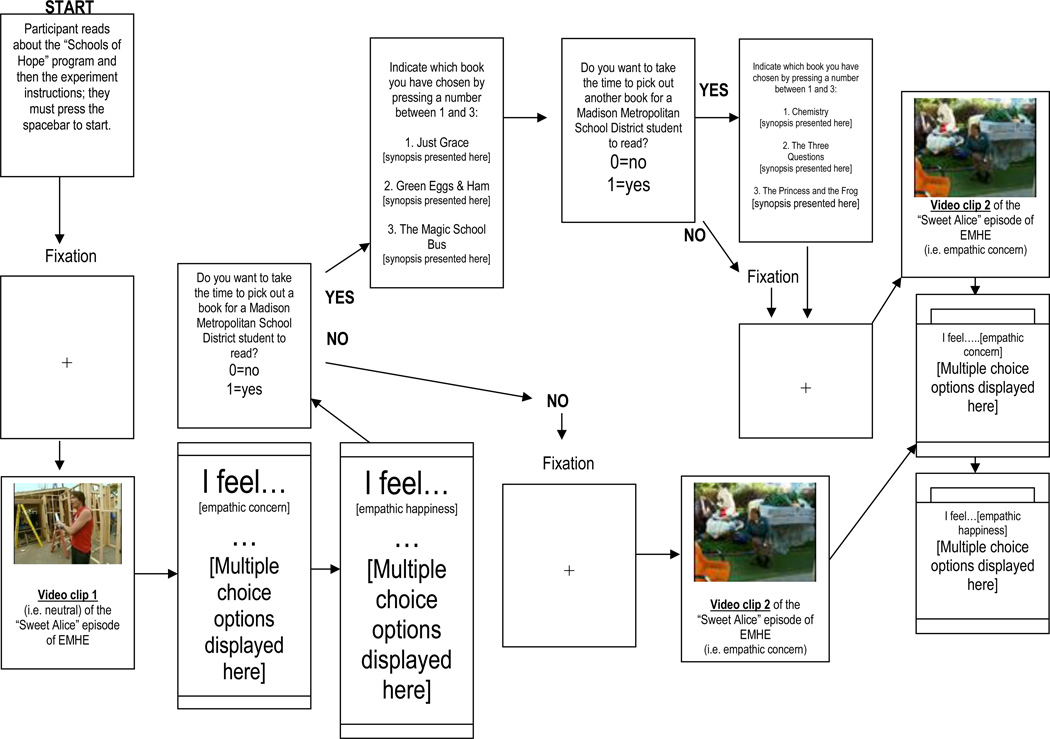
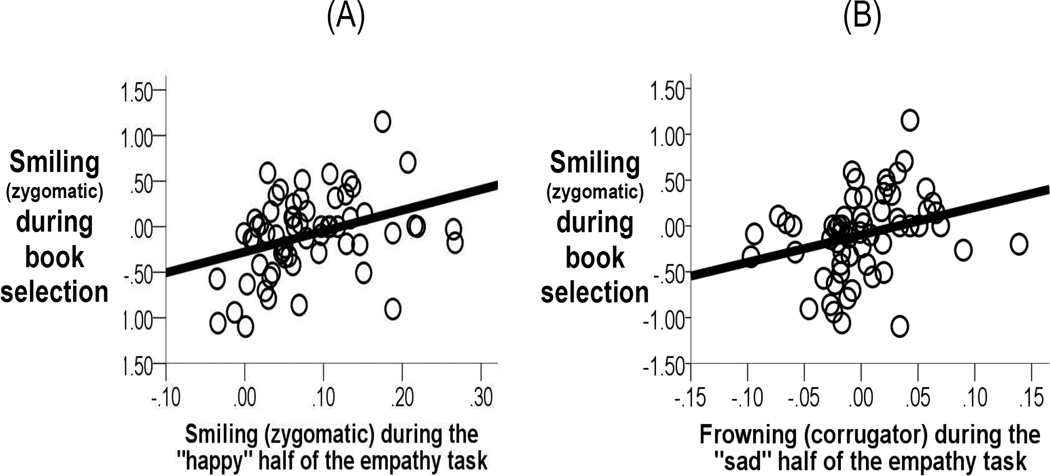
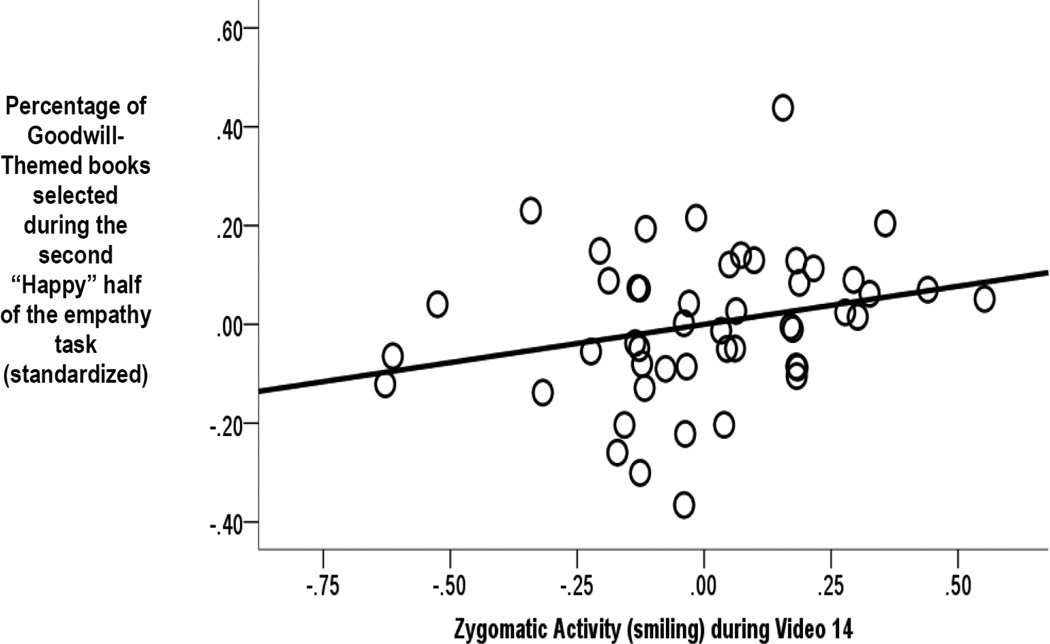
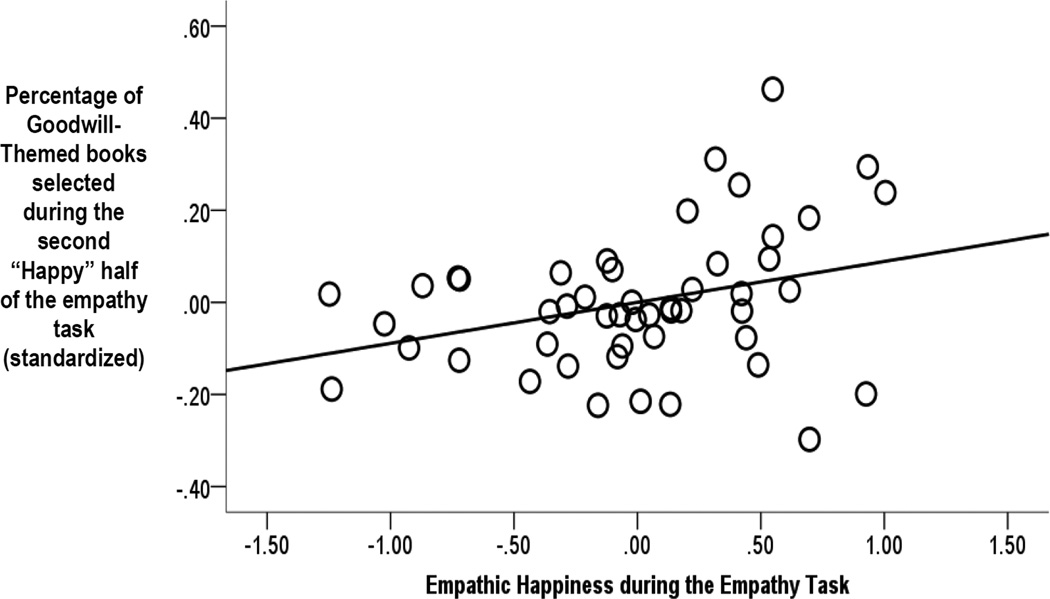
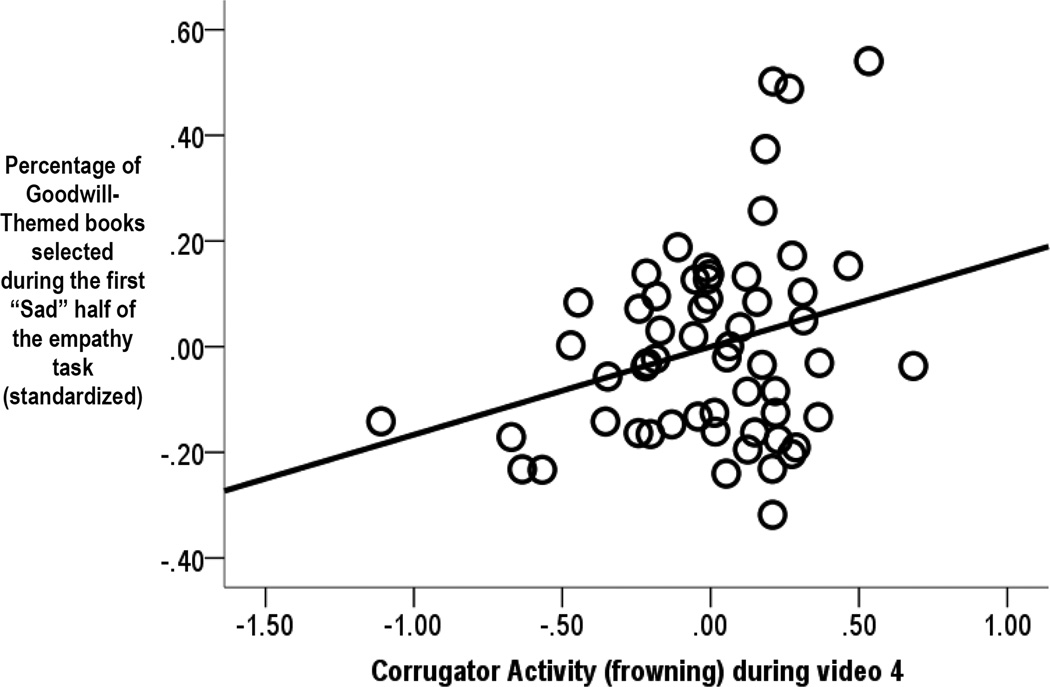
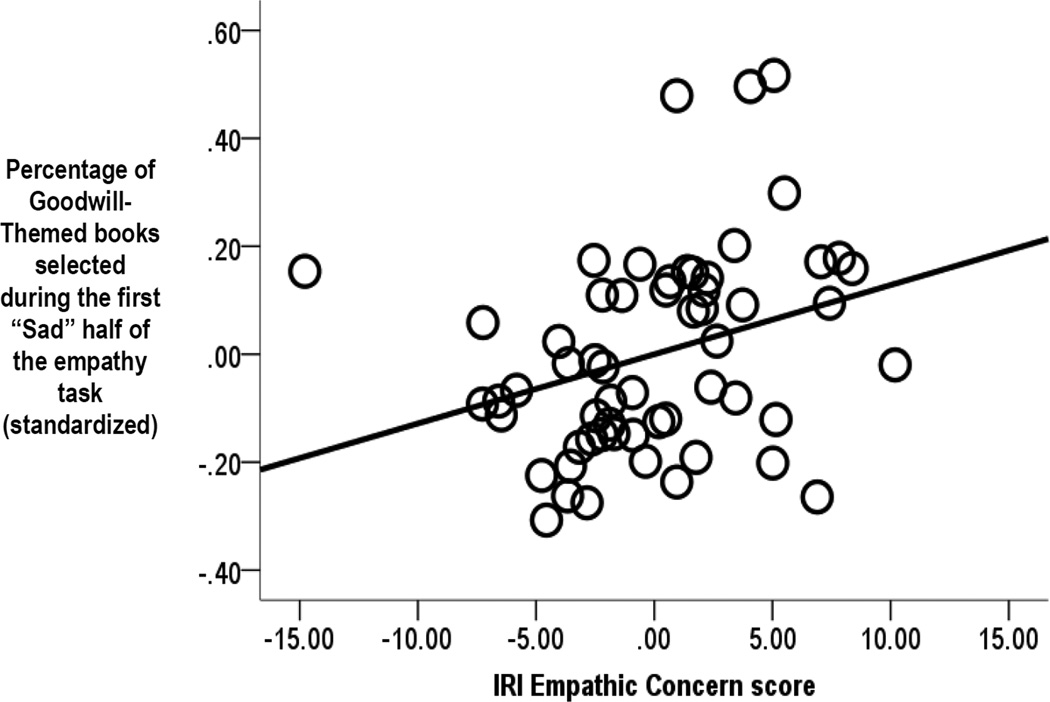
The relation between empathy subtypes and prosocial behavior was investigated in a sample of healthy adults. "Empathic concern" and "empathic happiness", defined as negative and positive vicarious emotion (respectively) combined with an other-oriented feeling of "goodwill" (i.e. a thought to do good to others/see others happy), were elicited in 68 adult participants who watched video clips extracted from the television show Extreme Makeover: Home Edition. Prosocial behavior was quantified via performance on a non-monetary altruistic decision-making task involving book selection and donation. Empathic concern and empathic happiness were measured via self-report (immediately following each video clip) and via facial electromyography recorded from corrugator (active during frowning) and zygomatic (active during smiling) facial regions. Facial electromyographic signs of (a) empathic concern (i.e. frowning) during sad video clips, and (b) empathic happiness (i.e. smiling) during happy video clips, predicted increased prosocial behavior in the form of increased goodwill-themed book selection/donation.
在一组健康成年人样本中,研究了共情亚型与亲社会行为之间的关系。68名成年参与者观看了从电视节目《改头换面:家庭版》中提取的视频片段,引发了“共情关注”和“共情快乐”,分别被定义为消极和积极的替代性情绪,并伴有以他人为导向的“善意”感受(即想要帮助他人/看到他人快乐的想法)。亲社会行为通过一项涉及书籍选择和捐赠的非货币性利他决策任务的表现进行量化。共情关注和共情快乐通过自我报告(在每个视频片段之后立即进行)以及从皱眉肌(皱眉时活跃)和颧肌(微笑时活跃)面部区域记录的面部肌电图进行测量。(a)在悲伤视频片段中出现共情关注(即皱眉)的面部肌电图迹象,以及(b)在快乐视频片段中出现共情快乐(即微笑)的面部肌电图迹象,预示着以增加善意主题书籍选择/捐赠形式出现的亲社会行为增加。