Berhan Yifru, Berhan Asres
Hawassa University, College of Medicine and Health Sciences, Department of Gynecology-Obstetrics.
Hawassa University, College of Medicine and Health Sciences, Department of Pharmacology.
Ethiop J Health Sci. 2014 Sep;24 Suppl(0 Suppl):41-54. doi: 10.4314/ejhs.v24i0.5s.
Although the perinatal mortality in low income countries is about five-folds higher than in the high income countries, little is known about the association of socio-demographic factors with perinatal mortality. National and small scale studies so far reported have shown very contradictory results. The objective of this meta-analysis was to assess the association of perinatal mortality with selected sociodemographic factors.
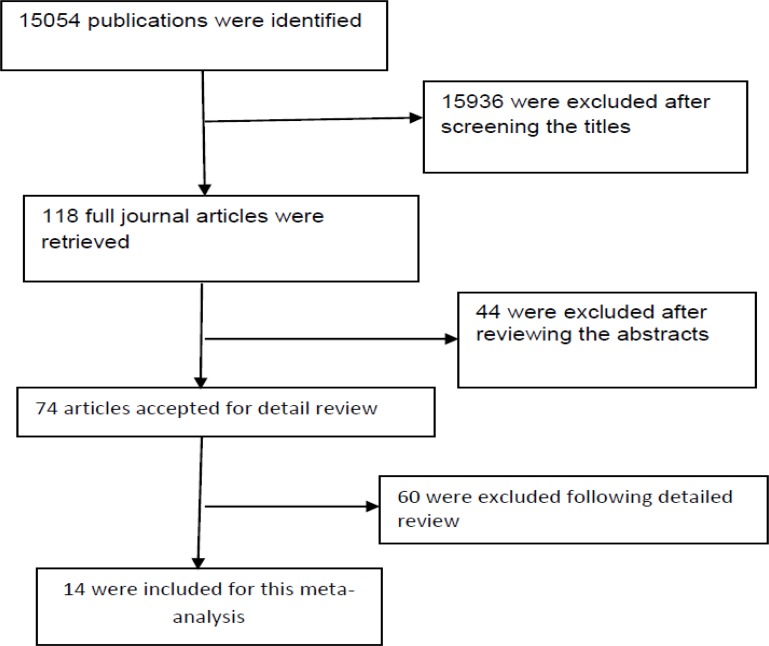
A computer based literature search was conducted mainly in the databases of African Journals Online, MEASURE Demographic and Health Survey (DHS), Google Scholar, HINARI, PUBMED, MEDLINE and the Cochrane Library. The inclusion criteria were: 1) studies that assessed the perinatal mortality in developing countries in relation to socio-demographic predictors and 2) studies published in English and conducted after the year 1990. Subgroup meta-analyses of perinatal mortality were performed for mothers' age, residence, educational level and wealth status. Sensitivity analysis and heterogeneity testing were done.
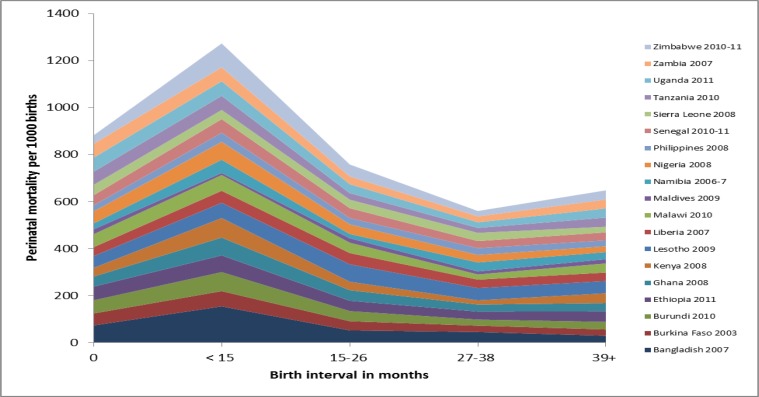
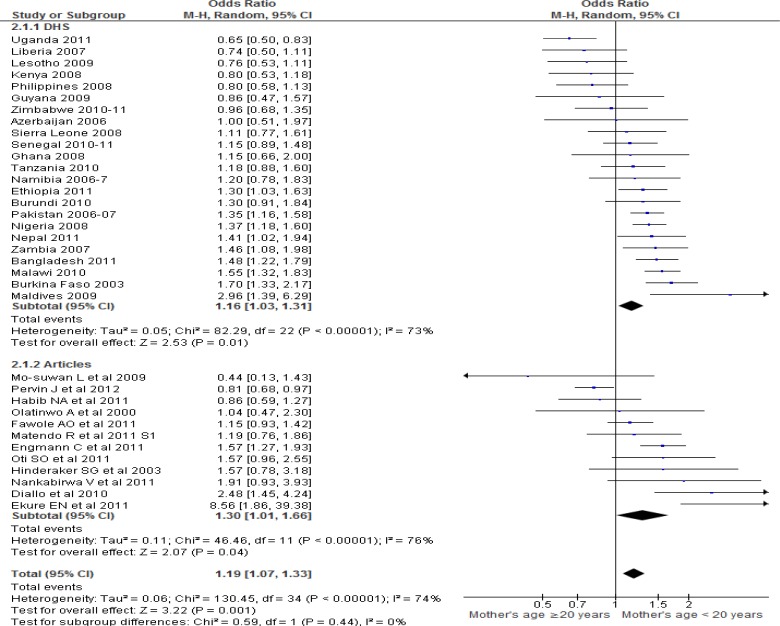
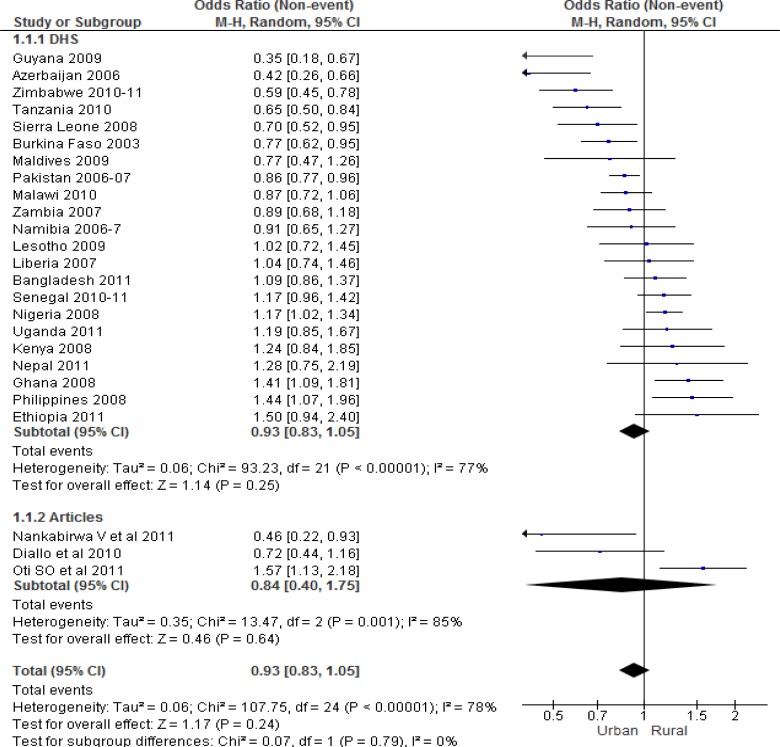
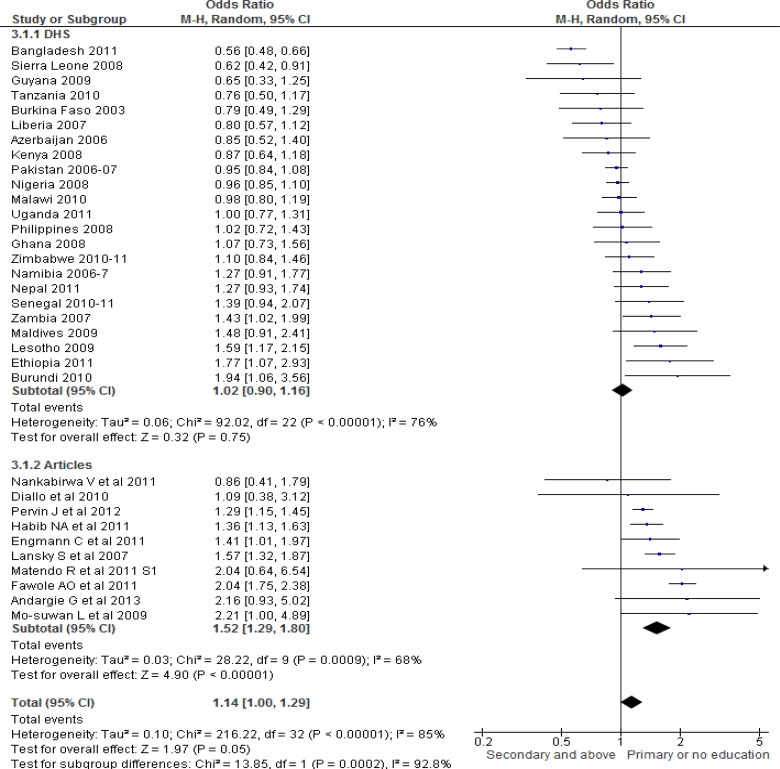
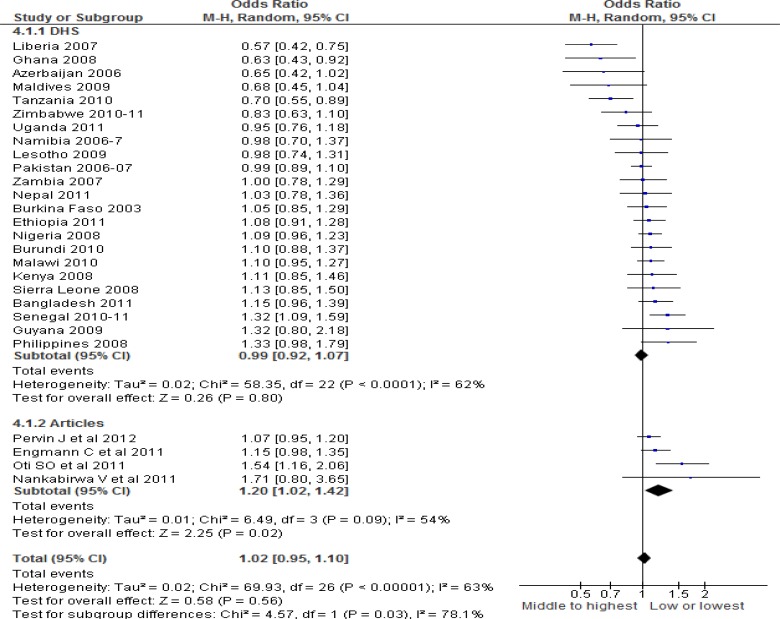
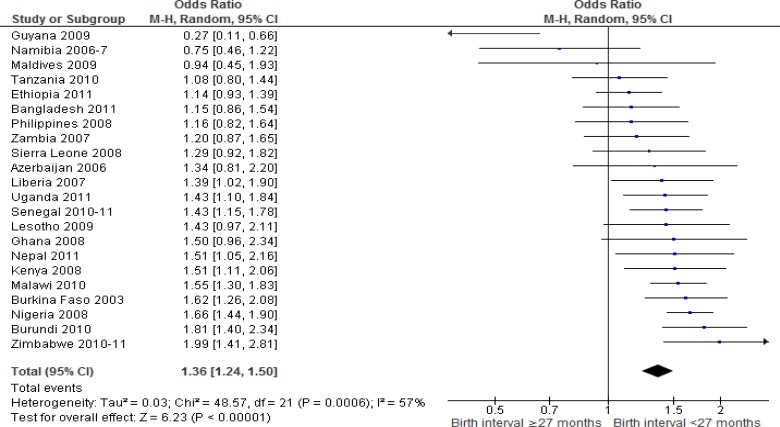
In this meta-analysis, several inconsistent associations of perinatal mortality with the selected socio-demographic variables were observed in the primary studies level, both DHS and small scale studies. However, the overall odds ratio (OR) demonstrated statistically significant association of perinatal mortality with low maternal age (OR=1.2) and short birth interval (OR=1.4) but was not influenced by the mothers' residence, low educational level and household wealth index. Very consistently, the highest perinatal mortality rates reported when the birth intervals were either too short (<15 months) or too long (>39 months).
Because of the disagreement among previous studies, the present study demonstrated a small effect size on the increased risk of perinatal mortality among women who were pregnant during teenage ages and gave birth too frequently or after a long interval. Therefore, to confirm the strong predictors of perinatal mortality, further studies on sociodemographic factors are needed.
尽管低收入国家的围产期死亡率比高收入国家高约五倍,但关于社会人口因素与围产期死亡率之间的关联却知之甚少。迄今为止报告的全国性和小规模研究结果非常矛盾。本荟萃分析的目的是评估围产期死亡率与选定社会人口因素之间的关联。
主要在非洲期刊在线数据库、衡量人口与健康调查(DHS)、谷歌学术、HINARI、PubMed、MEDLINE和考克兰图书馆中进行基于计算机的文献检索。纳入标准为:1)评估发展中国家围产期死亡率与社会人口预测因素关系的研究;2)1990年后发表的英文研究。对母亲年龄、居住地、教育水平和财富状况进行围产期死亡率的亚组荟萃分析。进行了敏感性分析和异质性检验。
在本荟萃分析中,在主要研究层面,即DHS研究和小规模研究中,观察到围产期死亡率与选定的社会人口变量之间存在几种不一致的关联。然而,总体优势比(OR)显示围产期死亡率与低孕产妇年龄(OR = 1.2)和短生育间隔(OR = 1.4)存在统计学上的显著关联,但不受母亲居住地、低教育水平和家庭财富指数的影响。非常一致的是,当生育间隔过短(<15个月)或过长(>39个月)时,报告的围产期死亡率最高。
由于先前研究之间存在分歧,本研究表明,对于青少年时期怀孕且生育过于频繁或间隔时间过长的女性,围产期死亡风险增加的效应量较小。因此,为了确定围产期死亡率的强有力预测因素,需要进一步研究社会人口因素。