Vuorinen Anna-Leena, Leppänen Juha, Kaijanranta Hannu, Kulju Minna, Heliö Tiina, van Gils Mark, Lähteenmäki Jaakko
VTT Technical Research Centre of Finland, Tampere, Finland.
J Med Internet Res. 2014 Dec 11;16(12):e282. doi: 10.2196/jmir.3651.
Heart failure (HF) patients suffer from frequent and repeated hospitalizations, causing a substantial economic burden on society. Hospitalizations can be reduced considerably by better compliance with self-care. Home telemonitoring has the potential to boost patients' compliance with self-care, although the results are still contradictory.
A randomized controlled trial was conducted in order to study whether the multidisciplinary care of heart failure patients promoted with telemonitoring leads to decreased HF-related hospitalization.
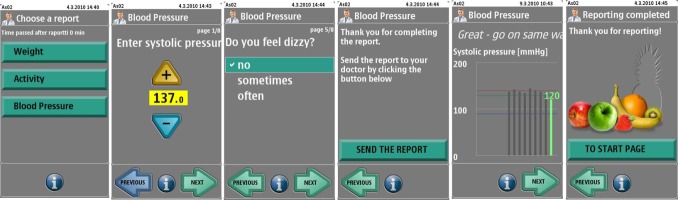
HF patients were eligible whose left ventricular ejection fraction was lower than 35%, NYHA functional class ≥2, and who needed regular follow-up. Patients in the telemonitoring group (n=47) measured their body weight, blood pressure, and pulse and answered symptom-related questions on a weekly basis, reporting their values to the heart failure nurse using a mobile phone app. The heart failure nurse followed the status of patients weekly and if necessary contacted the patient. The primary outcome was the number of HF-related hospital days. Control patients (n=47) received multidisciplinary treatment according to standard practices. Patients' clinical status, use of health care resources, adherence, and user experience from the patients' and the health care professionals' perspective were studied.
Adherence, calculated as a proportion of weekly submitted self-measurements, was close to 90%. No difference was found in the number of HF-related hospital days (incidence rate ratio [IRR]=0.812, P=.351), which was the primary outcome. The intervention group used more health care resources: they paid an increased number of visits to the nurse (IRR=1.73, P<.001), spent more time at the nurse reception (mean difference of 48.7 minutes, P<.001), and there was a greater number of telephone contacts between the nurse and intervention patients (IRR=3.82, P<.001 for nurse-induced contacts and IRR=1.63, P=.049 for patient-induced contacts). There were no statistically significant differences in patients' clinical health status or in their self-care behavior. The technology received excellent feedback from the patient and professional side with a high adherence rate throughout the study.
Home telemonitoring did not reduce the number of patients' HF-related hospital days and did not improve the patients' clinical condition. Patients in the telemonitoring group contacted the Cardiology Outpatient Clinic more frequently, and on this way increased the use of health care resources.
Clinicaltrials.gov NCT01759368; http://clinicaltrials.gov/show/NCT01759368 (Archived by WebCite at http://www.webcitation.org/6UFxiCk8Z).

心力衰竭(HF)患者经常反复住院,给社会带来沉重的经济负担。通过更好地遵守自我护理可以大幅减少住院次数。家庭远程监测有可能提高患者对自我护理的依从性,尽管结果仍存在矛盾。
进行一项随机对照试验,以研究通过远程监测促进的心力衰竭患者多学科护理是否会减少与HF相关的住院次数。
入选的HF患者左心室射血分数低于35%,纽约心脏协会(NYHA)功能分级≥2级,且需要定期随访。远程监测组(n = 47)的患者每周测量体重、血压和脉搏,并回答与症状相关的问题,使用手机应用程序将测量值报告给心力衰竭护士。心力衰竭护士每周跟踪患者状况,必要时与患者联系。主要结局是与HF相关的住院天数。对照组患者(n = 47)按照标准做法接受多学科治疗。从患者和医疗保健专业人员的角度研究了患者的临床状况、医疗保健资源的使用、依从性和用户体验。
以每周提交的自我测量比例计算的依从性接近90%。作为主要结局的与HF相关的住院天数没有差异(发病率比[IRR]=0.812,P = 0.351)。干预组使用了更多的医疗保健资源:他们去看护士的次数增加(IRR = 1.73,P < 0.001),在护士接待处花费的时间更多(平均差异为48.7分钟,P < 0.001),护士与干预组患者之间的电话联系次数更多(护士发起的联系IRR = 3.82,P < 0.001;患者发起的联系IRR = 1.63,P = 0.049)。患者的临床健康状况或自我护理行为没有统计学上的显著差异。在整个研究过程中,该技术从患者和专业人员方面都获得了极好的反馈,依从率很高。
家庭远程监测并未减少患者与HF相关的住院天数,也未改善患者的临床状况。远程监测组的患者更频繁地联系心脏病门诊,从而增加了医疗保健资源的使用。
Clinicaltrials.gov NCT01759368;http://clinicaltrials.gov/show/NCT01759368(由WebCite存档于http://www.webcitation.org/6UFxiCk8Z)