Snyder Michelle, Arunachalam Saravanan, Isakov Vlad, Talgo Kevin, Naess Brian, Valencia Alejandro, Omary Mohammad, Davis Neil, Cook Rich, Hanna Adel
Institute for the Environment, University of North Carolina at Chapel Hill, 100 Europa Drive, Suite 490, Chapel Hill, NC 27517, USA.
National Exposure Research Laboratory, U.S. Environmental Protection Agency, 109 T.W. Alexander Drive, Research Triangle Park, NC 27711, USA.
Int J Environ Res Public Health. 2014 Dec 9;11(12):12739-66. doi: 10.3390/ijerph111212739. Print 2014 Dec.
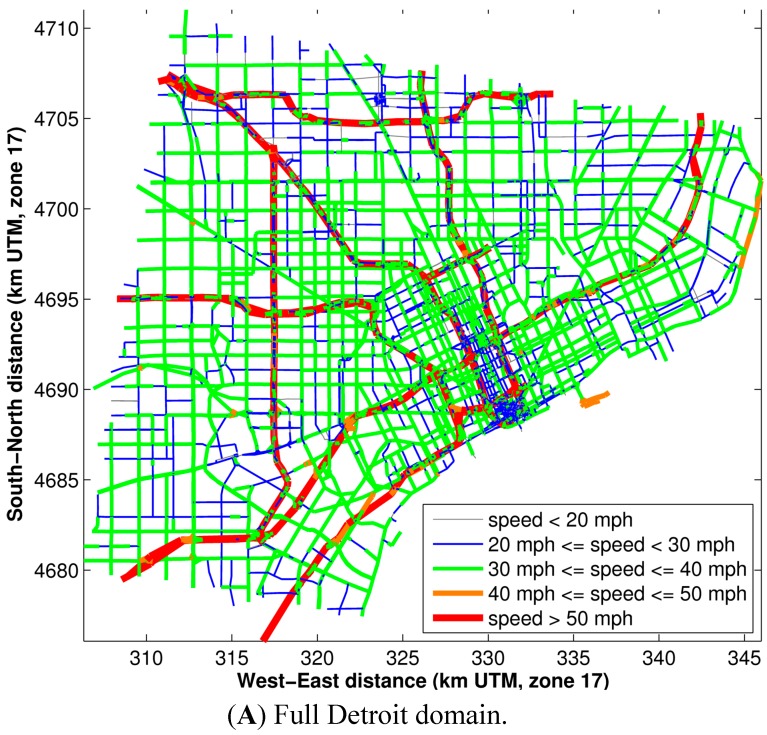
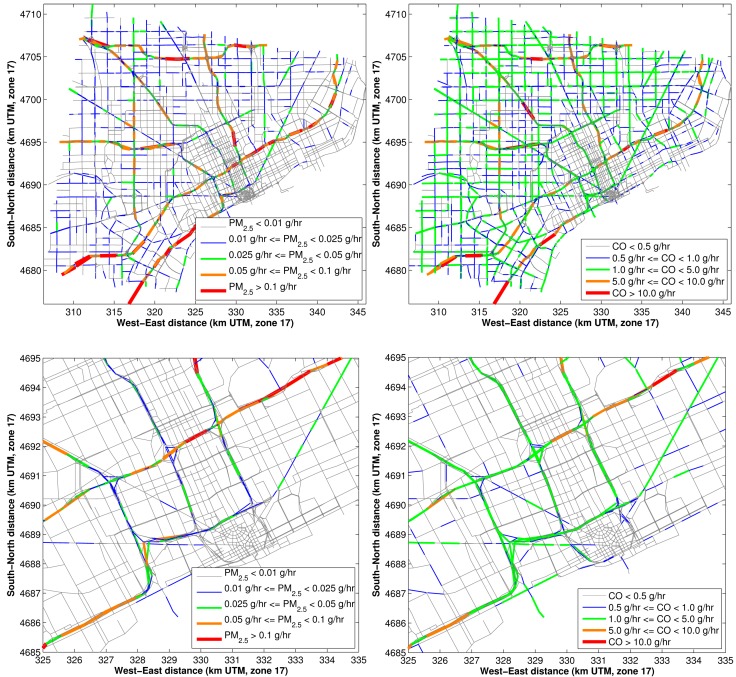
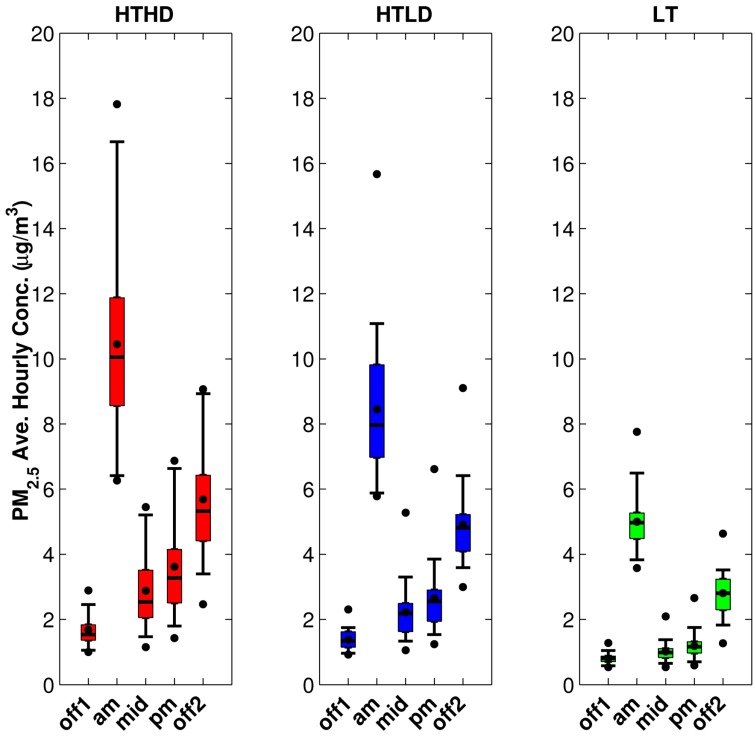
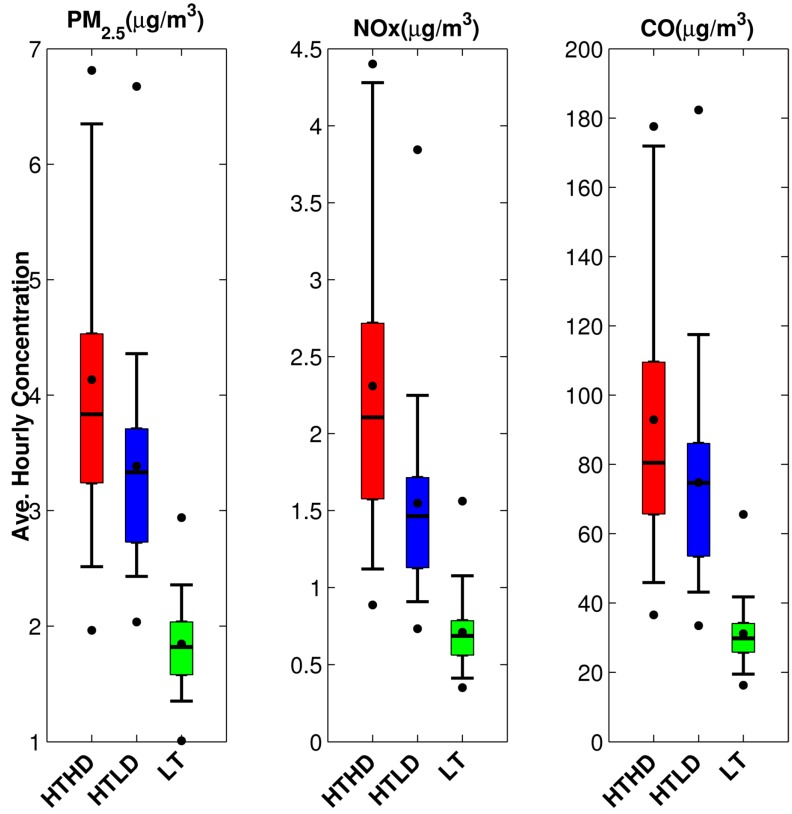
This work describes a methodology for modeling the impact of traffic-generated air pollutants in an urban area. This methodology presented here utilizes road network geometry, traffic volume, temporal allocation factors, fleet mixes, and emission factors to provide critical modeling inputs. These inputs, assembled from a variety of sources, are combined with meteorological inputs to generate link-based emissions for use in dispersion modeling to estimate pollutant concentration levels due to traffic. A case study implementing this methodology for a large health study is presented, including a sensitivity analysis of the modeling results reinforcing the importance of model inputs and identify those having greater relative impact, such as fleet mix. In addition, an example use of local measurements of fleet activity to supplement model inputs is described, and its impacts to the model outputs are discussed. We conclude that with detailed model inputs supported by local traffic measurements and meteorology, it is possible to capture the spatial and temporal patterns needed to accurately estimate exposure from traffic-related pollutants.
这项工作描述了一种对城市地区交通产生的空气污染物影响进行建模的方法。此处介绍的这种方法利用道路网络几何形状、交通流量、时间分配因子、车队组合和排放因子来提供关键的建模输入。这些从各种来源收集的输入与气象输入相结合,以生成基于路段的排放,用于扩散建模,以估计交通产生的污染物浓度水平。本文介绍了一个将该方法应用于大型健康研究的案例研究,包括对建模结果的敏感性分析,强化了模型输入的重要性,并确定了那些具有更大相对影响的因素,如车队组合。此外,还描述了一个使用车队活动的本地测量值来补充模型输入的示例,并讨论了其对模型输出的影响。我们得出结论,在本地交通测量和气象数据支持的详细模型输入的情况下,有可能捕捉到准确估计与交通相关污染物暴露所需的空间和时间模式。