Angelova Magdalena, Ferris MaryBeth, Swan Kenneth F, McFerrin Harris E, Pridjian Gabriella, Morris Cindy A, Sullivan Deborah E
Department of Microbiology and Immunology, Tulane University School of Medicine, 1430 Tulane Avenue, New Orleans, LA, USA.
Department of Obstetrics and Gynecology, Tulane University School of Medicine, 1430 Tulane Avenue, New Orleans, LA, USA.
Virol J. 2014 Dec 17;11:218. doi: 10.1186/s12985-014-0218-8.
KSHV is a tumorigenic γ-herpesvirus that has been identified as the etiologic agent of Kaposi's sarcoma (KS), a multifocal highly vascularized neoplasm that is the most common malignancy associated with acquired immunodeficiency syndrome (AIDS). The virus encodes a constitutively active chemokine receptor homologue, vGPCR that possesses potent angiogenic and tumorigenic properties, and is critical for KSHV pathobiology. To date, a number of signaling pathways have been identified as key in mediating vGPCR oncogenic potential.
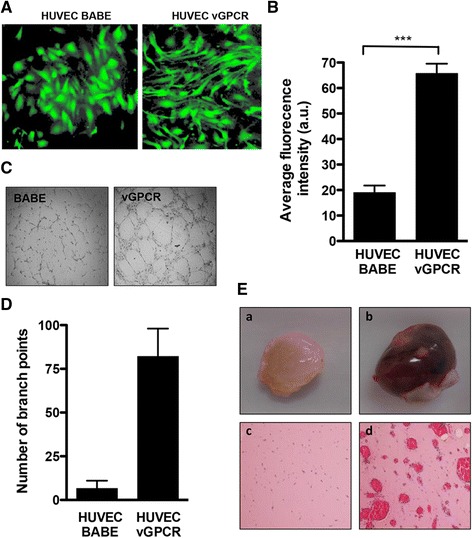
In this study, we identify a novel pathway, the Wnt/β-catenin pathway, which is dysregulated by vGPCR expression in endothelial cells. Expression of vGPCR in endothelial cells enhances the nuclear accumulation of β-catenin, that correlates with an increase in β-catenin transcriptional activity. Activation of β-catenin signaling by vGPCR is dependent on the PI3K/Akt pathway, as treatment of vGPCR-expressing cells with a pharmacological inhibitor of PI3K, leads to a decreased activation of a β-catenin-driven reporter, a significant decrease in expression of β-catenin target genes, and reduced endothelial tube formation.
Given the critical role of Wnt/β-catenin signaling in angiogenesis and tumorigenesis, the findings from this study suggest a novel mechanism in KSHV-induced malignancies.
卡波西肉瘤相关疱疹病毒(KSHV)是一种致瘤性γ疱疹病毒,已被确定为卡波西肉瘤(KS)的病原体,卡波西肉瘤是一种多灶性高度血管化的肿瘤,是与获得性免疫缺陷综合征(AIDS)相关的最常见恶性肿瘤。该病毒编码一种组成型活性趋化因子受体同源物vGPCR,其具有强大的血管生成和致瘤特性,对KSHV病理生物学至关重要。迄今为止,已确定许多信号通路是介导vGPCR致癌潜力的关键通路。
在本研究中,我们确定了一条新的通路,即Wnt/β-连环蛋白通路,该通路在内皮细胞中因vGPCR表达而失调。vGPCR在内皮细胞中的表达增强了β-连环蛋白的核积累,这与β-连环蛋白转录活性的增加相关。vGPCR对β-连环蛋白信号的激活依赖于PI3K/Akt通路,因为用PI3K的药理抑制剂处理表达vGPCR的细胞会导致β-连环蛋白驱动的报告基因的激活减少、β-连环蛋白靶基因的表达显著降低以及内皮管形成减少。
鉴于Wnt/β-连环蛋白信号在血管生成和肿瘤发生中的关键作用,本研究结果提示了KSHV诱导恶性肿瘤的一种新机制。