Department of Neurosurgery, The Second Affiliated Hospital, Chongqing Medical University, Chongqing, P. R. China.
Department of Gastroenterology, The Second Affiliated Hospital, Chongqing Medical University, Chongqing, P. R. China.
Cancer Commun (Lond). 2024 Oct;44(10):1130-1167. doi: 10.1002/cac2.12597. Epub 2024 Aug 1.
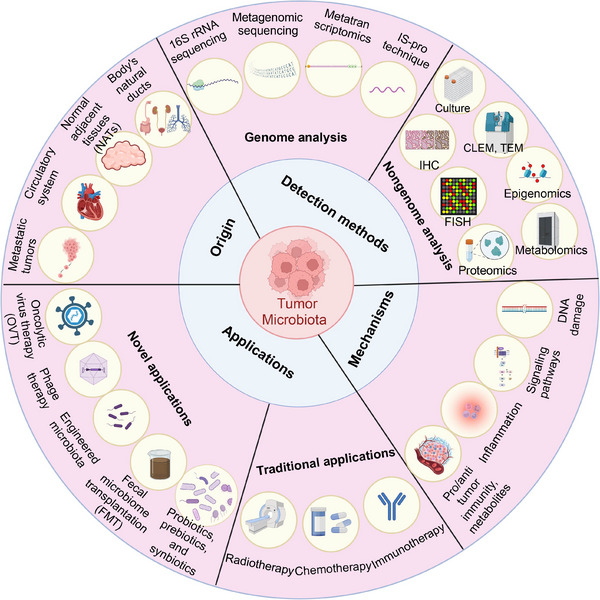
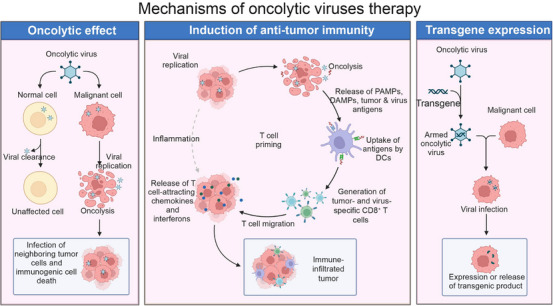
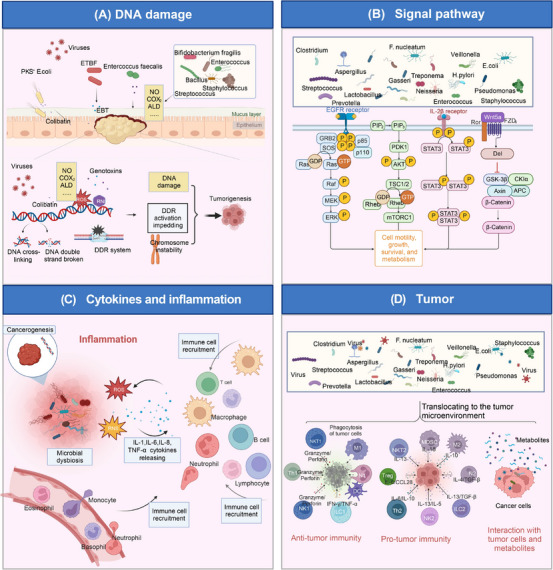
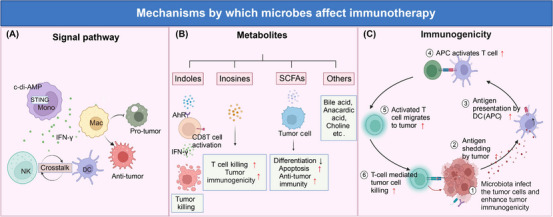
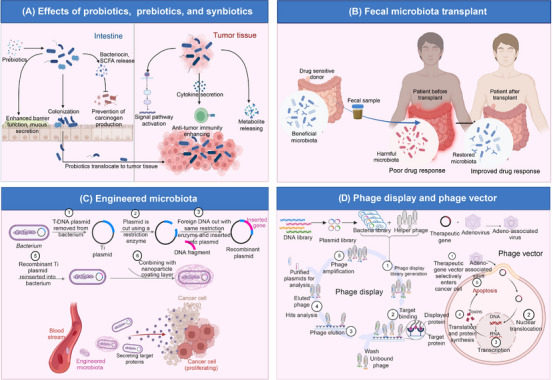
The intratumoral microbiome (TM) refers to the microorganisms in the tumor tissues, including bacteria, fungi, viruses, and so on, and is distinct from the gut microbiome and circulating microbiota. TM is strongly associated with tumorigenesis, progression, metastasis, and response to therapy. This paper highlights the current status of TM. Tract sources, adjacent normal tissue, circulatory system, and concomitant tumor co-metastasis are the main origin of TM. The advanced techniques in TM analysis are comprehensively summarized. Besides, TM is involved in tumor progression through several mechanisms, including DNA damage, activation of oncogenic signaling pathways (phosphoinositide 3-kinase [PI3K], signal transducer and activator of transcription [STAT], WNT/β-catenin, and extracellular regulated protein kinases [ERK]), influence of cytokines and induce inflammatory responses, and interaction with the tumor microenvironment (anti-tumor immunity, pro-tumor immunity, and microbial-derived metabolites). Moreover, promising directions of TM in tumor therapy include immunotherapy, chemotherapy, radiotherapy, the application of probiotics/prebiotics/synbiotics, fecal microbiome transplantation, engineered microbiota, phage therapy, and oncolytic virus therapy. The inherent challenges of clinical application are also summarized. This review provides a comprehensive landscape for analyzing TM, especially the TM-related mechanisms and TM-based treatment in cancer.
肿瘤内微生物组(TM)是指肿瘤组织中的微生物,包括细菌、真菌、病毒等,与肠道微生物组和循环微生物群不同。TM 与肿瘤的发生、进展、转移和对治疗的反应密切相关。本文重点介绍了 TM 的现状。TM 的来源主要包括病灶来源、相邻正常组织、循环系统和伴随肿瘤转移。全面总结了 TM 分析的先进技术。此外,TM 通过多种机制参与肿瘤进展,包括 DNA 损伤、致癌信号通路(磷脂酰肌醇 3-激酶[PI3K]、信号转导和转录激活因子[STAT]、WNT/β-连环蛋白和细胞外调节蛋白激酶[ERK])的激活、细胞因子的影响和诱导炎症反应,以及与肿瘤微环境的相互作用(抗肿瘤免疫、促肿瘤免疫和微生物衍生代谢物)。此外,TM 在肿瘤治疗中的有前途的方向包括免疫疗法、化学疗法、放射疗法、益生菌/益生元/合生菌的应用、粪便微生物群移植、工程化微生物群、噬菌体治疗和溶瘤病毒治疗。还总结了临床应用的固有挑战。这篇综述为分析 TM 提供了一个全面的视角,特别是 TM 相关机制和基于 TM 的癌症治疗。