Cimino Ernesto, Linari Silvia, Malerba Mara, Halimeh Susan, Biondo Francesca, Westfeld Martina
Dipartimento Medicina Clinica e Sperimentale, Universita' degli Studi di Napoli Federico II, Naples, Italy.
Agenzia per l' Emofilia, AOU Careggi di Firenze, Florence, Italy.
Patient Prefer Adherence. 2014 Dec 12;8:1713-20. doi: 10.2147/PPA.S64709. eCollection 2014.
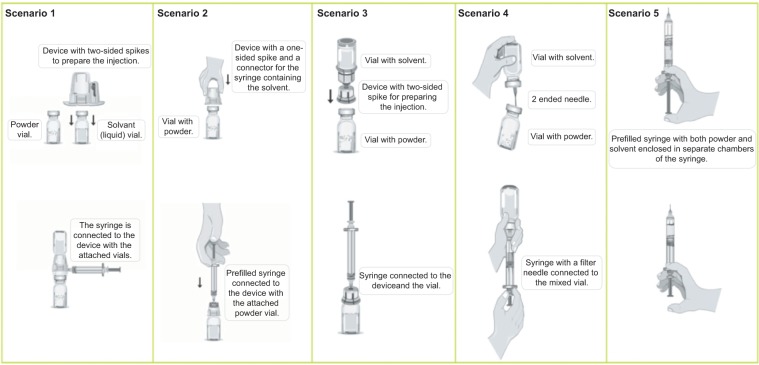
Hemophilia A treatment involves replacing the deficient coagulation factor VIII. This process may involve multiple steps that might create a barrier to adherence. A new dual-chamber syringe (DCS; FuseNGo(®)) was recently introduced with the aim of simplifying reconstitution.
This study aimed to identify factors associated with adult patients' preferences for different coagulation factor VIII reconstitution systems and to test ease of use and patient preference for the DCS.
A cross-sectional survey of adults with hemophilia A in five European countries was conducted; a subset of subjects also participated in a practical testing session of the DCS.
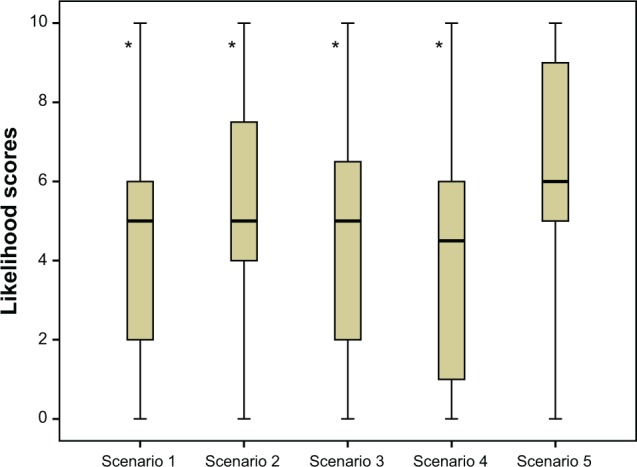
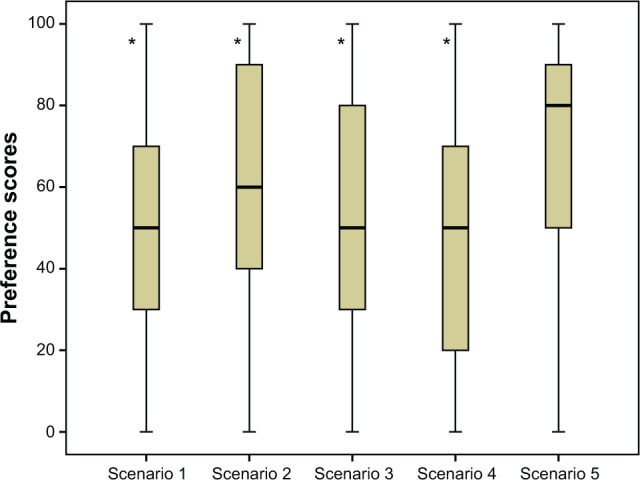
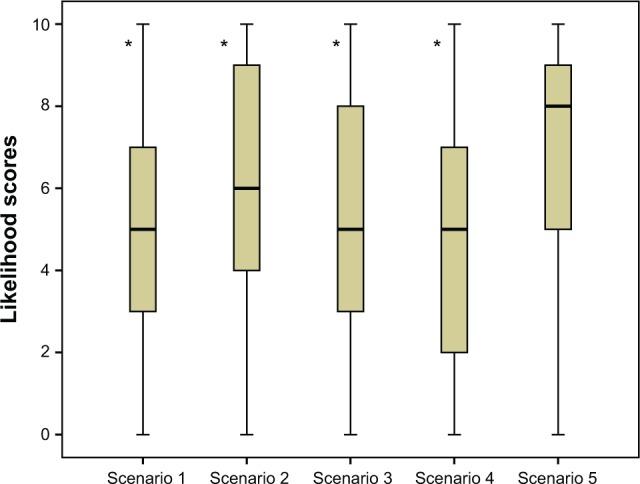
Among the 299 survey participants, the device scenario requiring the least equipment and reconstitution steps (the DCS) received a median preference rating of 71 out of 100 (0 being "the least desirable" and 100 "the most desirable" rating). This was significantly higher than the other scenarios (the next highest achieved a median of 50 points; P<0.001). Participants would be more likely to use this device prophylactically (P<0.001). Among the 98 participants who tested the DCS, 57% preferred this device over their current device, 26% preferred their current device, and 17% had no preference. The DCS was rated as easier to use than current treatment devices (median score 9/10 versus 7/10 for current treatment, P=0.001).
The survey indicates that the prefilled DCS, FuseNGo(®), requiring the least equipment and fewest reconstitution steps, was preferred by patients and was the device most likely to be used prophylactically; the practical device testing supports these results.
A型血友病的治疗涉及补充缺乏的凝血因子VIII。这一过程可能涉及多个步骤,可能会成为坚持治疗的障碍。最近推出了一种新型双腔注射器(DCS;FuseNGo(®)),旨在简化复溶过程。
本研究旨在确定与成年患者对不同凝血因子VIII复溶系统偏好相关的因素,并测试DCS的易用性和患者偏好。
对五个欧洲国家的成年A型血友病患者进行了横断面调查;部分受试者还参与了DCS的实际测试环节。
在299名调查参与者中,所需设备和复溶步骤最少的设备方案(DCS)获得的偏好中位数评分为71分(满分100分,0分为“最不理想”,100分为“最理想”评分)。这显著高于其他方案(次高的中位数为50分;P<0.001)。参与者更有可能预防性使用该设备(P<0.001)。在98名测试DCS的参与者中,57%的人更喜欢该设备而非他们当前使用的设备,26%的人更喜欢他们当前的设备,17%的人无偏好。DCS被评为比当前治疗设备更易于使用(中位数评分9/10,而当前治疗为7/10,P=0.001)。
调查表明,预填充的DCS(FuseNGo(®))所需设备最少且复溶步骤最少,受到患者青睐,是最有可能用于预防性治疗的设备;实际设备测试支持了这些结果。