Ding Jun, Li Xiaoman, Hu Haiyan
Department of Electrical Engineering and Computer Science and Burnett School of Biomedical Science, College of Medicine, University of Central Florida, Orlando, FL 32816, USA.
Bioinformatics. 2015 May 1;31(9):1366-74. doi: 10.1093/bioinformatics/btu833. Epub 2014 Dec 18.
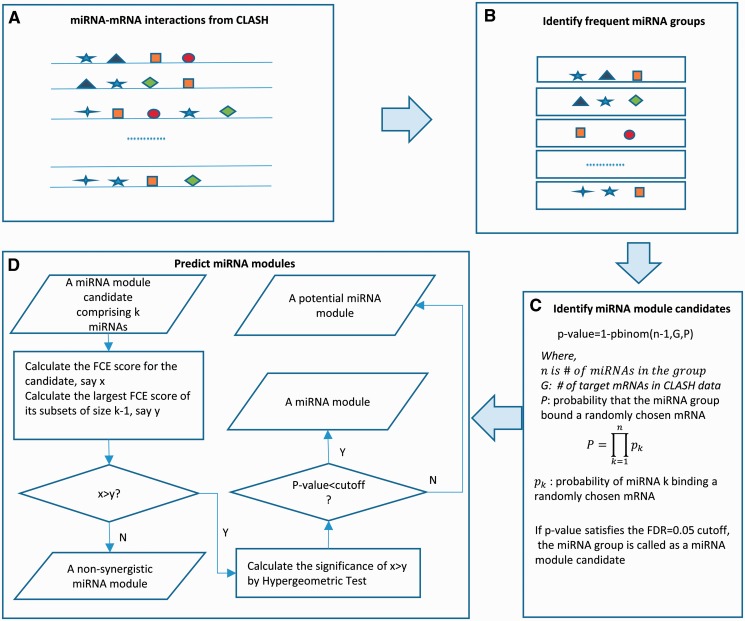
MicroRNAs (miRNAs) play critical roles in gene regulation. Although it is well known that multiple miRNAs may work as miRNA modules to synergistically regulate common target mRNAs, the understanding of miRNA modules is still in its infancy.
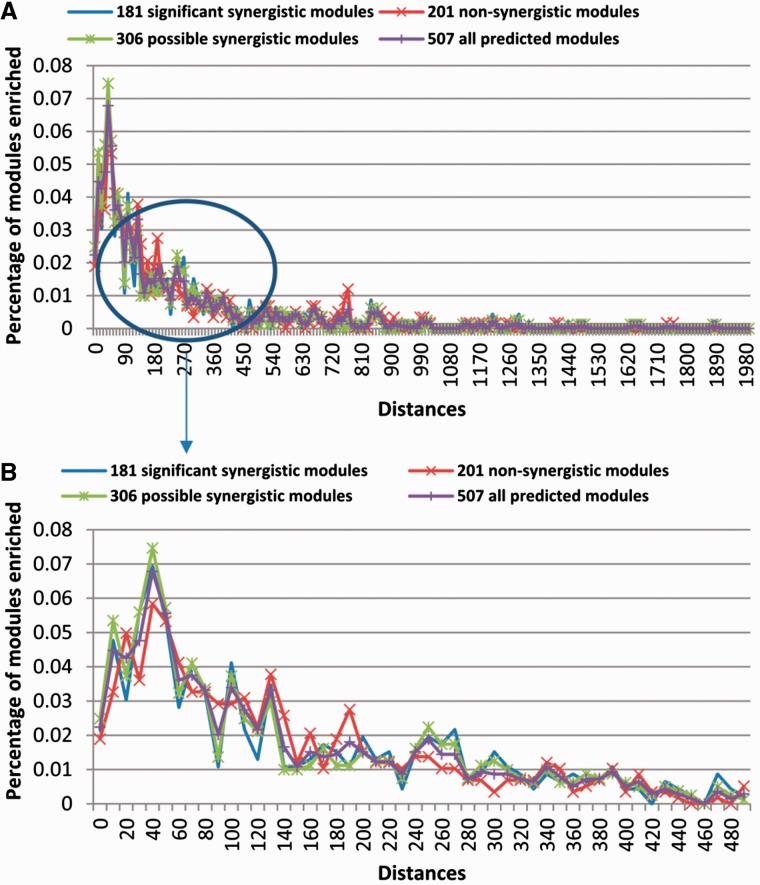
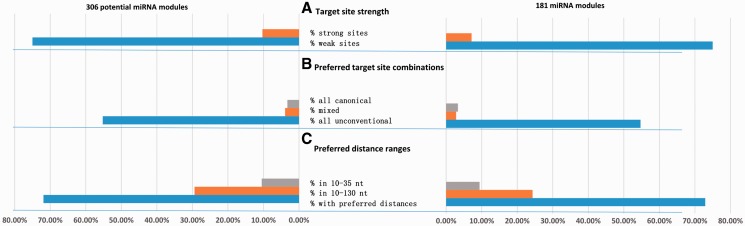
We employed the recently generated high throughput experimental data to study miRNA modules. We predicted 181 miRNA modules and 306 potential miRNA modules. We observed that the target sites of these predicted modules were in general weaker compared with those not bound by miRNA modules. We also discovered that miRNAs in predicted modules preferred to bind unconventional target sites rather than canonical sites. Surprisingly, contrary to a previous study, we found that most adjacent miRNA target sites from the same miRNA modules were not within the range of 10-130 nucleotides. Interestingly, the distance of target sites bound by miRNAs in the same modules was shorter when miRNA modules bound unconventional instead of canonical sites. Our study shed new light on miRNA binding and miRNA target sites, which will likely advance our understanding of miRNA regulation.
The software miRModule can be freely downloaded at http://hulab.ucf.edu/research/projects/miRNA/miRModule.
Supplementary data are available at Bioinformatics online.
微小RNA(miRNA)在基因调控中发挥着关键作用。尽管众所周知多个miRNA可能作为miRNA模块协同调控共同的靶标mRNA,但对miRNA模块的理解仍处于起步阶段。
我们利用最近生成的高通量实验数据来研究miRNA模块。我们预测了181个miRNA模块和306个潜在的miRNA模块。我们观察到,与未被miRNA模块结合的靶位点相比,这些预测模块的靶位点总体上较弱。我们还发现,预测模块中的miRNA更倾向于结合非常规靶位点而非典型位点。令人惊讶的是,与之前的一项研究相反,我们发现来自同一miRNA模块的大多数相邻miRNA靶位点不在10 - 130个核苷酸的范围内。有趣的是,当miRNA模块结合非常规位点而非典型位点时,同一模块中miRNA结合的靶位点之间的距离更短。我们的研究为miRNA结合和miRNA靶位点提供了新的见解,这可能会增进我们对miRNA调控的理解。
软件miRModule可从http://hulab.ucf.edu/research/projects/miRNA/miRModule免费下载。
补充数据可在《生物信息学》在线获取。