Lipkovich Ilya A, Choy Ernest H, Van Wambeke Peter, Deberdt Walter, Sagman Doron
Eli Lilly and Company, 3650 Danforth Avenue, Toronto, Ontario M1N 2E8, Canada.
BMC Musculoskelet Disord. 2014 Dec 23;15:450. doi: 10.1186/1471-2474-15-450.
To identify distinct groups of patients with fibromyalgia (FM) with respect to multiple outcome measures.
Data from 631 duloxetine-treated women in 4 randomized, placebo-controlled trials were included in a cluster analysis based on outcomes after up to 12 weeks of treatment. Corresponding classification rules were constructed using a classification tree method. Probabilities for transitioning from baseline to Week 12 category were estimated for placebo and duloxetine patients (Ntotal = 1188) using logistic regression.
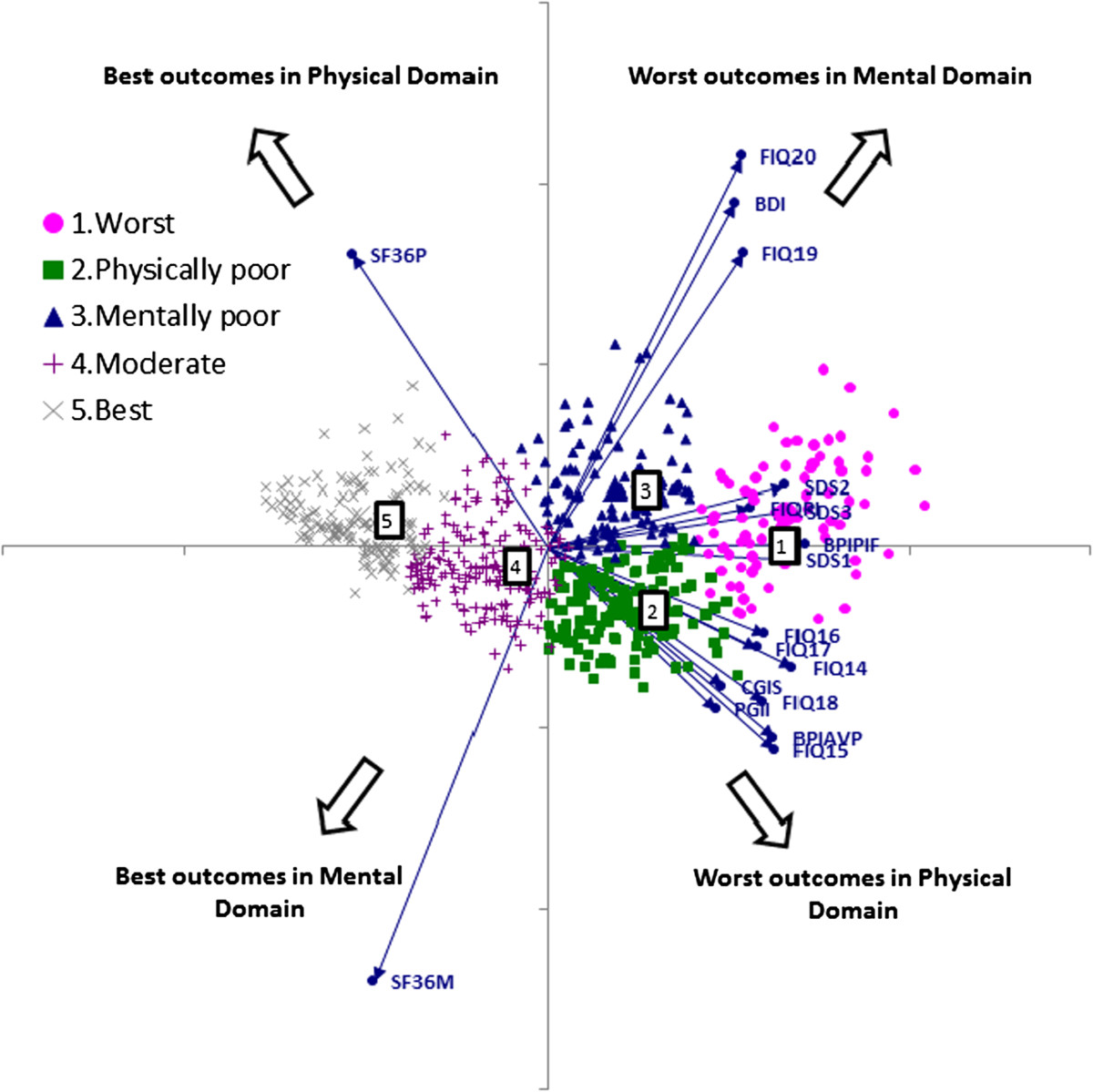
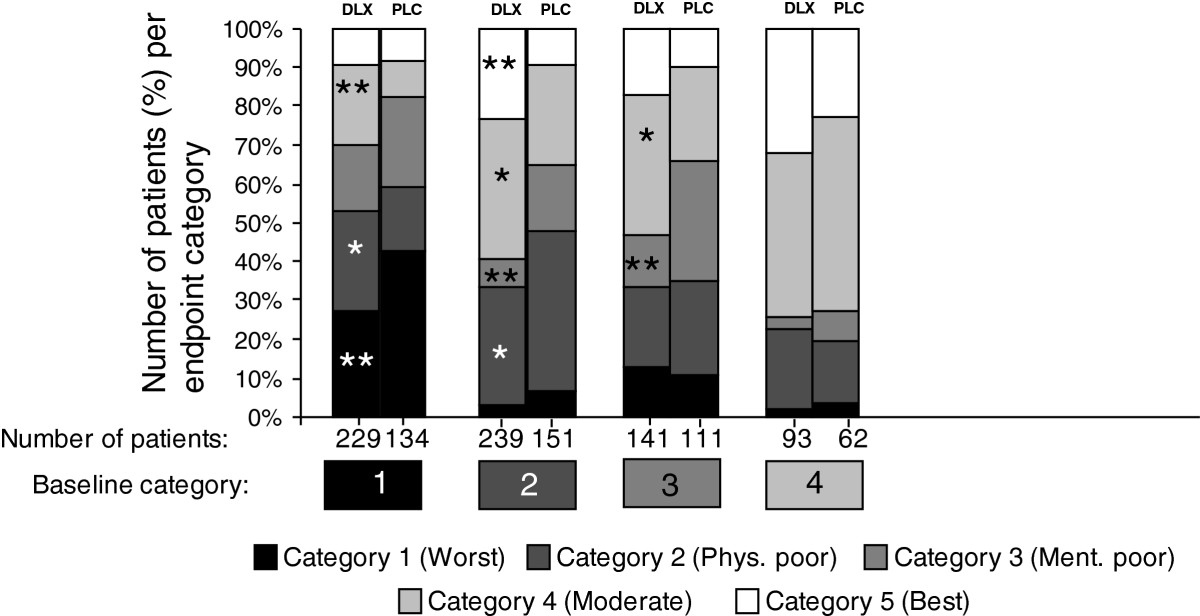
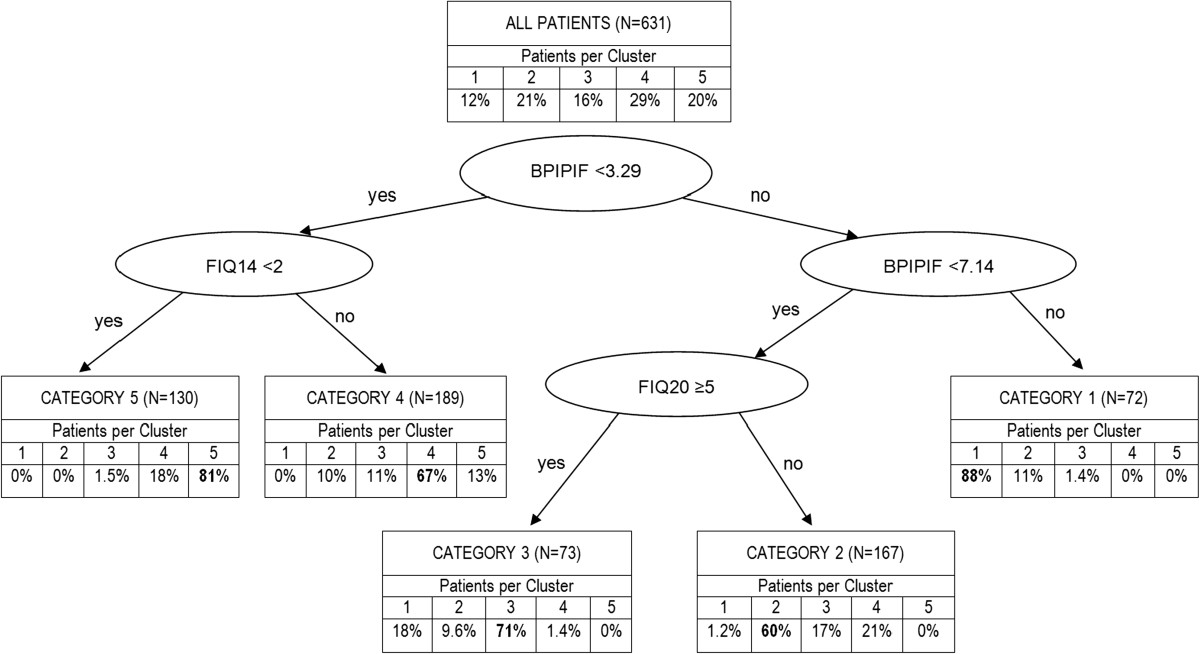
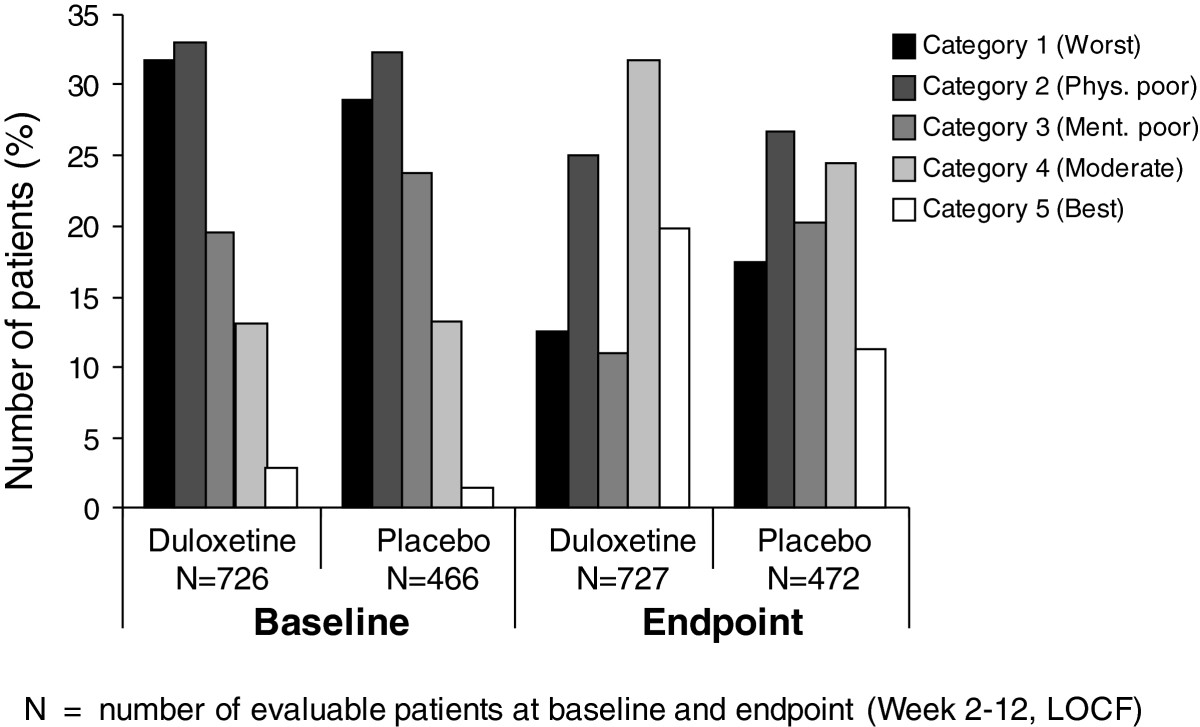
Five clusters were identified, from "worst" (high pain levels and severe mental/physical impairment) to "best" (low pain levels and nearly normal mental/physical function). For patients with moderate overall severity, mental and physical symptoms were less correlated, resulting in 2 distinct clusters based on these 2 symptom domains. Three key variables with threshold values were identified for classification of patients: Brief Pain Inventory (BPI) pain interference overall scores of <3.29 and <7.14, respectively, a Fibromyalgia Impact Questionnaire (FIQ) interference with work score of <2, and an FIQ depression score of ≥5. Patient characteristics and frequencies per baseline category were similar between treatments; >80% of patients were in the 3 worst categories. Duloxetine patients were significantly more likely to improve after 12 weeks than placebo patients. A sustained effect was seen with continued duloxetine treatment.
FM patients are heterogeneous and can be classified into distinct subgroups by simple descriptive rules derived from only 3 variables, which may guide individual patient management. Duloxetine showed higher improvement rates than placebo and had a sustained effect beyond 12 weeks.
根据多种结局指标识别纤维肌痛(FM)患者的不同组别。
来自4项随机、安慰剂对照试验中631名接受度洛西汀治疗的女性的数据,被纳入基于长达12周治疗后的结局进行的聚类分析。使用分类树方法构建相应的分类规则。使用逻辑回归估计安慰剂组和度洛西汀组患者(N总 = 1188)从基线转变为第12周类别的概率。
识别出5个聚类,从“最差”(高疼痛水平和严重精神/身体损伤)到“最佳”(低疼痛水平和近乎正常的精神/身体功能)。对于总体严重程度中等的患者,精神和身体症状的相关性较低,基于这两个症状领域形成了2个不同的聚类。确定了用于患者分类的3个具有阈值的关键变量:简明疼痛问卷(BPI)疼痛干扰总体得分分别<3.29和<7.14,纤维肌痛影响问卷(FIQ)工作干扰得分<2,以及FIQ抑郁得分≥5。各治疗组之间患者特征和每个基线类别的频率相似;超过80%的患者属于3个最差类别。度洛西汀组患者在12周后改善的可能性显著高于安慰剂组患者。持续使用度洛西汀治疗可见持续效果。
FM患者具有异质性,可通过仅从3个变量得出的简单描述性规则分为不同亚组,这可能指导个体患者管理。度洛西汀显示出比安慰剂更高的改善率,且在12周后有持续效果。