Zaydman Mark A, Kasimova Marina A, McFarland Kelli, Beller Zachary, Hou Panpan, Kinser Holly E, Liang Hongwu, Zhang Guohui, Shi Jingyi, Tarek Mounir, Cui Jianmin
Department of Biomedical Engineering, Center for the Investigation of Membrane Excitability Diseases, Washington University in St Louis, St Louis, United States.
Theory, Modeling, and Simulations, UMR 7565, Université de Lorraine, Nancy, France.
Elife. 2014 Dec 23;3:e03606. doi: 10.7554/eLife.03606.
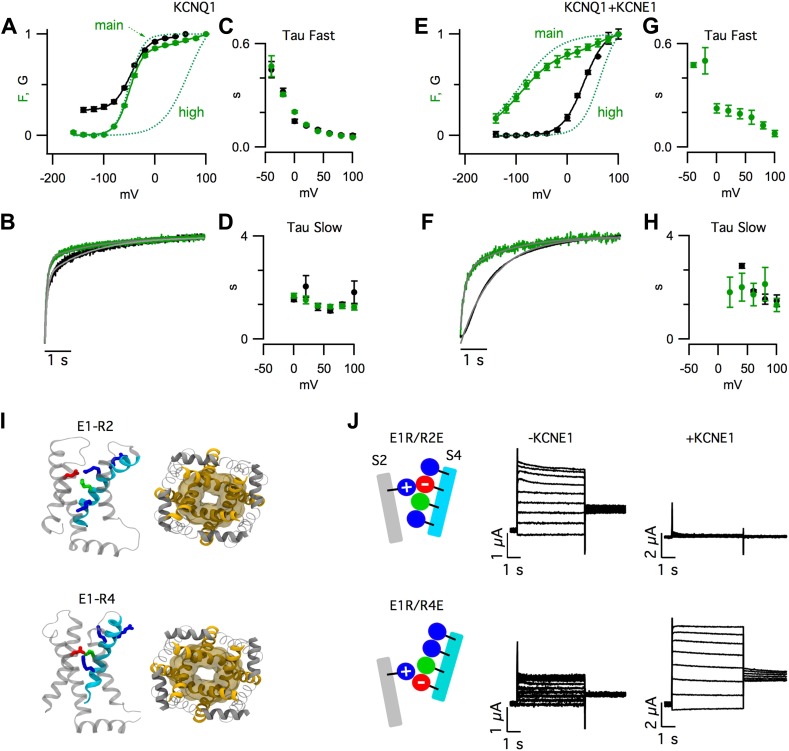
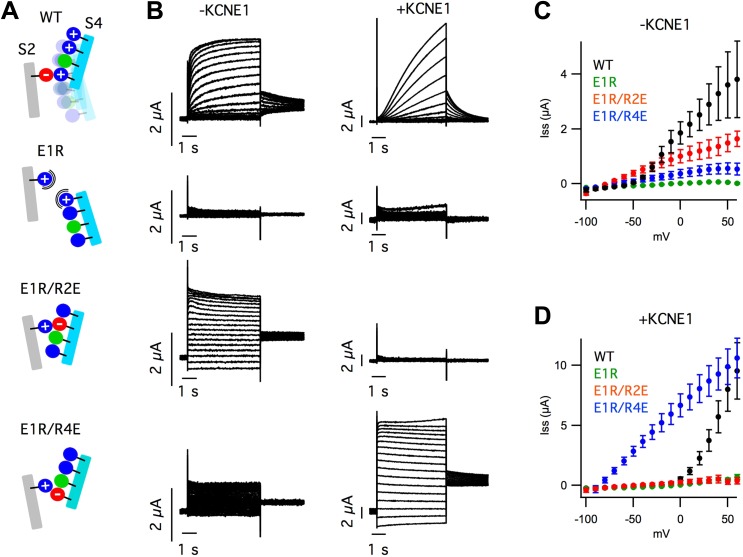
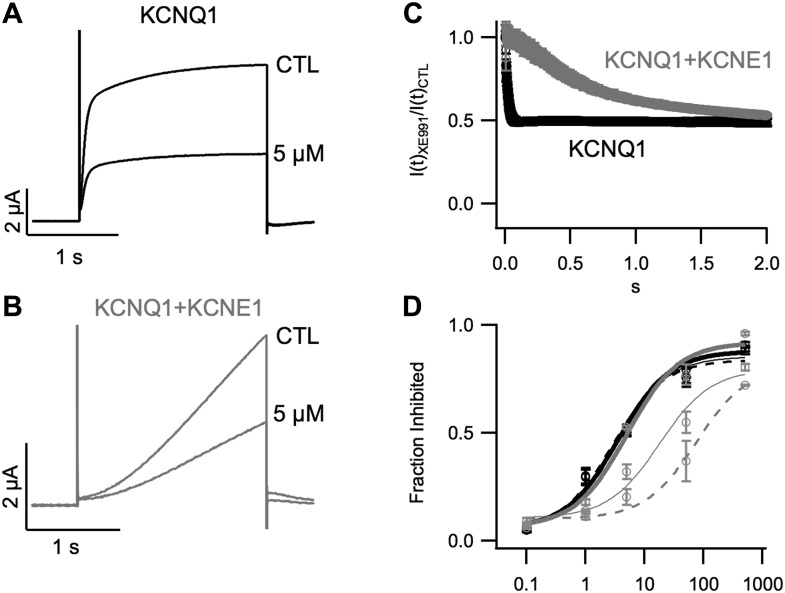
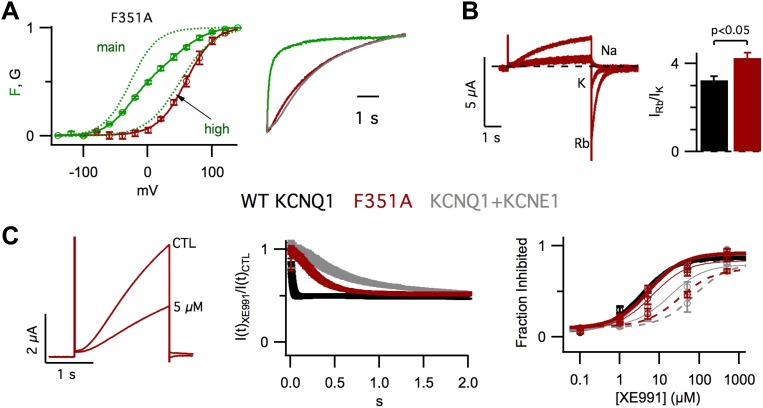
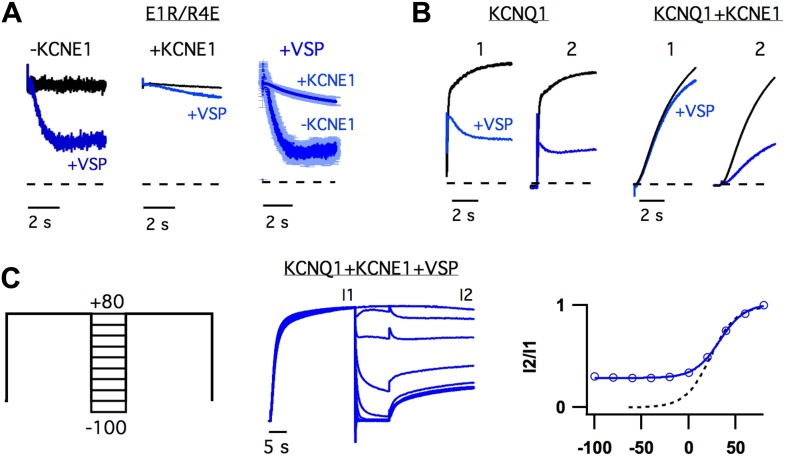
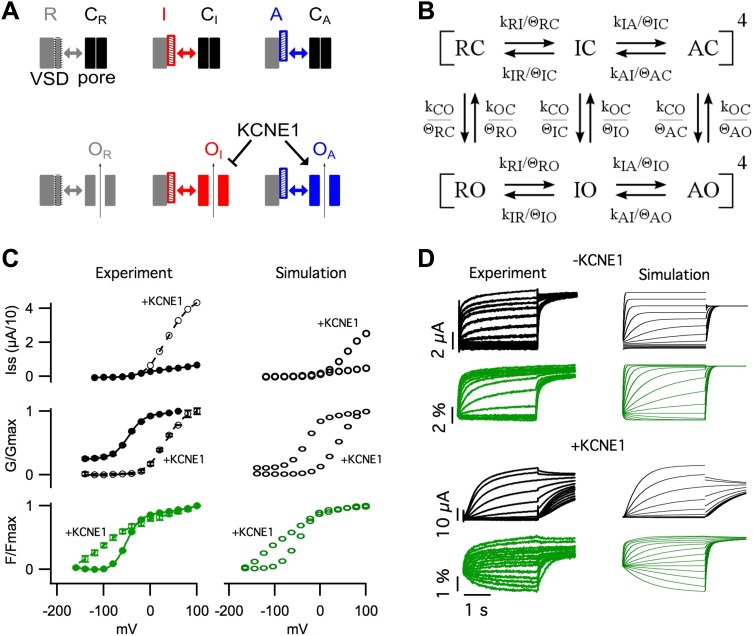
Voltage-gated ion channels generate electrical currents that control muscle contraction, encode neuronal information, and trigger hormonal release. Tissue-specific expression of accessory (β) subunits causes these channels to generate currents with distinct properties. In the heart, KCNQ1 voltage-gated potassium channels coassemble with KCNE1 β-subunits to generate the IKs current (Barhanin et al., 1996; Sanguinetti et al., 1996), an important current for maintenance of stable heart rhythms. KCNE1 significantly modulates the gating, permeation, and pharmacology of KCNQ1 (Wrobel et al., 2012; Sun et al., 2012; Abbott, 2014). These changes are essential for the physiological role of IKs (Silva and Rudy, 2005); however, after 18 years of study, no coherent mechanism explaining how KCNE1 affects KCNQ1 has emerged. Here we provide evidence of such a mechanism, whereby, KCNE1 alters the state-dependent interactions that functionally couple the voltage-sensing domains (VSDs) to the pore.
电压门控离子通道产生的电流可控制肌肉收缩、编码神经元信息并触发激素释放。辅助(β)亚基的组织特异性表达使这些通道产生具有不同特性的电流。在心脏中,KCNQ1电压门控钾通道与KCNE1β亚基共同组装以产生IKs电流(Barhanin等人,1996年;Sanguinetti等人,1996年),这是维持稳定心律的重要电流。KCNE1显著调节KCNQ1的门控、通透性和药理学特性(Wrobel等人,2012年;Sun等人,2012年;Abbott,2014年)。这些变化对于IKs的生理作用至关重要(Silva和Rudy,2005年);然而,经过18年的研究,尚未出现关于KCNE1如何影响KCNQ1的连贯机制。在此,我们提供了这样一种机制的证据,即KCNE1改变了将电压传感结构域(VSDs)与孔功能性耦合的状态依赖性相互作用。