Kavle Justine A, Mehanna Sohair, Saleh Gulsen, Fouad Mervat A, Ramzy Magda, Hamed Doaa, Hassan Mohamed, Khan Ghada, Galloway Rae
PATH, Maternal and Child Health and Nutrition, Washington, District of Columbia, USA.
Maternal and Child Health Integrated Program (MCHIP), Washington, District of Columbia, USA.
Matern Child Nutr. 2015 Jul;11(3):346-70. doi: 10.1111/mcn.12165. Epub 2014 Dec 23.
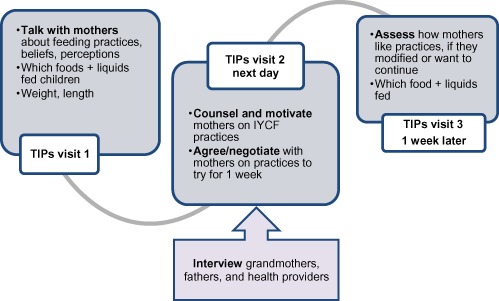
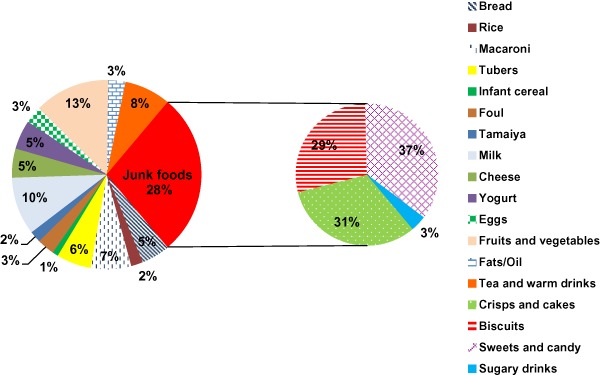
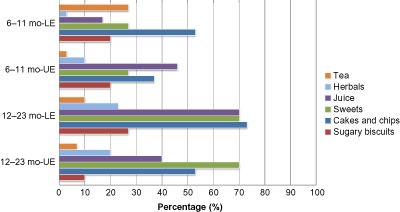
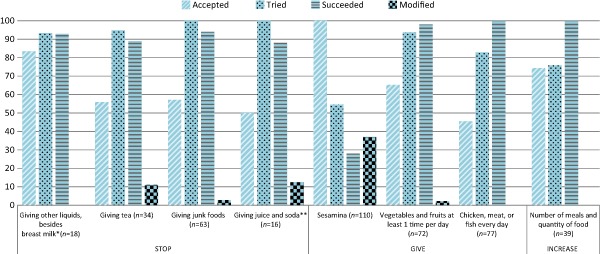
In Egypt, the double burden of malnutrition and rising overweight and obesity in adults mirrors the transition to westernized diets and a growing reliance on energy-dense, low-nutrient foods. This study utilized the trials of improved practices (TIPs) methodology to gain an understanding of the cultural beliefs and perceptions related to feeding practices of infants and young children 0-23 months of age and used this information to work in tandem with 150 mothers to implement feasible solutions to feeding problems in Lower and Upper Egypt. The study triangulated in-depth interviews (IDIs) with mothers participating in TIPs, with IDIs with 40 health providers, 40 fathers and 40 grandmothers to gain an understanding of the influence and importance of the role of other caretakers and health providers in supporting these feeding practices. Study findings reveal high consumption of junk foods among toddlers, increasing in age and peaking at 12-23 months of age. Sponge cakes and sugary biscuits are not perceived as harmful and considered 'ideal' common complementary foods. Junk foods and beverages often compensate for trivial amounts of food given. Mothers are cautious about introducing nutritious foods to young children because of fears of illness and inability to digest food. Although challenges in feeding nutritious foods exist, mothers were able to substitute junk foods with locally available and affordable foods. Future programming should build upon cultural considerations learned in TIPs to address sustainable, meaningful changes in infant and young child feeding to reduce junk foods and increase dietary quality, quantity and frequency.
在埃及,成年人营养不良与超重及肥胖问题日益严重的双重负担,反映出向西方化饮食的转变以及对高能量、低营养食物的依赖不断增加。本研究采用改进实践试验(TIPs)方法,以了解与0至23个月婴幼儿喂养习惯相关的文化信仰和观念,并利用这些信息与150位母亲协同合作,为埃及上下埃及地区的喂养问题实施可行的解决方案。该研究通过对参与TIPs的母亲进行深入访谈(IDI),并与40位医疗服务提供者、40位父亲和40位祖母进行IDI,以了解其他照顾者和医疗服务提供者在支持这些喂养习惯方面的影响和作用的重要性。研究结果显示,幼儿中垃圾食品的消费量很高,且随年龄增长而增加,在12至23个月时达到峰值。海绵蛋糕和含糖饼干不被视为有害食品,而是被认为是“理想的”常见辅食。垃圾食品和饮料常常用来补充少量的食物摄入。由于担心生病和消化不良,母亲们在给幼儿引入营养食品时十分谨慎。尽管在提供营养食品方面存在挑战,但母亲们能够用当地可得且价格实惠的食物替代垃圾食品。未来的项目规划应基于在TIPs中学到的文化考量因素,以实现婴幼儿喂养方面可持续、有意义的改变,减少垃圾食品的摄入,提高饮食质量、数量和频率。