Skulmowski Alexander, Bunge Andreas, Kaspar Kai, Pipa Gordon
E-Learning and New Media, Institute for Media Research, TU Chemnitz Chemnitz, Germany.
Department of Philosophy, University of Nottingham Nottingham, UK.
Front Behav Neurosci. 2014 Dec 16;8:426. doi: 10.3389/fnbeh.2014.00426. eCollection 2014.
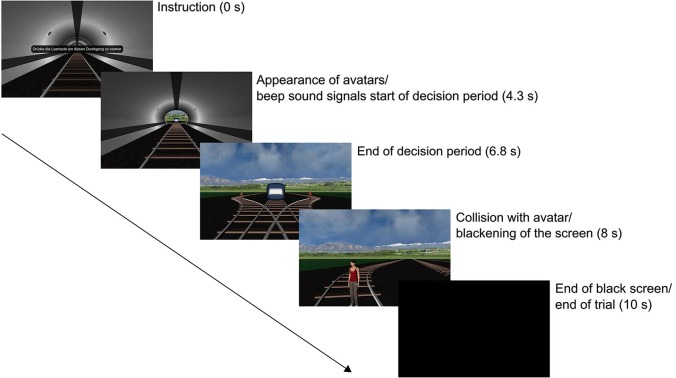
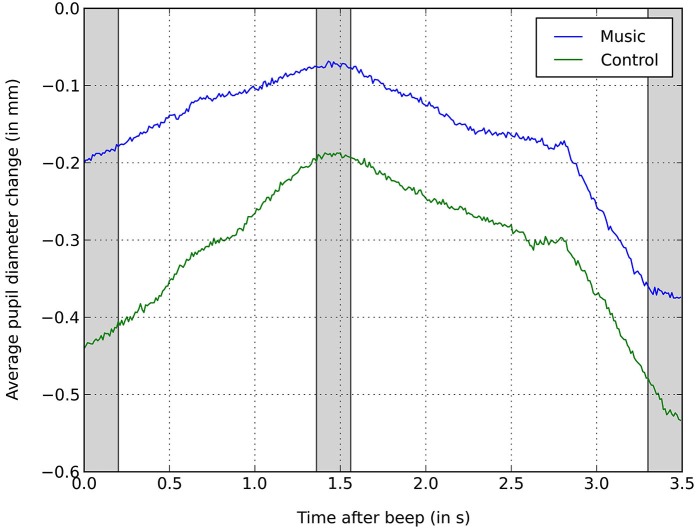
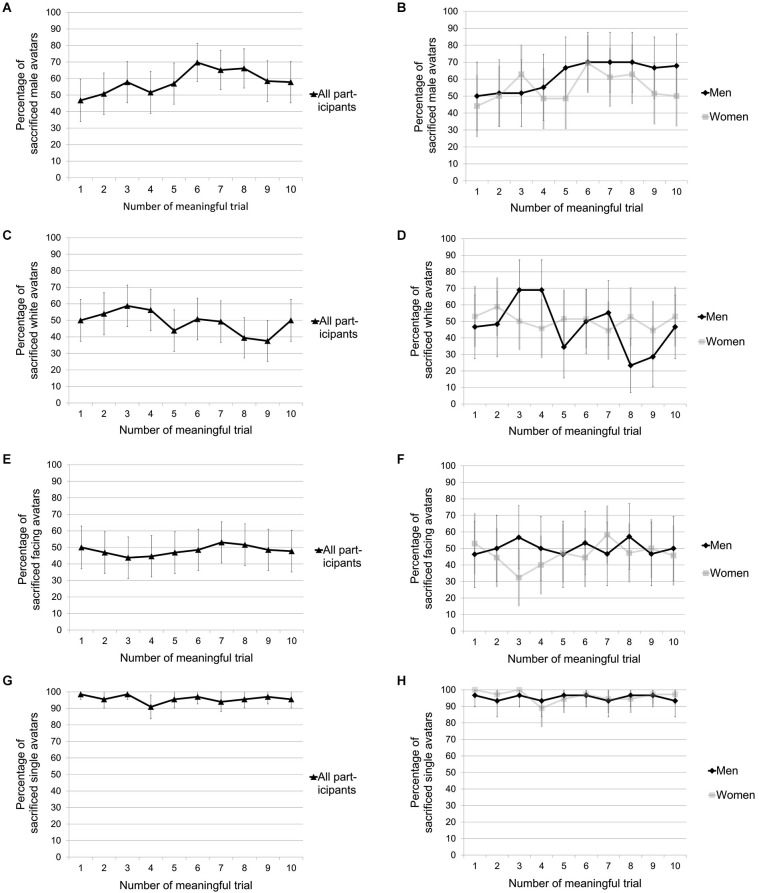
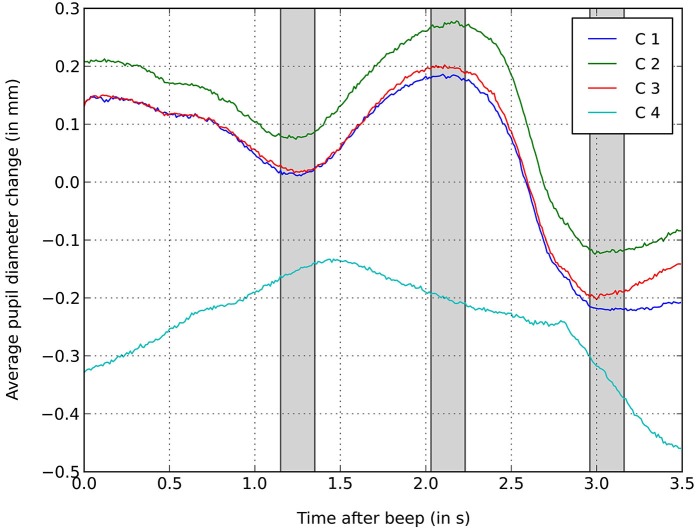
Based on the frameworks of dual-process theories, we examined the interplay between intuitive and controlled cognitive processes related to moral and social judgments. In a virtual reality (VR) setting we performed an experiment investigating the progression from fast, automatic decisions towards more controlled decisions over multiple trials in the context of a sacrificing scenario. We repeatedly exposed participants to a modified ten-to-one version and to three one-to-one versions of the trolley dilemma in VR and varied avatar properties, such as their gender and ethnicity, and their orientation in space. We also investigated the influence of arousing music on decisions. Our experiment replicated the behavioral pattern observed in studies using text versions of the trolley dilemma, thereby validating the use of virtual environments in research on moral judgments. Additionally, we found a general tendency towards sacrificing male individuals which correlated with socially desirable responding. As indicated by differences in response times, the ten-to-one version of the trolley dilemma seems to be faster to decide than decisions requiring comparisons based on specific avatar properties as a result of differing moral content. Building upon research on music-based emotion induction, we used music to induce emotional arousal on a physiological level as measured by pupil diameter. We found a specific temporal signature displaying a peak in arousal around the moment of decision. This signature occurs independently of the overall arousal level. Furthermore, we found context-dependent gaze durations during sacrificing decisions, leading participants to look prolonged at their victim if they had to choose between avatars differing in gender. Our study confirmed that moral decisions can be explained within the framework of dual-process theories and shows that pupillometric measurements are a promising tool for investigating affective responses in dilemma situations.
基于双加工理论框架,我们研究了与道德和社会判断相关的直觉和控制性认知过程之间的相互作用。在虚拟现实(VR)环境中,我们进行了一项实验,研究在牺牲情境下多次试验中从快速、自动决策向更具控制性决策的转变过程。我们让参与者在VR中反复接触修改后的十比一版本以及电车困境的三个一对一版本,并改变虚拟化身的属性,如性别、种族以及它们在空间中的朝向。我们还研究了激昂音乐对决策的影响。我们的实验复制了使用电车困境文本版本的研究中观察到的行为模式,从而验证了虚拟环境在道德判断研究中的应用。此外,我们发现存在牺牲男性个体的总体倾向,这与社会期望反应相关。如反应时间差异所示,由于道德内容不同,电车困境的十比一版本似乎比基于特定虚拟化身属性进行比较的决策更快做出决定。基于对基于音乐的情绪诱导的研究,我们使用音乐在生理层面诱导情绪唤起,通过瞳孔直径来衡量。我们发现了一种特定的时间特征,在决策时刻左右唤起水平达到峰值。这种特征独立于总体唤起水平出现。此外,我们发现在牺牲决策过程中存在情境依赖的注视持续时间,当参与者必须在不同性别的虚拟化身之间做出选择时,他们会更长时间地注视受害者。我们的研究证实,道德决策可以在双加工理论框架内得到解释,并表明瞳孔测量是研究困境情境中情感反应的一种有前景的工具。