Santos António M, Lopes Teresa, Oleastro Mónica, Gato Inês Vale, Floch Pauline, Benejat Lucie, Chaves Paula, Pereira Teresa, Seixas Elsa, Machado Jorge, Guerreiro António S
Serviço de Medicina 4-Hospital de Santa Marta/Centro Hospitalar de Lisboa Central, Rua de Santa Marta, 50, 1169-024 Lisboa, Portugal.
CEDOC-Nova Medical School-Faculdade de Ciências Médicas Campo Mártires da Pátria 130, 1169-056 Lisboa, Portugal.
Nutrients. 2015 Jan 6;7(1):306-20. doi: 10.3390/nu7010306.
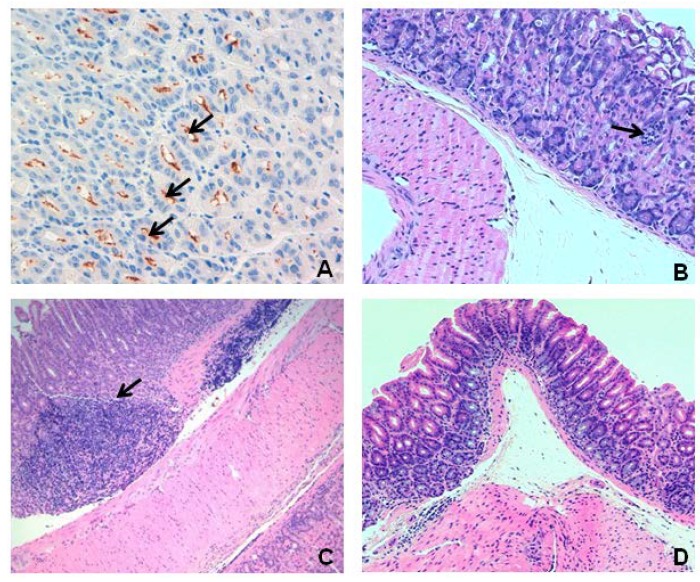
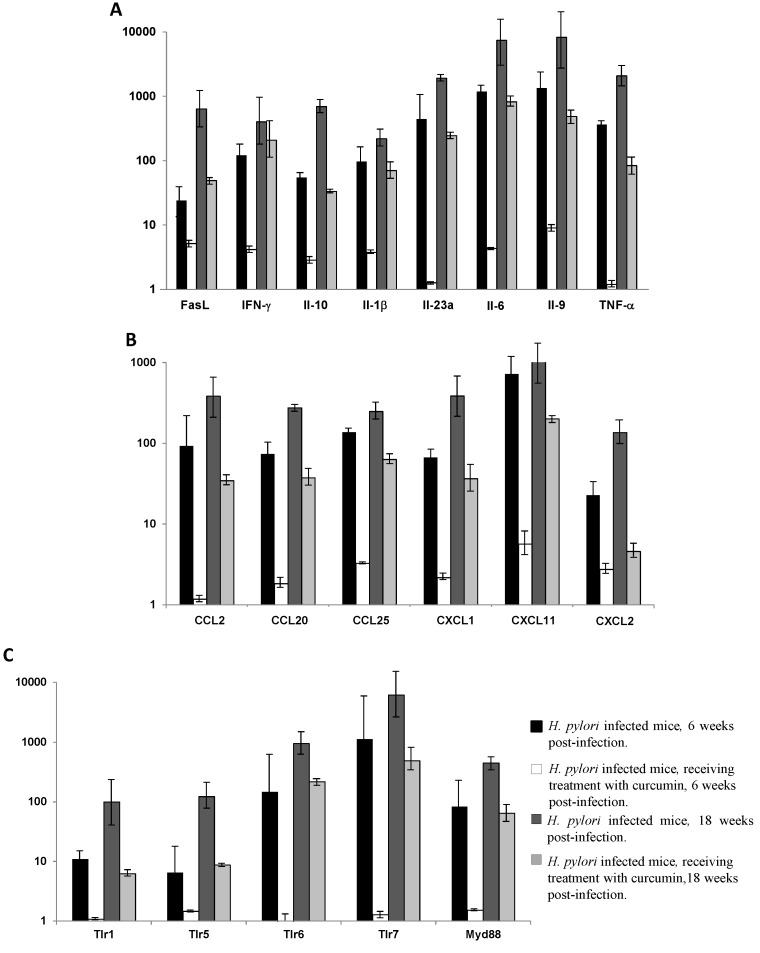
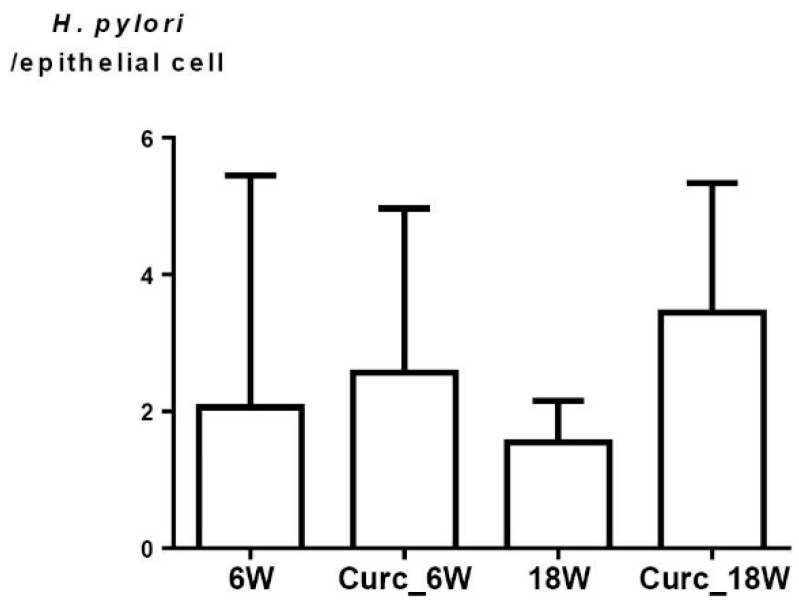
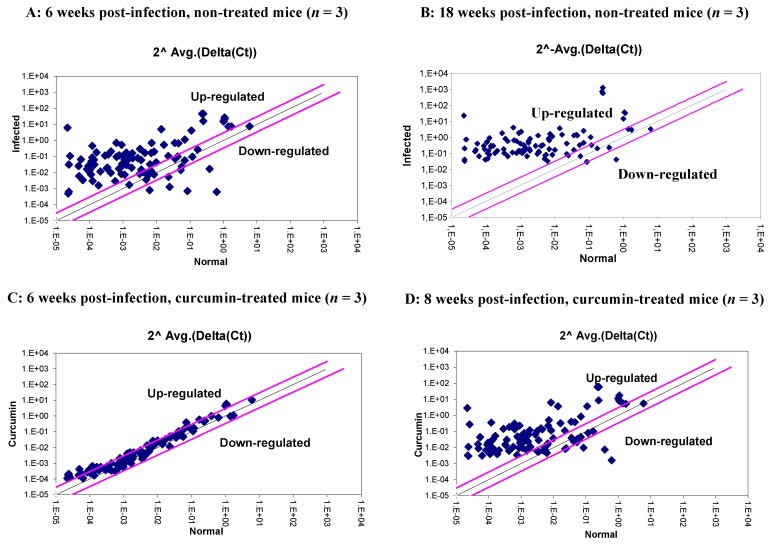
Helicobacter pylori (H. pylori) infection triggers a sequence of gastric alterations starting with an inflammation of the gastric mucosa that, in some cases, evolves to gastric cancer. Efficient vaccination has not been achieved, thus it is essential to find alternative therapies, particularly in the nutritional field. The current study evaluated whether curcumin could attenuate inflammation of the gastric mucosa due to H. pylori infection. Twenty-eight C57BL/6 mice, were inoculated with the H. pylori SS1 strain; ten non-infected mice were used as controls. H. pylori infection in live mice was followed-up using a modified 13C-Urea Breath Test (13C-UBT) and quantitative real-time polymerase chain reaction (PCR). Histologically confirmed, gastritis was observed in 42% of infected non-treated mice at both 6 and 18 weeks post-infection. These mice showed an up-regulation of the expression of inflammatory cytokines and chemokines, as well as of toll-like receptors (TLRs) and MyD88, at both time points. Treatment with curcumin decreased the expression of all these mediators. No inflammation was observed by histology in this group. Curcumin treatment exerted a significant anti-inflammatory effect in H. pylori-infected mucosa, pointing to the promising role of a nutritional approach in the prevention of H. pylori induced deleterious inflammation while the eradication or prevention of colonization by effective vaccine is not available.
幽门螺杆菌(H. pylori)感染会引发一系列胃部病变,最初是胃黏膜炎症,在某些情况下会发展为胃癌。目前尚未实现有效的疫苗接种,因此必须找到替代疗法,特别是在营养领域。本研究评估了姜黄素是否可以减轻幽门螺杆菌感染引起的胃黏膜炎症。28只C57BL/6小鼠接种了幽门螺杆菌SS1菌株;10只未感染的小鼠用作对照。使用改良的13C-尿素呼气试验(13C-UBT)和定量实时聚合酶链反应(PCR)对活体小鼠的幽门螺杆菌感染进行随访。经组织学证实,在感染后6周和18周时,42%的未治疗感染小鼠出现胃炎。在这两个时间点,这些小鼠的炎症细胞因子、趋化因子以及Toll样受体(TLRs)和髓样分化因子88(MyD88)的表达均上调。姜黄素治疗降低了所有这些介质的表达。该组经组织学检查未观察到炎症。姜黄素治疗对幽门螺杆菌感染的黏膜具有显著的抗炎作用,这表明在无法通过有效疫苗根除或预防定植的情况下,营养方法在预防幽门螺杆菌诱导的有害炎症方面具有潜在作用。