Applebaum Lauren, Coppola Marie, Goldin-Meadow Susan
University of Chicago.
University of Connecticut.
Sign Lang Linguist. 2014;17(2):181-212. doi: 10.1075/sll.17.2.02app.
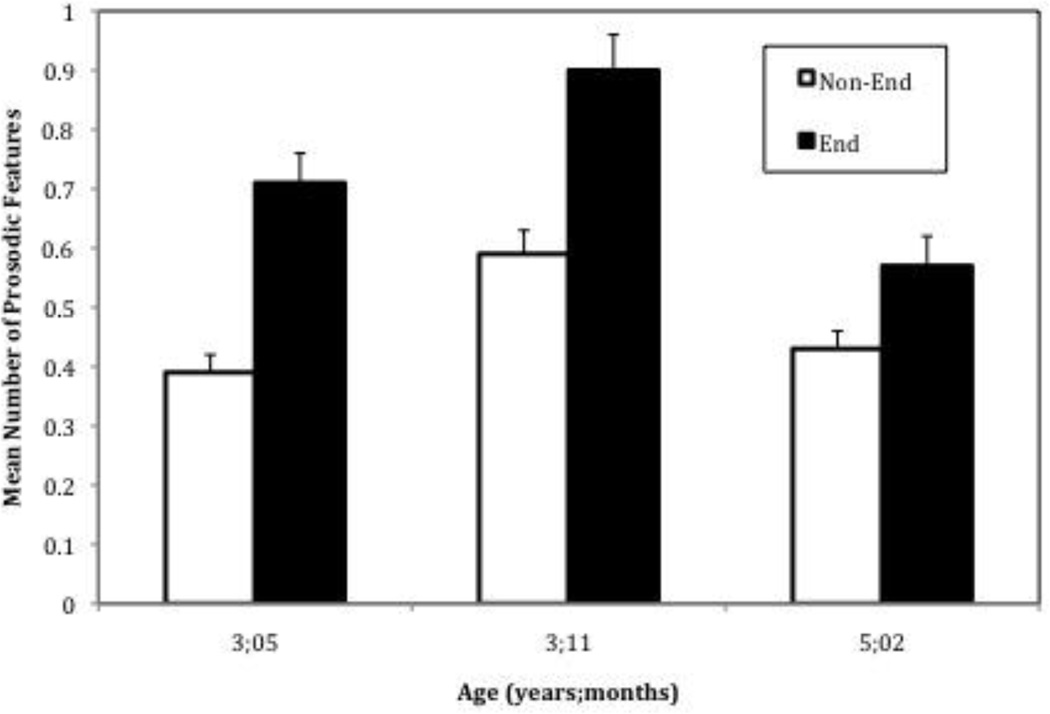
Prosody, he "music" of language, is an important aspect of all natural languages, spoken and signed. We ask here whether prosody is also robust across learning conditions. If a child were not exposed to a conventional language and had to construct his own communication system, would that system contain prosodic structure? We address this question by observing a deaf child who received no sign language input and whose hearing loss prevented him from acquiring spoken language. Despite his lack of a conventional language model, this child developed his own gestural system. In this system, features known to mark phrase and utterance boundaries in established sign languages were used to consistently mark the ends of utterances, but not to mark phrase or utterance internal boundaries. A single child can thus develop the seeds of a prosodic system, but full elaboration may require more time, more users, or even more generations to blossom.
韵律,即语言的“音乐性”,是所有自然语言(包括口语和手语)的一个重要方面。我们在此探讨韵律在不同学习条件下是否也具有稳定性。如果一个孩子没有接触过传统语言,必须构建自己的交流系统,那么这个系统会包含韵律结构吗?我们通过观察一个失聪儿童来解决这个问题,这个孩子没有接受过手语输入,并且听力损失使他无法习得口语。尽管他没有传统语言模型,但这个孩子发展出了自己的手势系统。在这个系统中,已知在已确立的手语中标记短语和话语边界的特征被用来一致地标记话语的结尾,但不用于标记短语或话语内部的边界。因此,一个孩子可以发展出韵律系统的种子,但要使其充分发展可能需要更多时间、更多使用者,甚至更多代人才能成熟。