Xu Xiaobin, Kim Kwanoh, Fan Donglei
Materials Science and Engineering Program, Texas Materials Institute, The University of Texas at Austin, Austin, TX 78712 (USA).
Angew Chem Int Ed Engl. 2015 Feb 16;54(8):2525-9. doi: 10.1002/anie.201410754. Epub 2015 Jan 9.
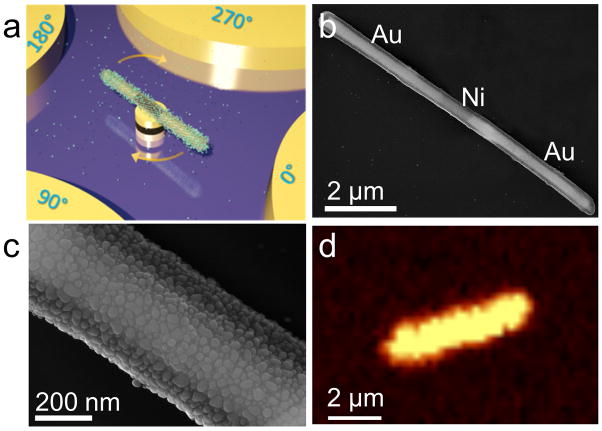
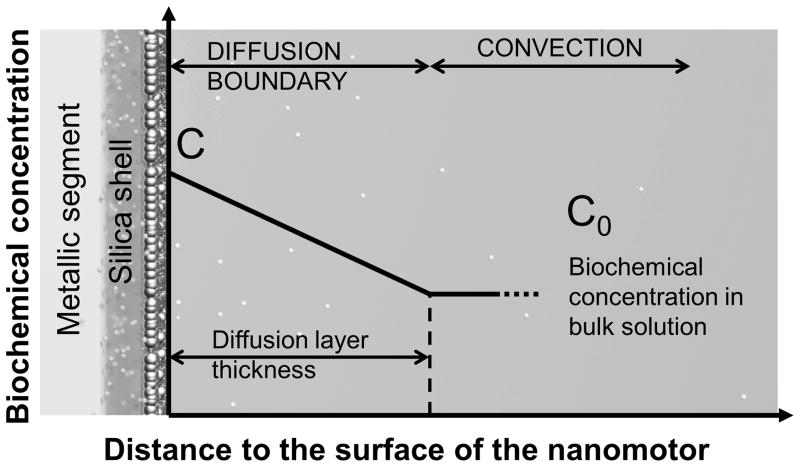
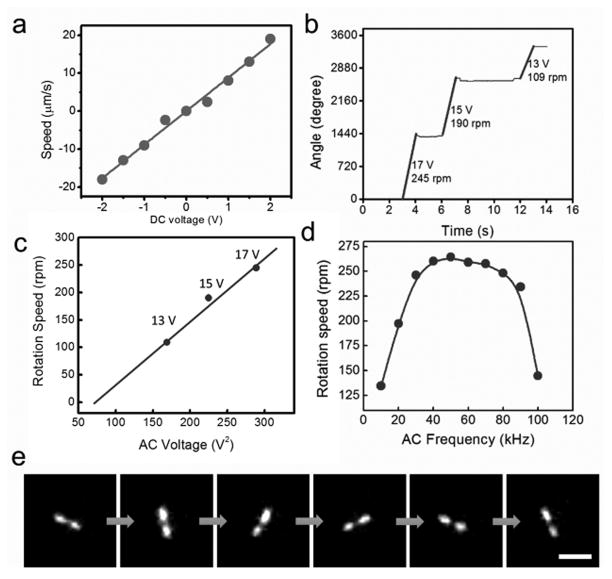
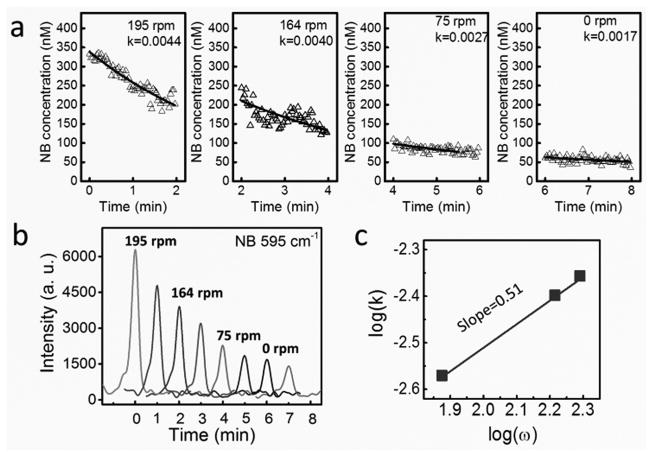
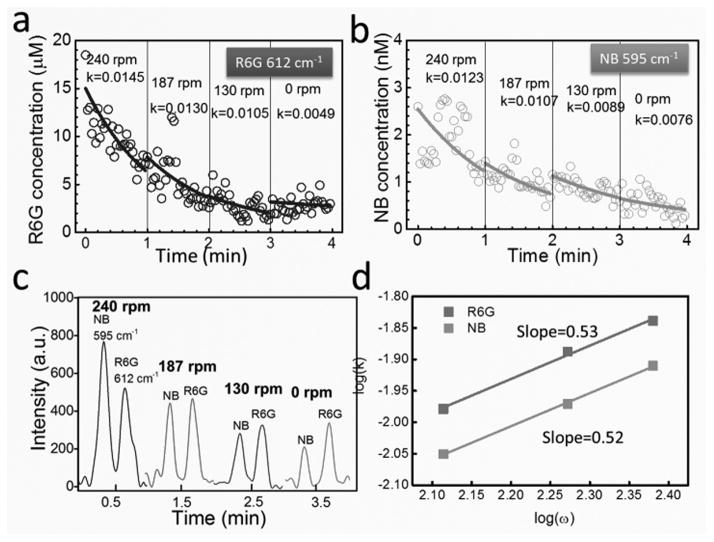
It is highly desirable to precisely tune the molecule release rate from the surfaces of nanoparticles (NPs) that are relevant to cancer therapy and single-cell biology. An innovative mechanism is reported to actively tune the biochemical release rate by rotation of NPs. Plasmonic nanomotors were assembled from NPs and applied in multiplex biochemical release and detection. Both single and multiplex biosignals can be released in a tunable fashion by controlling the rotation speed of the nanomotors. The chemistry and release rate of individual chemicals can be revealed by Raman spectroscopy. The fundamental mechanism was modeled quantitatively and attributed to the fluidic boundary-layer reduction owing to the liquid convection. This work, which explored the synergistic attributes of surface enhanced Raman scattering and nanoelectromechanical systems, could inspire new sensors that are potentially interesting for various bio-applications.
精确调节与癌症治疗和单细胞生物学相关的纳米颗粒(NPs)表面的分子释放速率是非常必要的。据报道,一种创新机制可通过纳米颗粒的旋转来主动调节生化释放速率。等离子体纳米马达由纳米颗粒组装而成,并应用于多重生化释放和检测。通过控制纳米马达的转速,单重和多重生物信号都可以以可调方式释放。单个化学物质的化学性质和释放速率可以通过拉曼光谱揭示。对其基本机制进行了定量建模,并归因于液体对流导致的流体边界层减小。这项探索表面增强拉曼散射和纳米机电系统协同特性的工作,可能会激发新型传感器的产生,这些传感器对于各种生物应用可能具有潜在的吸引力。