Bastos A M, Litvak V, Moran R, Bosman C A, Fries P, Friston K J
Ernst Strüngmann Institute (ESI) in Cooperation with Max Planck Society, Deutschordenstraße 46, Frankfurt 60528, Germany; Center for Neuroscience and Center for Mind and Brain, University of California, Davis, Davis, CA 95618, USA.
The Wellcome Trust Centre for Neuroimaging, University College London, Queen Square, London WC1N 3BG, UK.
Neuroimage. 2015 Mar;108:460-75. doi: 10.1016/j.neuroimage.2014.12.081. Epub 2015 Jan 10.
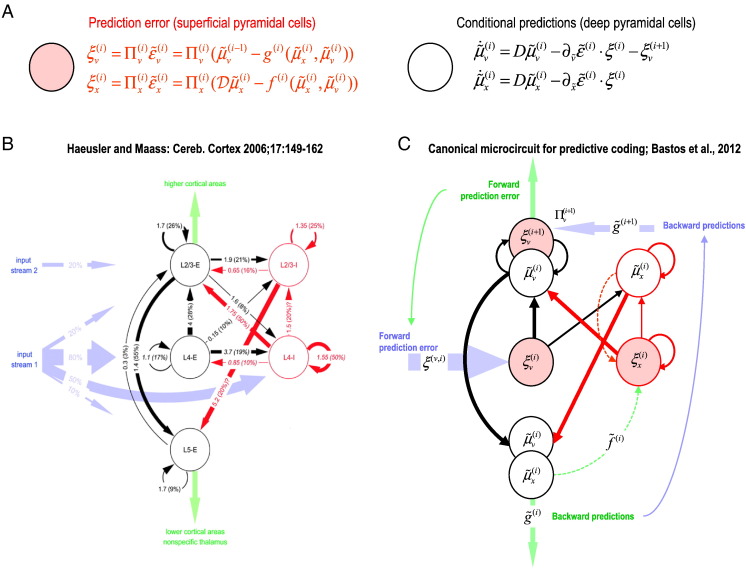
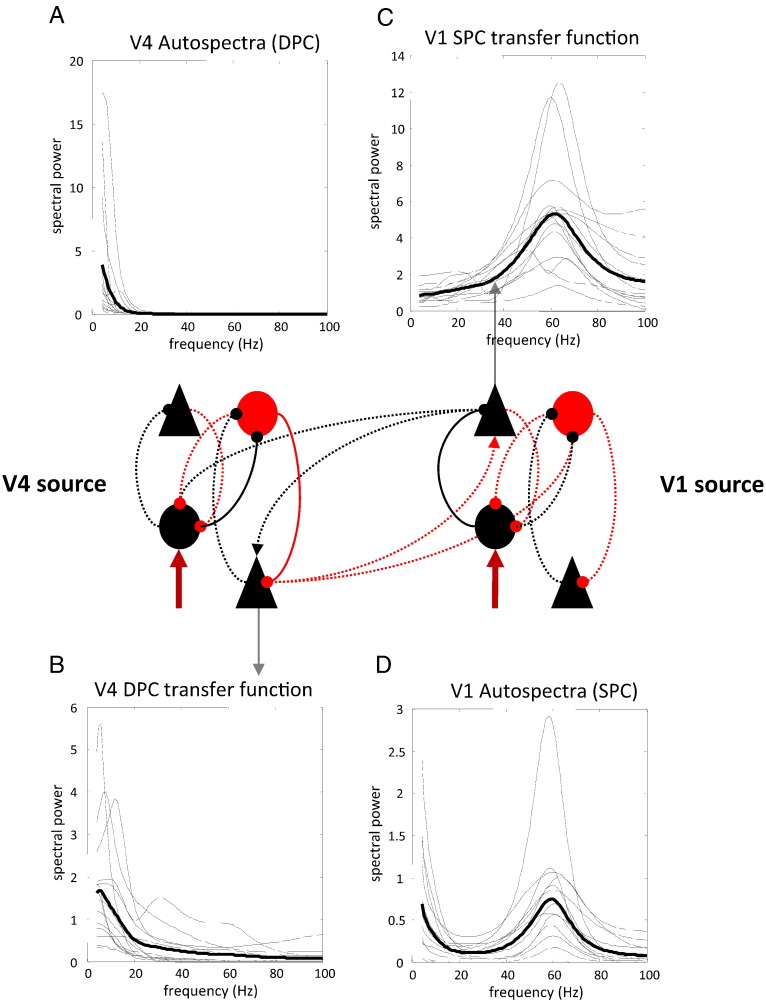
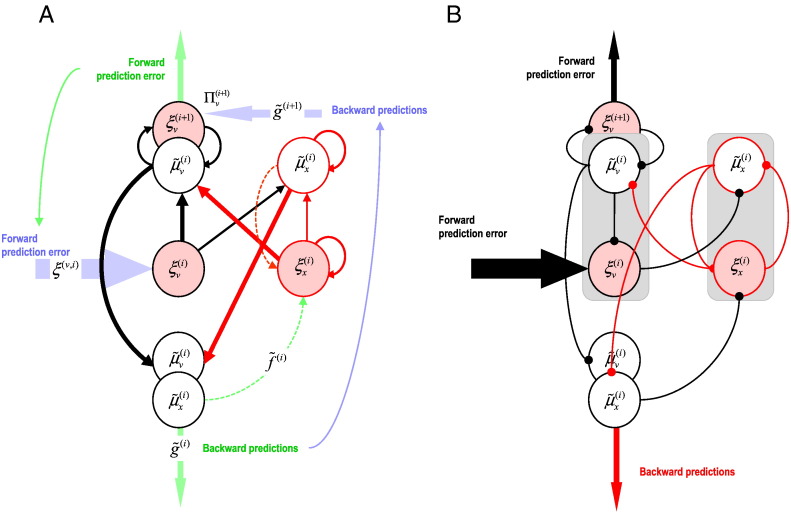
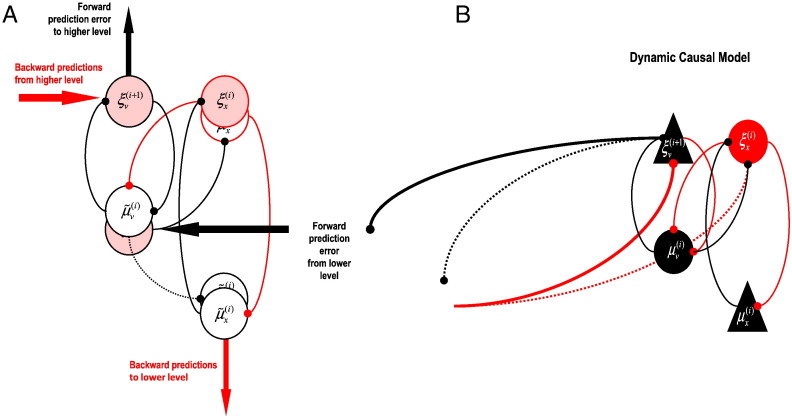
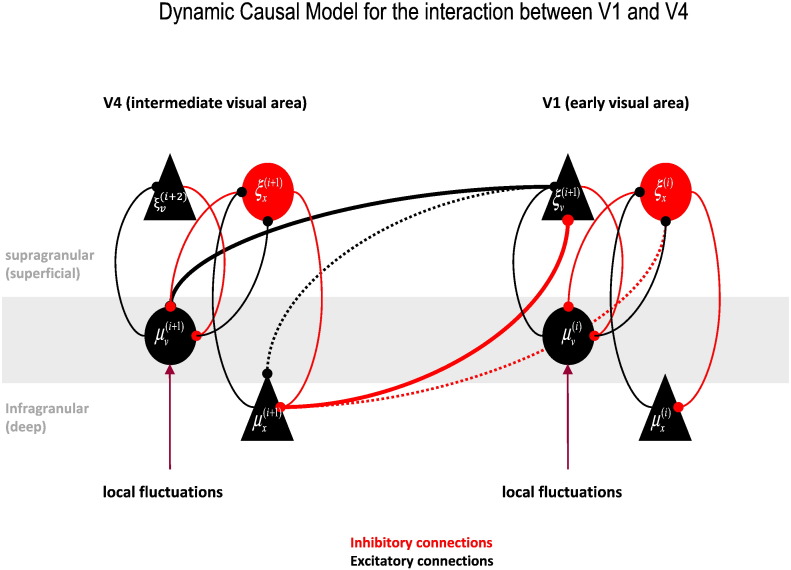
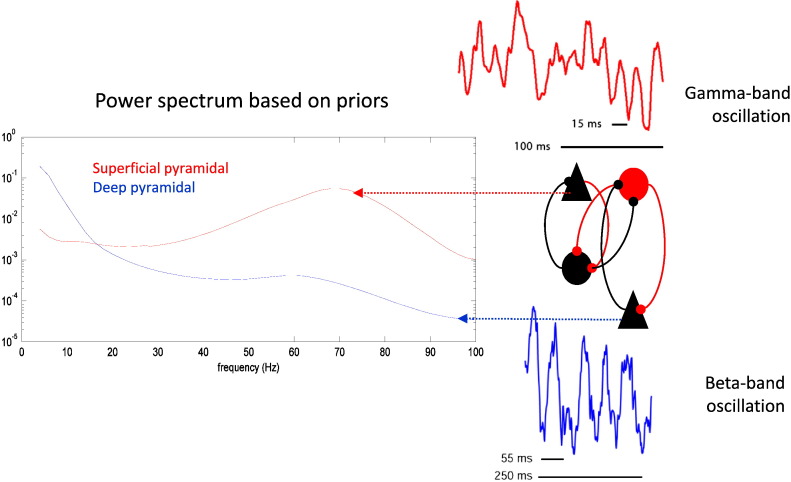
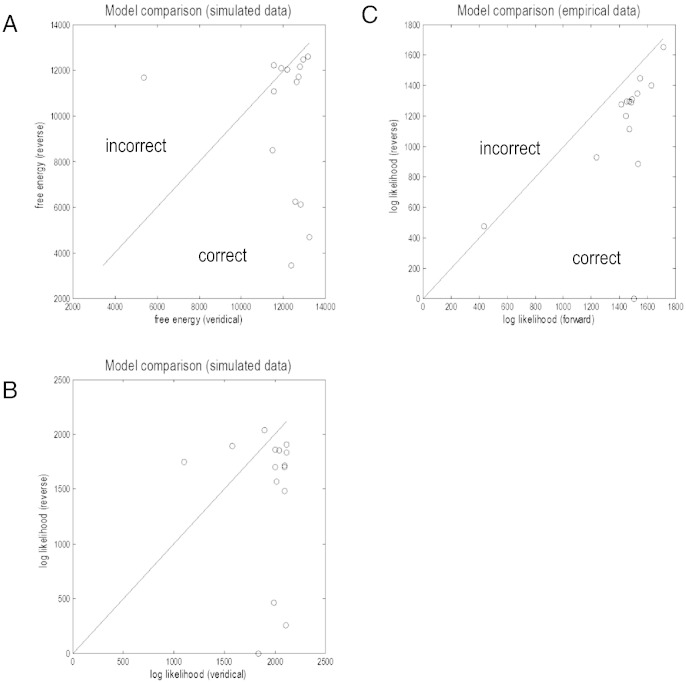
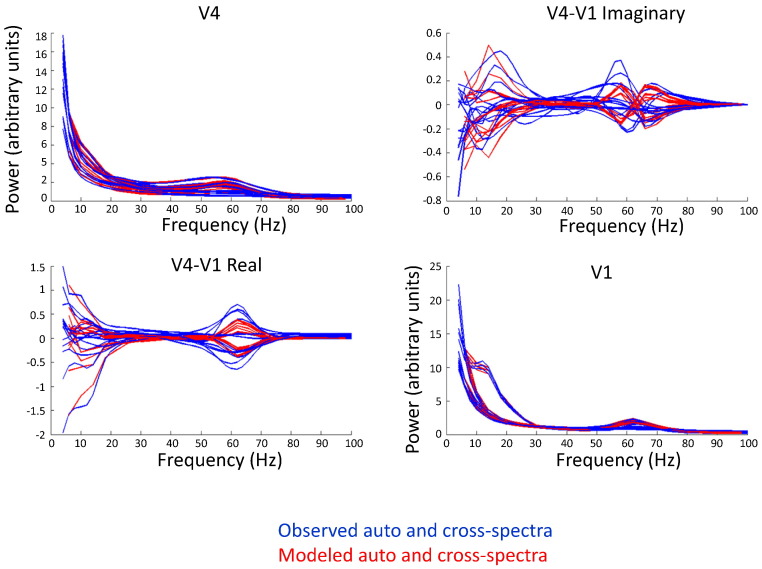
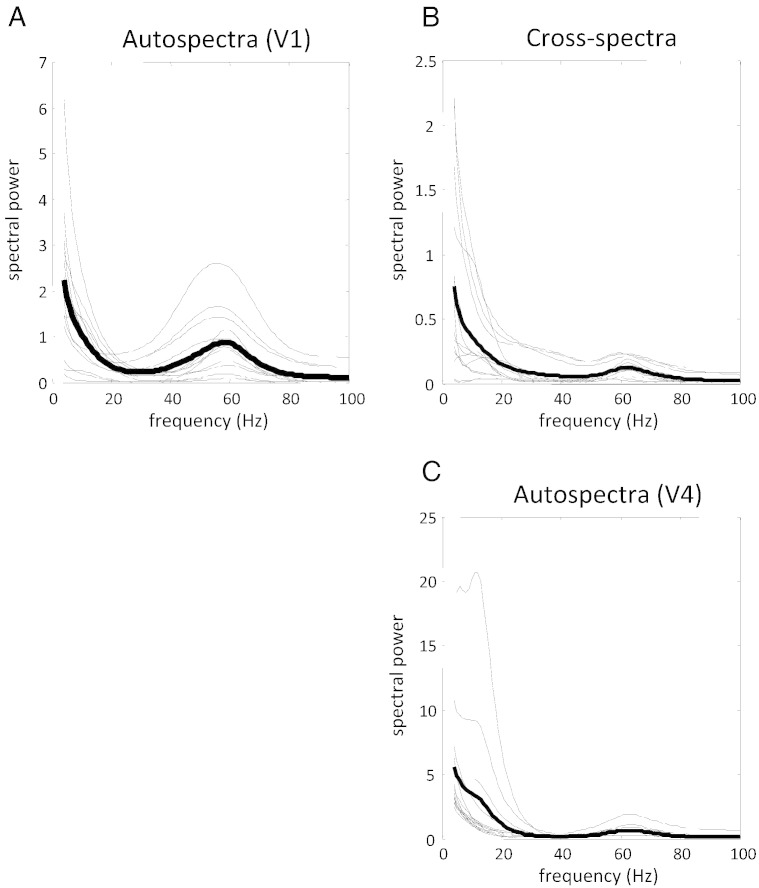
This paper reports a dynamic causal modeling study of electrocorticographic (ECoG) data that addresses functional asymmetries between forward and backward connections in the visual cortical hierarchy. Specifically, we ask whether forward connections employ gamma-band frequencies, while backward connections preferentially use lower (beta-band) frequencies. We addressed this question by modeling empirical cross spectra using a neural mass model equipped with superficial and deep pyramidal cell populations-that model the source of forward and backward connections, respectively. This enabled us to reconstruct the transfer functions and associated spectra of specific subpopulations within cortical sources. We first established that Bayesian model comparison was able to discriminate between forward and backward connections, defined in terms of their cells of origin. We then confirmed that model selection was able to identify extrastriate (V4) sources as being hierarchically higher than early visual (V1) sources. Finally, an examination of the auto spectra and transfer functions associated with superficial and deep pyramidal cells confirmed that forward connections employed predominantly higher (gamma) frequencies, while backward connections were mediated by lower (alpha/beta) frequencies. We discuss these findings in relation to current views about alpha, beta, and gamma oscillations and predictive coding in the brain.
本文报告了一项关于脑电皮质图(ECoG)数据的动态因果模型研究,该研究探讨了视觉皮质层级中前向和后向连接之间的功能不对称性。具体而言,我们探究前向连接是否采用伽马波段频率,而后向连接是否优先使用较低(贝塔波段)频率。我们通过使用配备有浅层和深层锥体细胞群体的神经质量模型对经验交叉谱进行建模来解决这个问题,该模型分别模拟前向和后向连接的来源。这使我们能够重建皮质源内特定亚群的传递函数和相关频谱。我们首先确定贝叶斯模型比较能够区分根据其起源细胞定义的前向和后向连接。然后我们证实模型选择能够识别纹外(V4)源在层级上高于早期视觉(V1)源。最后,对与浅层和深层锥体细胞相关的自谱和传递函数的检查证实,前向连接主要采用较高(伽马)频率,而后向连接由较低(阿尔法/贝塔)频率介导。我们结合当前关于大脑中阿尔法、贝塔和伽马振荡以及预测编码的观点来讨论这些发现。