Mirmajlessi Seyed Mahyar, Destefanis Marialaura, Gottsberger Richard Alexander, Mänd Marika, Loit Evelin
Department of Field Crops and Grassland Husbandry, Institute of Agricultural and Environmental Sciences, Estonian University of Life Sciences, Tartu, Estonia.
Syst Rev. 2015 Jan 15;4(1):9. doi: 10.1186/2046-4053-4-9.
Strawberry diseases are a major limiting factor that severely impact plant agronomic performance. Regarding limitations of traditional techniques for detection of pathogens, researchers have developed specific DNA-based tests as sensitive and specific techniques. The aim of this review is to provide an overview of polymerase chain reaction (PCR)-based methods used for detection or quantification of the most widespread strawberry pathogens, such as Fusarium oxysporum f.sp. fragariae, Phytophthora fragariae, Colletotrichum acutatum, Verticillium dahliae, Botrytis cinerea, Macrophomina phaseolina, and Xanthomonas fragariae. An updated and detailed list of published PCR protocols is presented and discussed, aimed at facilitating access to information that could be particularly useful for diagnostic laboratories in order to develop a rapid, cost-effective, and reliable monitoring technique.
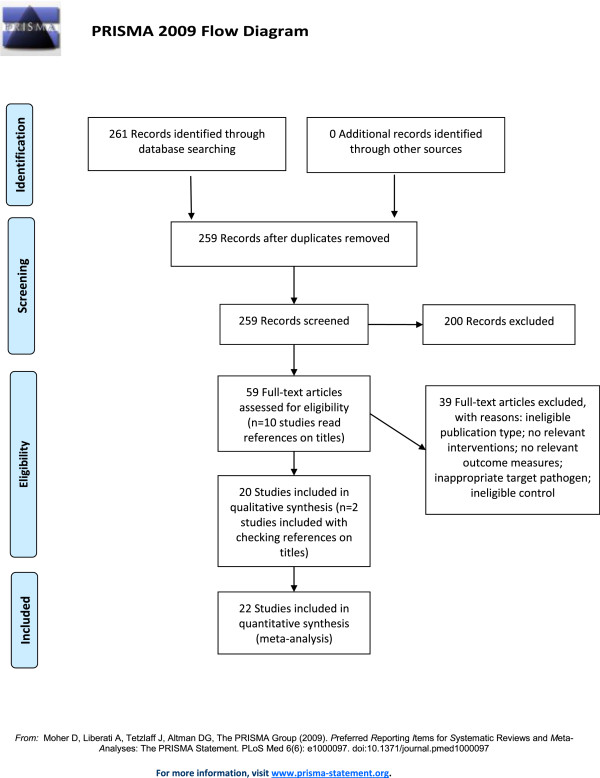
The study design was a systematic review of PCR-based techniques used for detection and quantification of strawberry pathogens. Using appropriate subject headings, AGRICOLA, AGRIS, BASE, Biological Abstracts, CAB Abstracts, Google Scholar, Scopus, Web of Knowledge, and SpringerLink databases were searched from their inception up to April 2014. Two assessors independently reviewed the titles, abstracts, and full articles of all identified citations. Selected articles were included if one of the mentioned strawberry pathogens was investigated based on PCR methods, and a summary of pre-analytical requirements for PCR was provided.
A total of 259 titles and abstracts were reviewed, of which 22 full texts met all the inclusion criteria. Our systematic review identified ten different protocols for X. fragariae, eight for P. fragariae, four for B. cinerea, six for C. acutatum, three for V. dahlia, and only one for F. oxysporum. The accuracy and sensitivity of PCR diagnostic methods is the focus of most studies included in this review. However, a large proportion of errors in laboratories occur in the pre-analytical phase of the testing process. Due to heterogeneity, results could not be meta-analyzed.
From a systematic review of the currently available published literature, effective detection assays to detect the major strawberry pathogens have been developed. These assays can function as a basis for clinical labs, regulatory personnel, and other diagnosticians to adapt or implement for detection of these six important strawberry pathogens.
草莓病害是严重影响植株农艺性能的主要限制因素。鉴于传统病原体检测技术的局限性,研究人员已开发出基于DNA的特异性检测方法,作为灵敏且特异的技术手段。本综述的目的是概述用于检测或定量最常见草莓病原体的基于聚合酶链反应(PCR)的方法,这些病原体包括尖孢镰刀菌草莓专化型、草莓疫霉、尖孢炭疽菌、大丽轮枝菌、灰葡萄孢、菜豆壳球孢和草莓黄单胞菌。本文列出并讨论了已发表的PCR方案的最新详细清单,旨在方便获取对诊断实验室可能特别有用的信息,以便开发一种快速、经济高效且可靠的监测技术。
本研究设计为对用于检测和定量草莓病原体的基于PCR的技术进行系统综述。使用适当的主题词,对AGRICOLA、AGRIS、BASE、生物学文摘数据库、CAB文摘数据库、谷歌学术、Scopus、Web of Knowledge和SpringerLink数据库从建库至2014年4月进行检索。两名评估人员独立审查所有已识别文献的标题、摘要和全文。如果基于PCR方法对上述提及的草莓病原体之一进行了研究,并提供了PCR分析前要求的总结,则纳入所选文章。
共审查了259篇标题和摘要,其中22篇全文符合所有纳入标准。我们的系统综述确定了针对草莓黄单胞菌的10种不同方案,针对草莓疫霉的8种,针对灰葡萄孢的4种,针对尖孢炭疽菌的6种,针对大丽轮枝菌的3种,而针对尖孢镰刀菌的仅1种。PCR诊断方法的准确性和灵敏度是本综述中大多数研究的重点。然而,实验室中很大一部分错误发生在检测过程的分析前阶段。由于存在异质性,无法进行荟萃分析。
通过对当前可用的已发表文献进行系统综述,已开发出用于检测主要草莓病原体的有效检测方法。这些检测方法可为临床实验室、监管人员和其他诊断人员检测这六种重要草莓病原体提供适配或实施的基础。