Xie Cheng-long, Wang Wen-Wen, Xue Xiao-dong, Zhang Su-fang, Gan Jing, Liu Zhen-Guo
Department of Neurology, Xinhua Hospital, Shanghai Jiao Tong University School of Medicine 200092, 1665 Kongjiang Road, Shanghai, China.
The center of Traditional Chinese Medicine, The Second Affiliated Hospital of Wenzhou Medical College, Wenzhou 325027, China.
Sci Rep. 2015 Jan 20;5:7790. doi: 10.1038/srep07790.
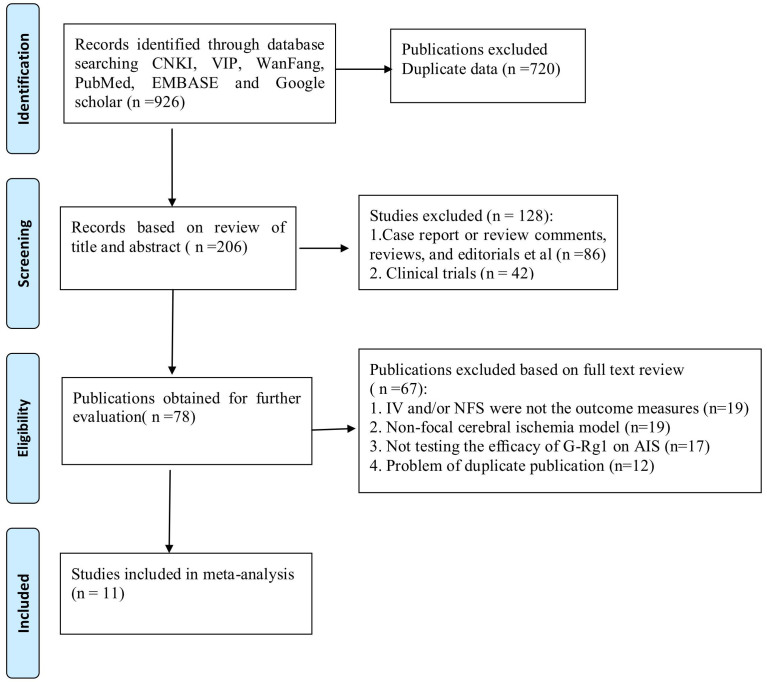
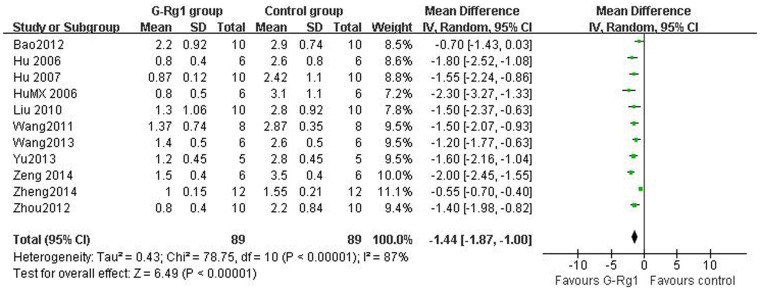
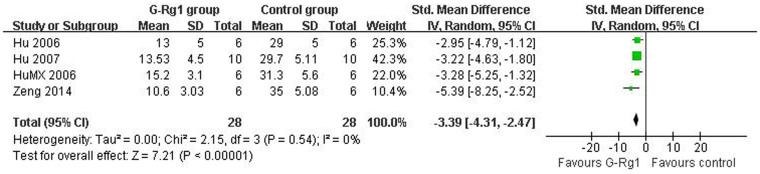
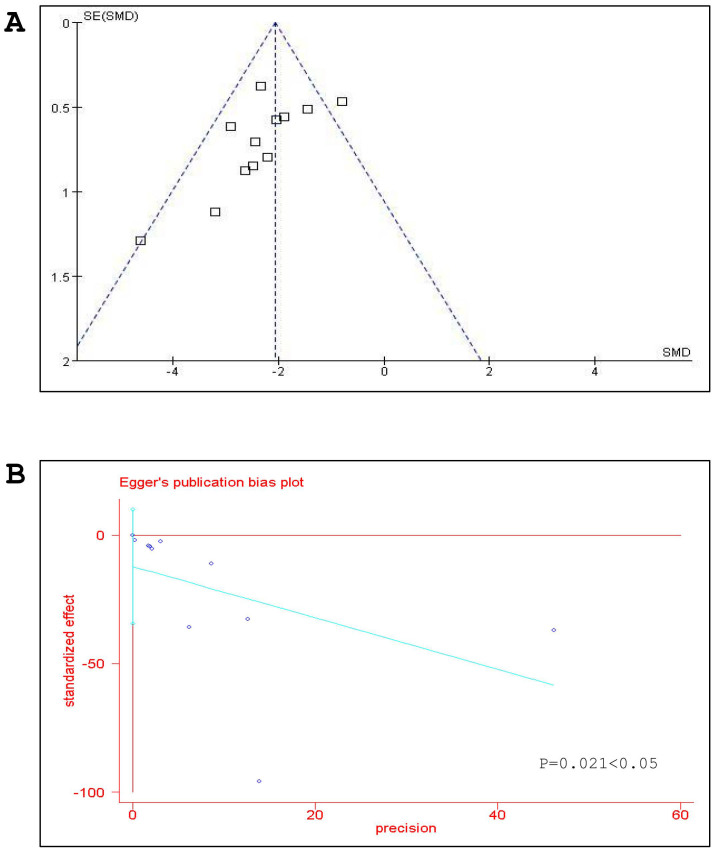
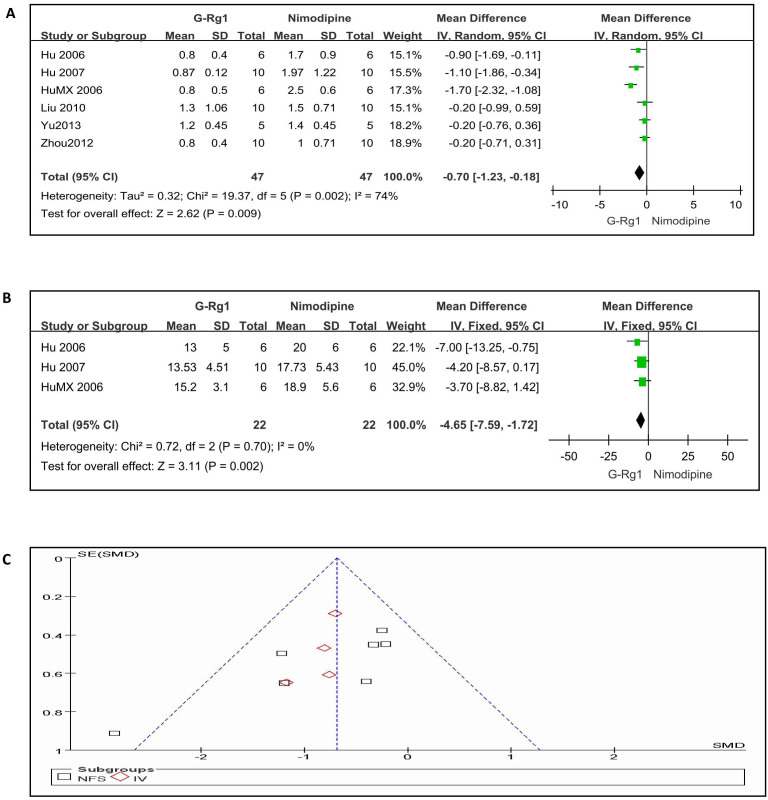
The neuroprotective actions of Ginsenoside-Rg1 (G-Rg1) have been documented for experimental stroke therapy. We used a systematic review and meta-analysis to assess the efficacy of G-Rg1 in experimental ischemic stroke. We identified studies describing the efficacy of G-Rg1 in animal models of focal cerebral ischemia. Primary outcomes were infarct volume and neurological function score (NFS). In all, eleven studies reported significant effects of G-Rg1 for improving the NFS when compared with the control group (P < 0.00001), and four studies reported significant effects of G-Rg1 for reducing infarct volume compared with middle cerebral artery occlusion group (P < 0.00001). Meanwhile, studies reported G-Rg1 was more efficacious than positive control drug nimodipine (0.7 or 1 mg/kg, intraperitoneal) according to NFS (P = 0.009) and infarct volume (p = 0.0002). The results demonstrate a marked efficacy of G-Rg1 in experimental acute ischemic stroke, but raise concerns that our value of effect size might be overestimate due to factors such as study quality and possible publication bias. Even so, the findings suggest G-Rg1 as a candidate neuroprotective drug for human ischemic stroke.
人参皂苷-Rg1(G-Rg1)的神经保护作用已被记录用于实验性中风治疗。我们进行了一项系统评价和荟萃分析,以评估G-Rg1在实验性缺血性中风中的疗效。我们检索了描述G-Rg1在局灶性脑缺血动物模型中疗效的研究。主要结局指标为梗死体积和神经功能评分(NFS)。总共11项研究报告称,与对照组相比,G-Rg1对改善NFS有显著效果(P<0.00001),4项研究报告称,与大脑中动脉闭塞组相比,G-Rg1对减少梗死体积有显著效果(P<0.00001)。同时,研究报告称,根据NFS(P=0.009)和梗死体积(P=0.0002),G-Rg1比阳性对照药物尼莫地平(0.7或1mg/kg,腹腔注射)更有效。结果表明,G-Rg1在实验性急性缺血性中风中具有显著疗效,但由于研究质量和可能的发表偏倚等因素,我们担心效应量的值可能被高估。即便如此,这些发现表明G-Rg1可作为人类缺血性中风的候选神经保护药物。