Kuligowska Katarzyna, Lütken Henrik, Christensen Brian, Skovgaard Ib, Linde Marcus, Winkelmann Traud, Müller Renate
Department of Plant and Environmental Sciences, Faculty of Science, University of Copenhagen, Højbakkegård Allé 9-13, DK-2630, Taastrup, Denmark.
AgroTech A/S, Inst. f. Agri Technology and Food Innovation, Højbakkegård Allé 21, DK-2630, Taastrup, Denmark.
BMC Plant Biol. 2015 Jan 21;15:15. doi: 10.1186/s12870-014-0394-0.
Interspecific hybridization is a useful tool in ornamental breeding to increase genetic variability and introduce new valuable traits into existing cultivars. The successful formation of interspecific hybrids is frequently limited by the presence of pre- and post-fertilization barriers. In the present study, we investigated the nature of hybridization barriers occurring in crosses between Kalanchoë species and evaluated possibilities of obtaining interspecific hybrids.
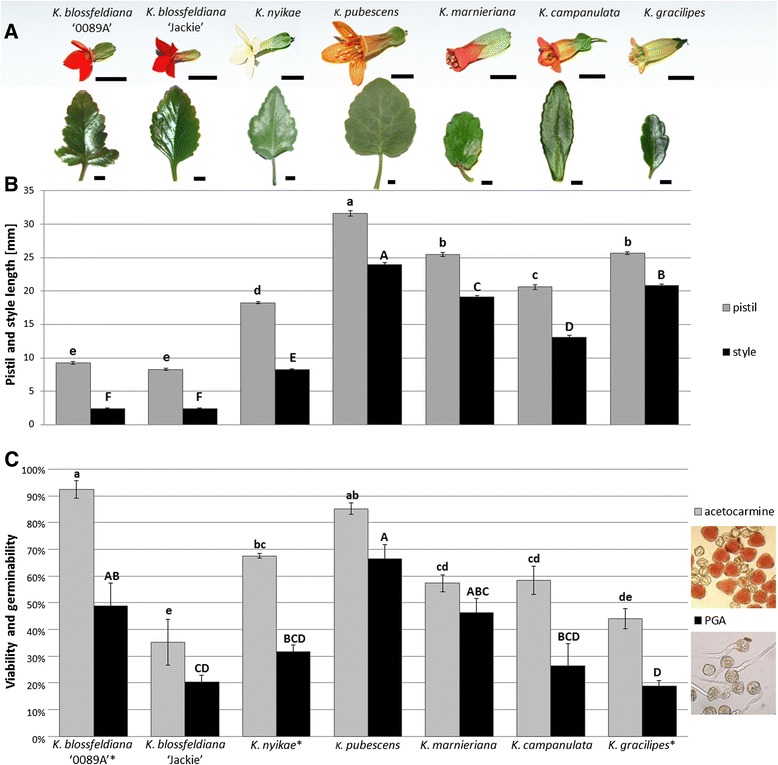
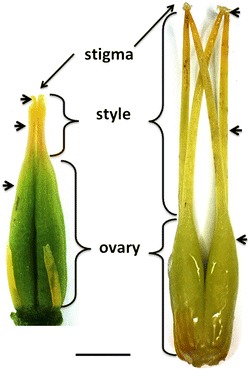
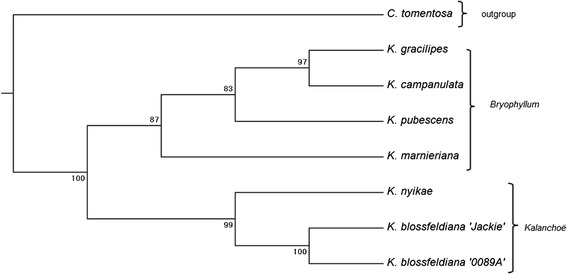
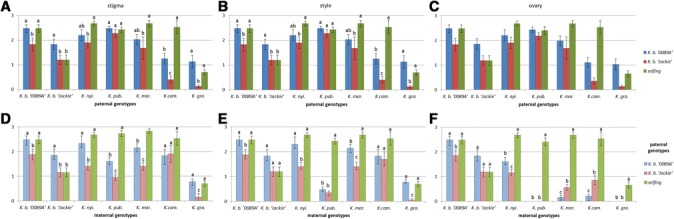
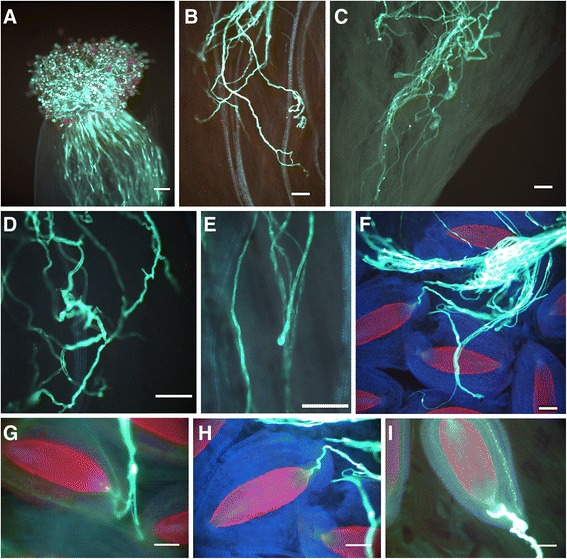
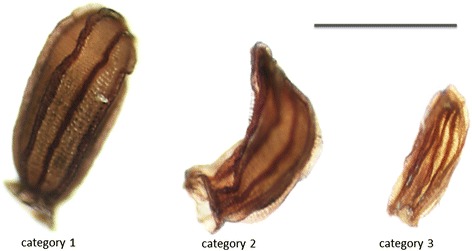
The qualitative and quantitative analyses of pollen tube growth in situ were performed following intra- and interspecific pollinations. They revealed occurrence of pre-fertilization barriers associated with inhibition of pollen germination on the stigma and abnormal growth of pollen tubes. Unilateral incongruity related to differences in pistil length was also observed. The pollen quality was identified as a strong factor influencing the number of pollen tubes germinating in the stigma. In relation to post-fertilization barriers, endosperm degeneration was a probable barrier hampering production of interspecific hybrids. Moreover, our results demonstrate the relation of genetic distance estimated by AFLP marker analysis of hybridization partners with cross-compatibility of Kalanchoë species. At the same time, differences in ploidy did not influence the success of interspecific crosses.
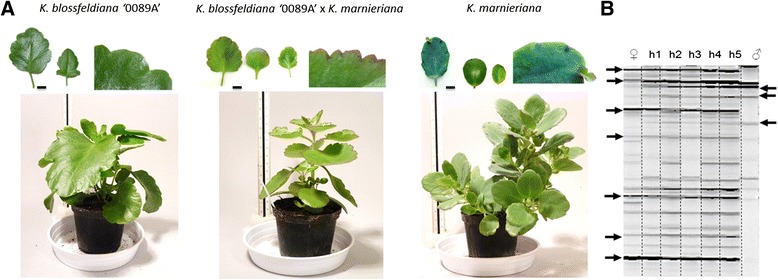
Our study presents the first comprehensive analysis of hybridization barriers occurring within Kalanchoë genus. Reproductive barriers were detected on both, pre- and post-fertilization levels. This new knowledge will contribute to further understanding of reproductive isolation of Kalanchoë species and facilitate breeding of new cultivars. For the first time, interspecific hybrids between K. nyikae as maternal plant and K. blossfeldiana as well as K. blossfeldiana and K. marnieriana were generated.
种间杂交是观赏植物育种中增加遗传变异性并将新的有价值性状引入现有栽培品种的一种有用工具。种间杂种的成功形成常常受到受精前和受精后障碍的限制。在本研究中,我们调查了伽蓝菜属物种间杂交障碍的性质,并评估了获得种间杂种的可能性。
在种内和种间授粉后,对花粉管在原位的生长进行了定性和定量分析。结果显示存在与柱头上花粉萌发抑制和花粉管异常生长相关的受精前障碍。还观察到与雌蕊长度差异相关的单侧不亲和性。花粉质量被确定为影响柱头上萌发的花粉管数量的一个重要因素。关于受精后障碍,胚乳退化可能是阻碍种间杂种产生的一个障碍。此外,我们的结果证明了通过对杂交亲本进行AFLP标记分析估计的遗传距离与伽蓝菜属物种的杂交亲和性之间的关系。同时,倍性差异并不影响种间杂交的成功率。
我们的研究首次对伽蓝菜属内发生的杂交障碍进行了全面分析。在受精前和受精后水平均检测到了生殖障碍。这些新知识将有助于进一步理解伽蓝菜属物种的生殖隔离,并促进新品种的培育。首次获得了以尼卡伽蓝菜为母本与长寿花以及长寿花与玛瑙伽蓝菜的种间杂种。