Zheng Jinshui, Guan Ziyu, Cao Shiyun, Peng Donghai, Ruan Lifang, Jiang Daohong, Sun Ming
State Key Laboratory of Agricultural Microbiology, Huazhong Agricultural University, Wuhan, 430070, China.
BMC Genomics. 2015 Jan 22;16(1):6. doi: 10.1186/s12864-014-1206-5.
Prokaryotic plasmids have played significant roles in the evolution of bacterial genomes and have a great impact on the metabolic functions of the host cell. Many bacterial strains contain multiple plasmids, but the relationships between bacterial plasmids and chromosomes are unclear. We focused on plasmids from the Bacillus cereus group because most strains contain several plasmids.
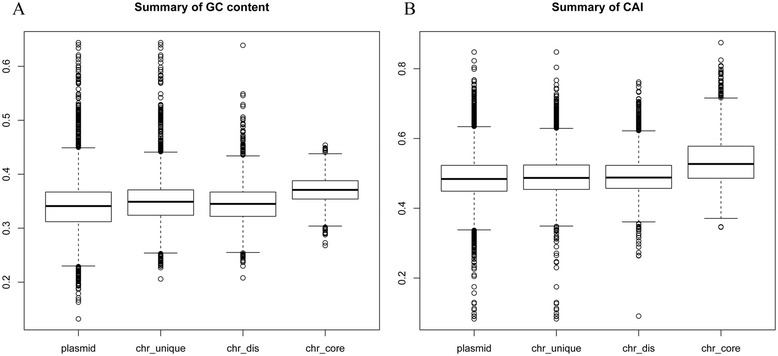
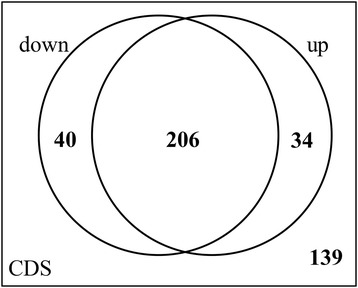
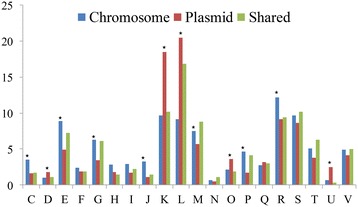
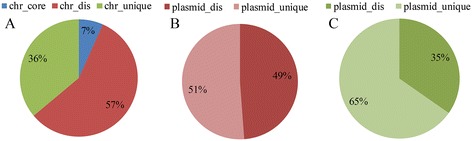
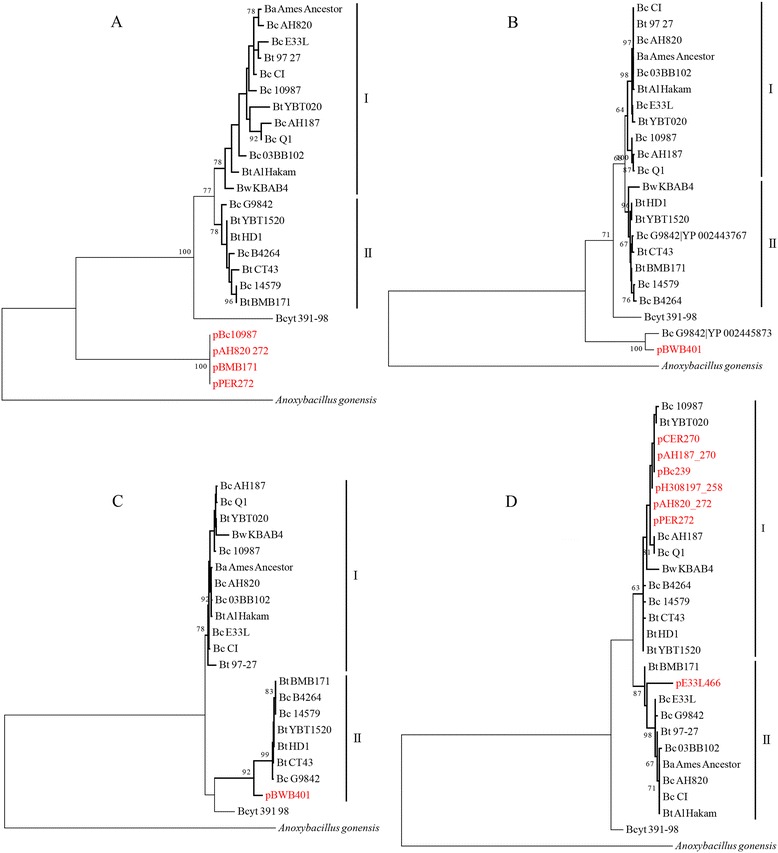
We collected the genome sequences of 104 plasmids and 20 chromosomes from B. cereus group strains, and we studied the relationships between plasmids and chromosomes by focusing on the pan-genomes of these plasmids and chromosomes. In terms of basic features (base composition and codon usage), the genes on plasmids were more similar to the chromosomal variable genes (distributed genes and unique genes) than to the chromosomal core genes. Although all the functional categories of the chromosomal genes were exhibited by the plasmid genes, the proportions of each category differed between these two gene sets. The 598 gene families shared between chromosomes and plasmids displayed a uniform distribution between the two groups. A phylogenetic analysis of the shared genes, including the chromosomal core gene set, indicated that gene exchange events between plasmids and chromosomes occurred frequently during the evolutionary histories of the strains and species in this group. Moreover, the shared genes between plasmids and chromosomes usually had different promoter and terminator sequences, suggesting that they are regulated by different elements at the transcriptional level.
We speculate that for the entire B. cereus group, adaptive genes are preserved on both plasmids and chromosomes; however, in a single cell, homologous genes on plasmids and the chromosome are controlled by different regulators to reduce the burden of maintaining redundant genes.
原核生物质粒在细菌基因组进化中发挥了重要作用,对宿主细胞的代谢功能有重大影响。许多细菌菌株含有多个质粒,但细菌质粒与染色体之间的关系尚不清楚。我们聚焦于蜡样芽孢杆菌群的质粒,因为大多数菌株含有多个质粒。
我们收集了蜡样芽孢杆菌群菌株的104个质粒和20条染色体的基因组序列,并通过关注这些质粒和染色体的泛基因组来研究质粒与染色体之间的关系。在基本特征(碱基组成和密码子使用)方面,质粒上的基因与染色体可变基因(分布基因和独特基因)比与染色体核心基因更相似。虽然质粒基因展现出了染色体基因的所有功能类别,但这两组基因中各功能类别的比例有所不同。染色体和质粒共有的598个基因家族在两组之间呈现均匀分布。对包括染色体核心基因集在内的共有基因进行系统发育分析表明,在该菌群菌株和物种的进化历史中,质粒与染色体之间频繁发生基因交换事件。此外,质粒和染色体之间的共有基因通常具有不同的启动子和终止子序列,这表明它们在转录水平上受不同元件调控。
我们推测,对于整个蜡样芽孢杆菌群而言,适应性基因同时保留在质粒和染色体上;然而,在单个细胞中,质粒和染色体上的同源基因由不同的调节因子控制,以减轻维持冗余基因的负担。