The Milner Centre for Evolution, Department of Biology and Biochemistry, University of Bath, Bath, UK.
Institute of Life Science, Swansea University Medical School, Swansea, UK.
Mol Ecol. 2018 Apr;27(7):1524-1540. doi: 10.1111/mec.14546. Epub 2018 Apr 2.
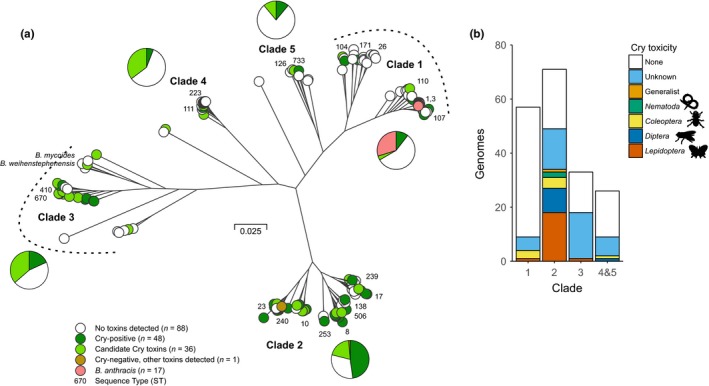
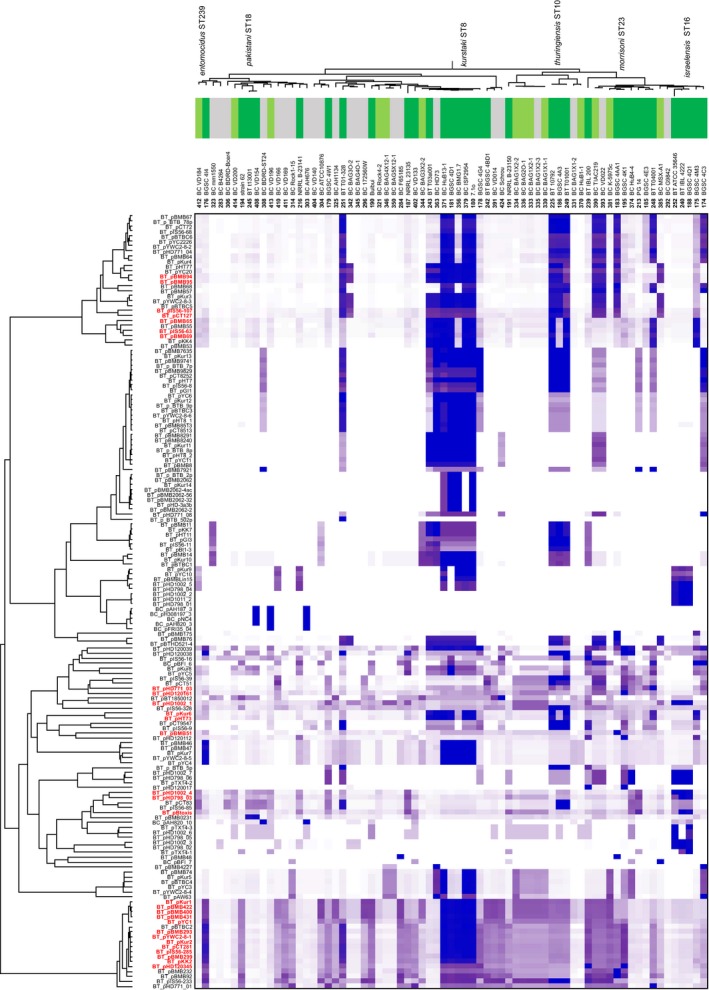
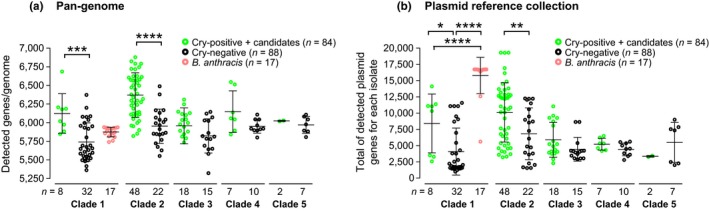
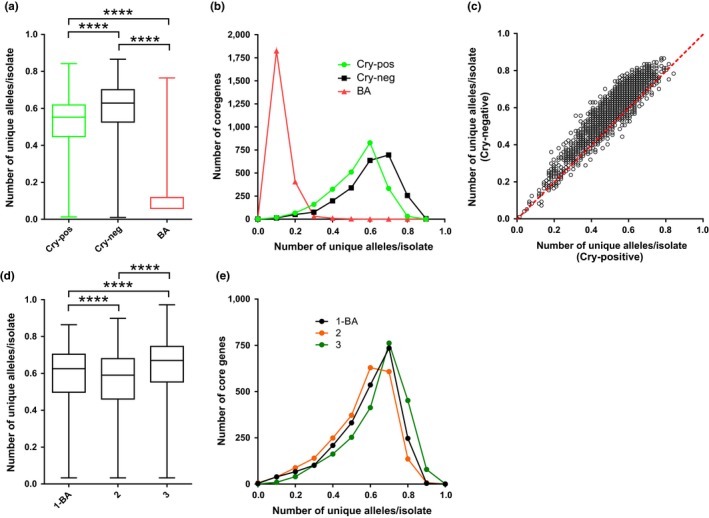
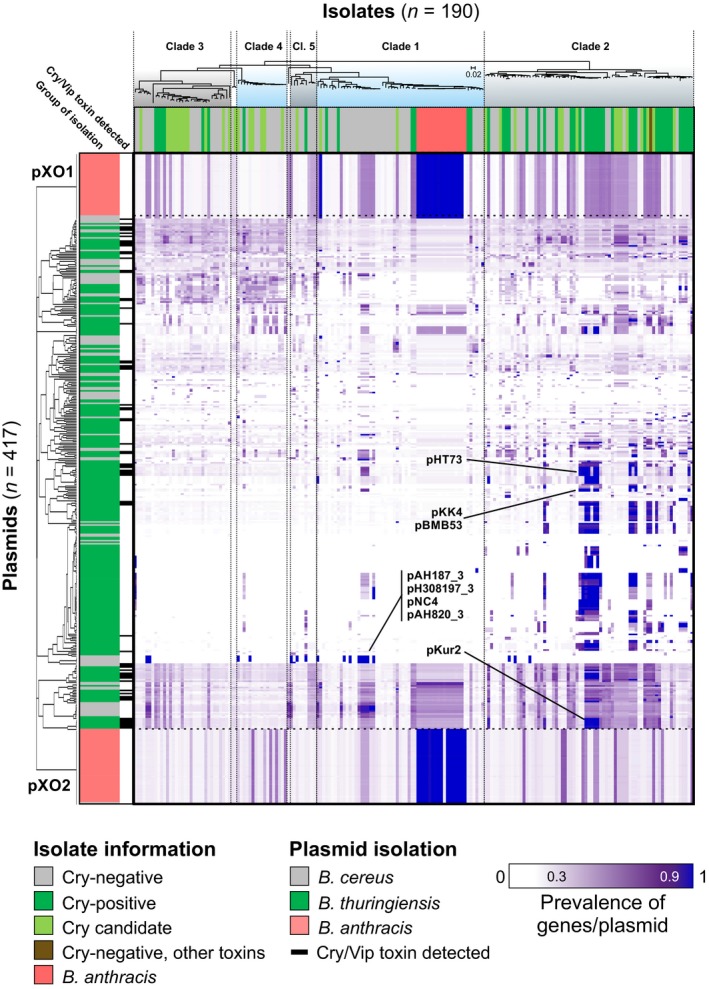
Bacterial plasmids can vary from small selfish genetic elements to large autonomous replicons that constitute a significant proportion of total cellular DNA. By conferring novel function to the cell, plasmids may facilitate evolution but their mobility may be opposed by co-evolutionary relationships with chromosomes or encouraged via the infectious sharing of genes encoding public goods. Here, we explore these hypotheses through large-scale examination of the association between plasmids and chromosomal DNA in the phenotypically diverse Bacillus cereus group. This complex group is rich in plasmids, many of which encode essential virulence factors (Cry toxins) that are known public goods. We characterized population genomic structure, gene content and plasmid distribution to investigate the role of mobile elements in diversification. We analysed coding sequence within the core and accessory genome of 190 B. cereus group isolates, including 23 novel sequences and genes from 410 reference plasmid genomes. While cry genes were widely distributed, those with invertebrate toxicity were predominantly associated with one sequence cluster (clade 2) and phenotypically defined Bacillus thuringiensis. Cry toxin plasmids in clade 2 showed evidence of recent horizontal transfer and variable gene content, a pattern of plasmid segregation consistent with transfer during infectious cooperation. Nevertheless, comparison between clades suggests that co-evolutionary interactions may drive association between plasmids and chromosomes and limit wider transfer of key virulence traits. Proliferation of successful plasmid and chromosome combinations is a feature of specialized pathogens with characteristic niches (Bacillus anthracis, B. thuringiensis) and has occurred multiple times in the B. cereus group.
细菌质粒可以从小型自私的遗传元件到大型自主复制子不等,后者构成了细胞总 DNA 的重要比例。通过赋予细胞新的功能,质粒可能促进进化,但它们的移动性可能会受到与染色体的共同进化关系的抵制,也可能会通过基因的感染性共享来促进公共物品的编码。在这里,我们通过对表型多样的芽孢杆菌群中质粒和染色体 DNA 之间的关联进行大规模研究来探索这些假设。这个复杂的群体富含质粒,其中许多质粒编码重要的毒力因子(Cry 毒素),这些毒素是众所周知的公共物品。我们对种群基因组结构、基因组成和质粒分布进行了表征,以研究移动元件在多样化中的作用。我们分析了 190 个芽孢杆菌群分离株的核心和辅助基因组中的编码序列,包括 23 个新序列和 410 个参考质粒基因组中的基因。虽然 Cry 基因广泛分布,但那些具有昆虫毒性的基因主要与一个序列群(2 型群)和表型定义的苏云金芽孢杆菌相关。2 型群中的 Cry 毒素质粒显示出最近水平转移和可变基因组成的证据,这种质粒分离模式与感染性合作期间的转移一致。然而,在群之间进行比较表明,共同进化的相互作用可能导致质粒和染色体之间的关联,并限制关键毒力性状的更广泛转移。成功的质粒和染色体组合的增殖是具有特征性生态位的专门病原体的一个特征(炭疽芽孢杆菌、苏云金芽孢杆菌),在芽孢杆菌群中已经多次发生。