Jin Daeyong, Lee Hyunju
School of Information and Communications, Gwangju Institute of Science and Technology, Gwangju, South Korea.
PLoS Comput Biol. 2015 Jan 22;11(1):e1004042. doi: 10.1371/journal.pcbi.1004042. eCollection 2015 Jan.
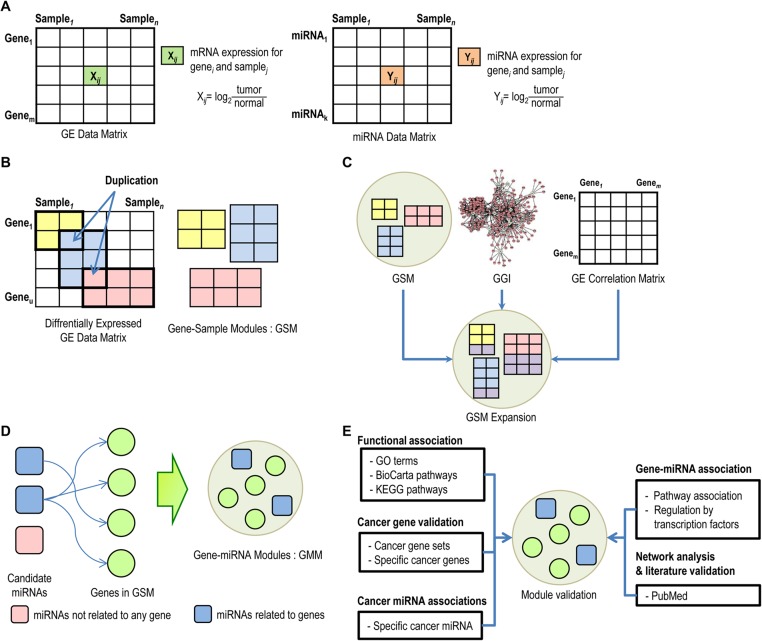
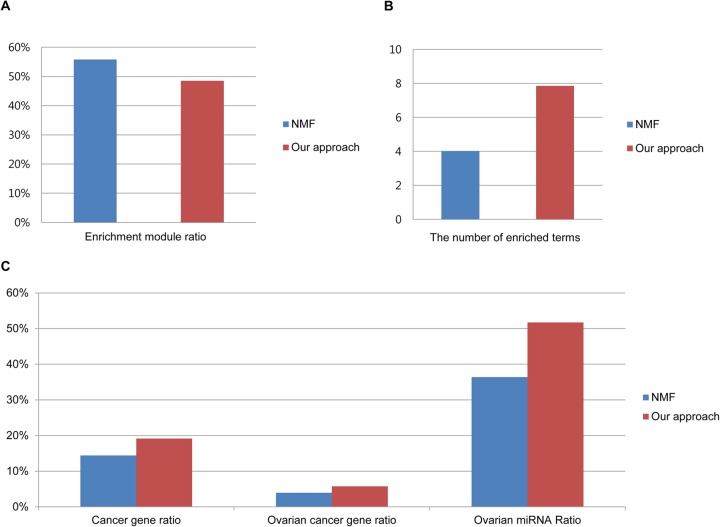
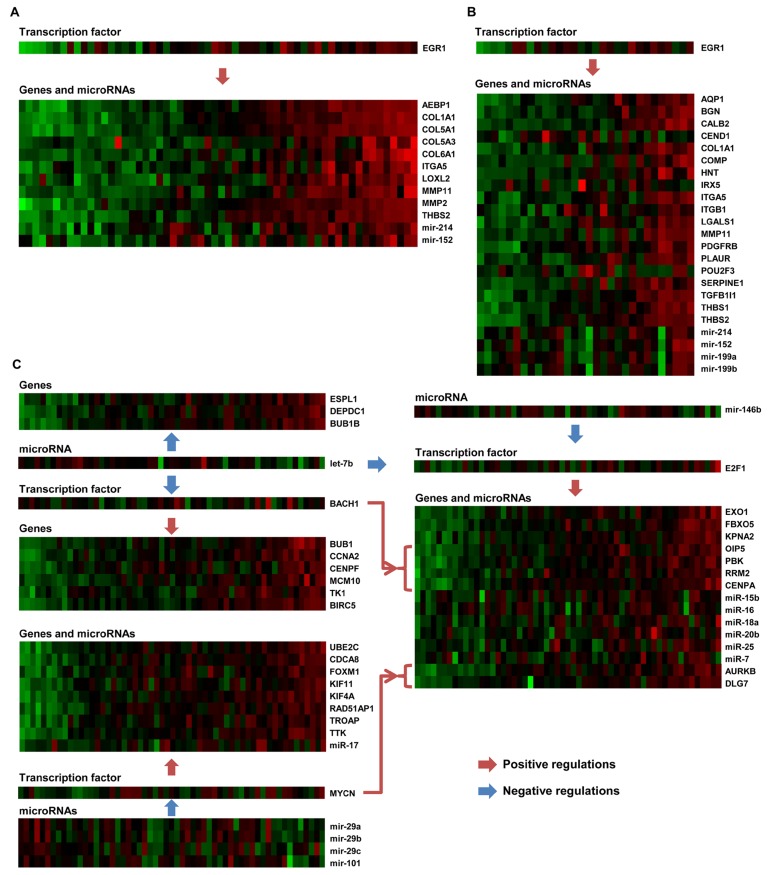
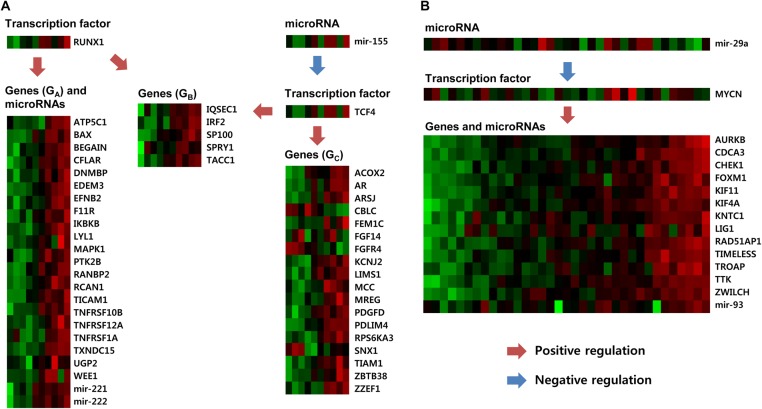
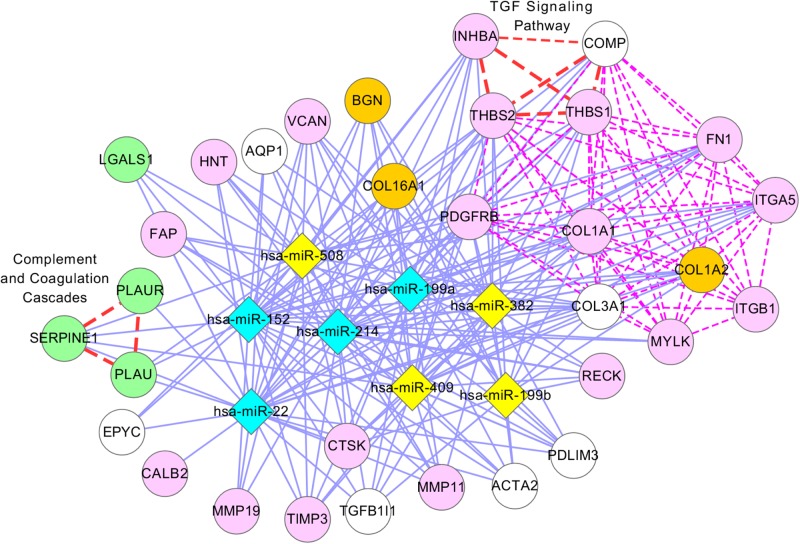
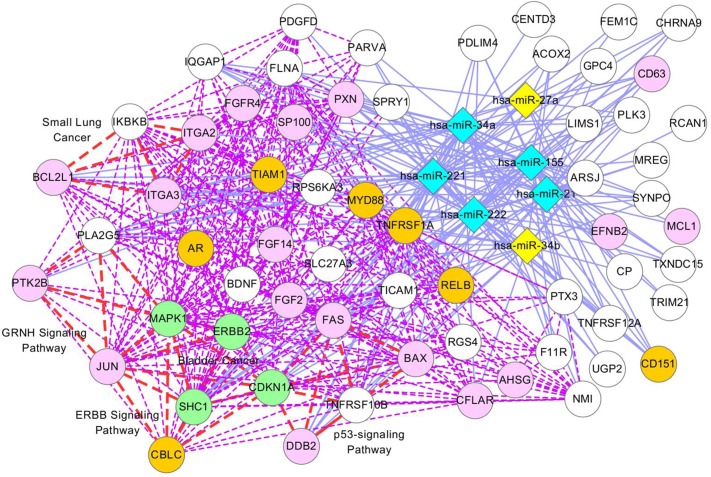
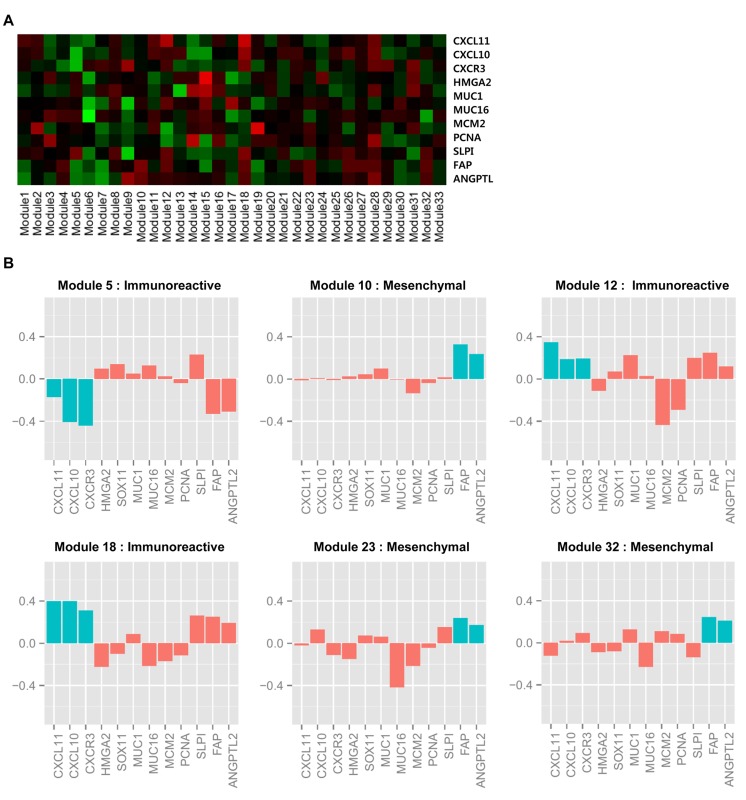
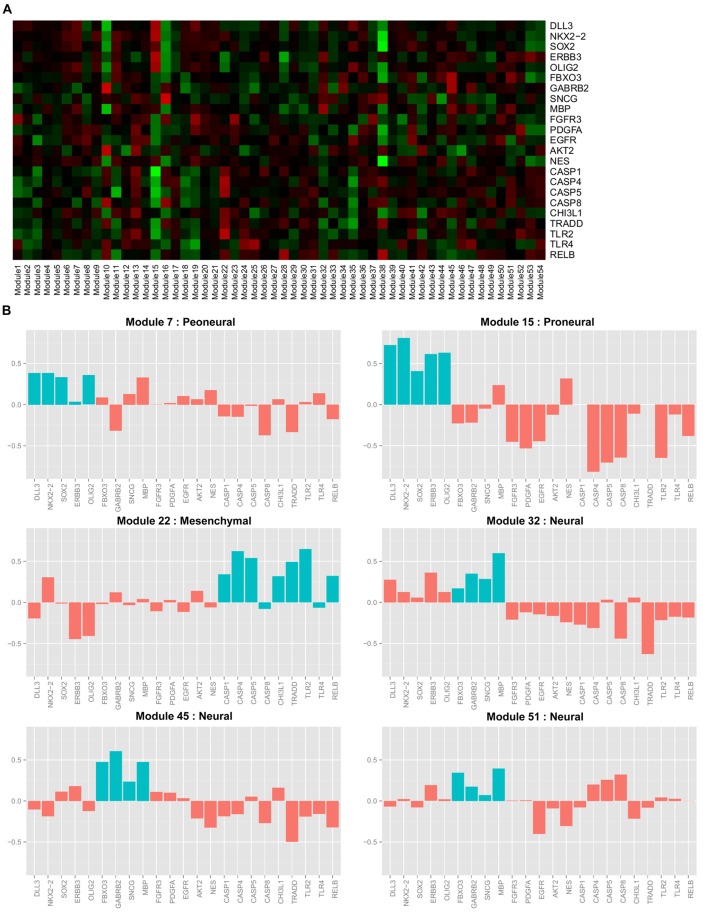
MicroRNAs (miRNAs) play key roles in the initiation and progression of various cancers by regulating genes. Regulatory interactions between genes and miRNAs are complex, as multiple miRNAs can regulate multiple genes. In addtion, these interactions vary from patient to patient and even among patients with the same cancer type, as cancer development is a heterogeneous process. These relationships are more complicated because transcription factors and other regulatory molecules can also regulate miRNAs and genes. Hence, it is important to identify the complex relationships between genes and miRNAs in cancer. In this study, we propose a computational approach to constructing modules that represent these relationships by integrating the expression data of genes and miRNAs with gene-gene interaction data. First, we used a biclustering algorithm to construct modules consisting of a subset of genes and a subset of samples to incorporate the heterogeneity of cancer cells. Second, we combined gene-gene interactions to include genes that play important roles in cancer-related pathways. Then, we selected miRNAs that are closely associated with genes in the modules based on a Gaussian Bayesian network and Bayesian Information Criteria. When we applied our approach to ovarian cancer and glioblastoma (GBM) data sets, 33 and 54 modules were constructed, respectively. In these modules, 91% and 94% of ovarian cancer and GBM modules, respectively, were explained either by direct regulation between genes and miRNAs or by indirect relationships via transcription factors. In addition, 48.4% and 74.0% of modules from ovarian cancer and GBM, respectively, were enriched with cancer-related pathways, and 51.7% and 71.7% of miRNAs in modules were ovarian cancer-related miRNAs and GBM-related miRNAs, respectively. Finally, we extensively analyzed significant modules and showed that most genes in these modules were related to ovarian cancer and GBM.
微小RNA(miRNA)通过调控基因在各种癌症的发生和发展中发挥关键作用。基因与miRNA之间的调控相互作用很复杂,因为多个miRNA可以调控多个基因。此外,这些相互作用因患者而异,甚至在相同癌症类型的患者之间也存在差异,因为癌症发展是一个异质性过程。由于转录因子和其他调控分子也可以调控miRNA和基因,这些关系更加复杂。因此,识别癌症中基因与miRNA之间的复杂关系很重要。在本研究中,我们提出了一种计算方法,通过整合基因和miRNA的表达数据以及基因-基因相互作用数据来构建代表这些关系的模块。首先,我们使用双聚类算法构建由基因子集和样本子集组成的模块,以纳入癌细胞的异质性。其次,我们结合基因-基因相互作用,纳入在癌症相关途径中起重要作用的基因。然后,我们基于高斯贝叶斯网络和贝叶斯信息准则选择与模块中的基因密切相关的miRNA。当我们将我们的方法应用于卵巢癌和胶质母细胞瘤(GBM)数据集时,分别构建了33个和54个模块。在这些模块中,卵巢癌和GBM模块分别有91%和94%可以通过基因与miRNA之间的直接调控或通过转录因子的间接关系来解释。此外,卵巢癌和GBM模块分别有48.4%和74.0%富含癌症相关途径,模块中分别有51.7%和71.7%的miRNA是卵巢癌相关miRNA和GBM相关miRNA。最后,我们对重要模块进行了广泛分析,结果表明这些模块中的大多数基因与卵巢癌和GBM相关。