Gondorf Fabian, Berbudi Afiat, Buerfent Benedikt C, Ajendra Jesuthas, Bloemker Dominique, Specht Sabine, Schmidt David, Neumann Anna-Lena, Layland Laura E, Hoerauf Achim, Hübner Marc P
Institute for Medical Microbiology, Immunology and Parasitology, University Hospital of Bonn, Bonn, Germany.
Institute for Medical Microbiology, Immunology and Parasitology, University Hospital of Bonn, Bonn, Germany; Institute of Medical Psychology and Behavioral Immunobiology, University Hospital Essen, Essen, Germany.
PLoS Pathog. 2015 Jan 22;11(1):e1004616. doi: 10.1371/journal.ppat.1004616. eCollection 2015 Jan.
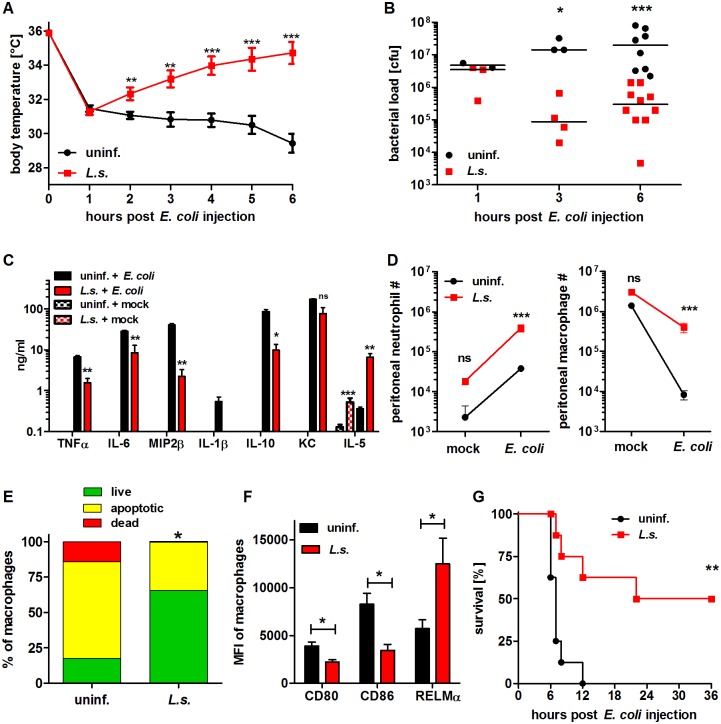
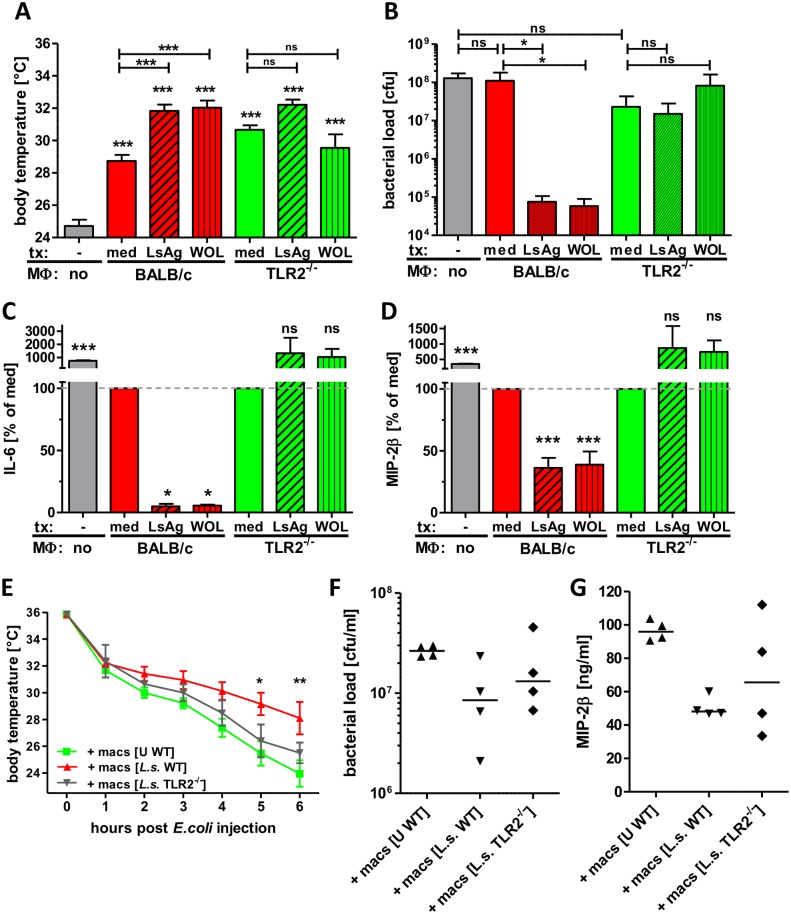
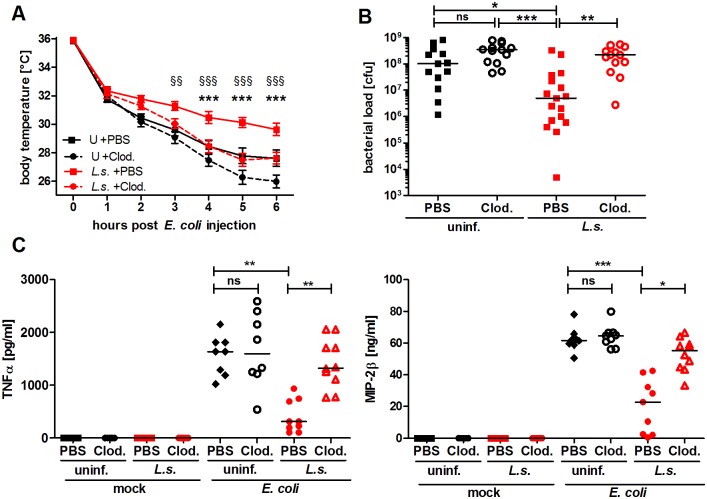
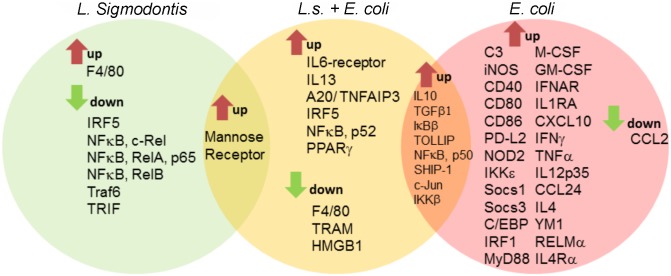
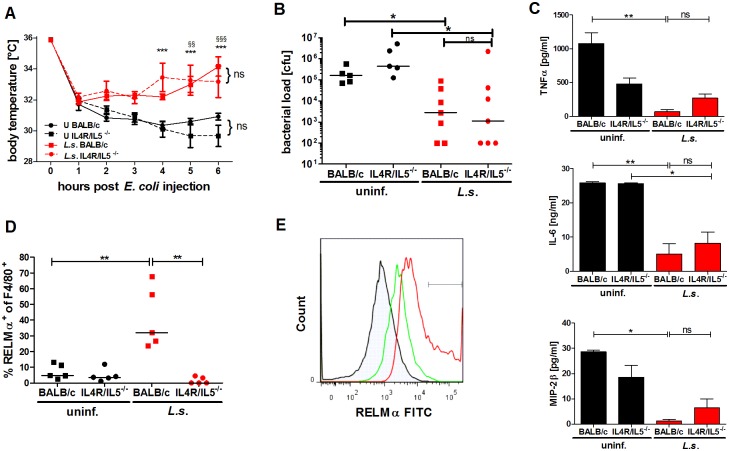
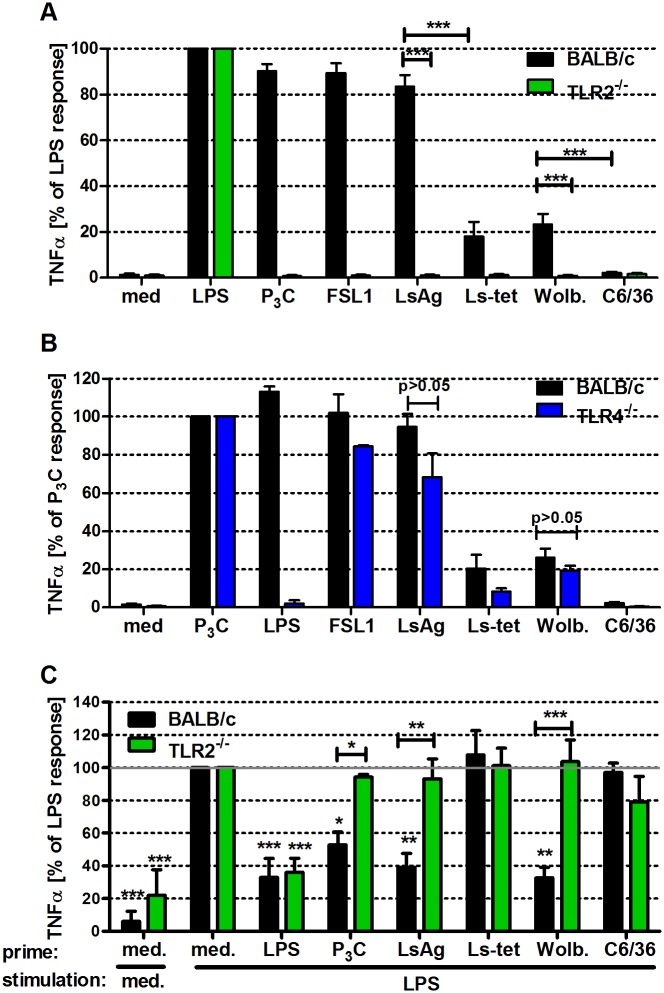
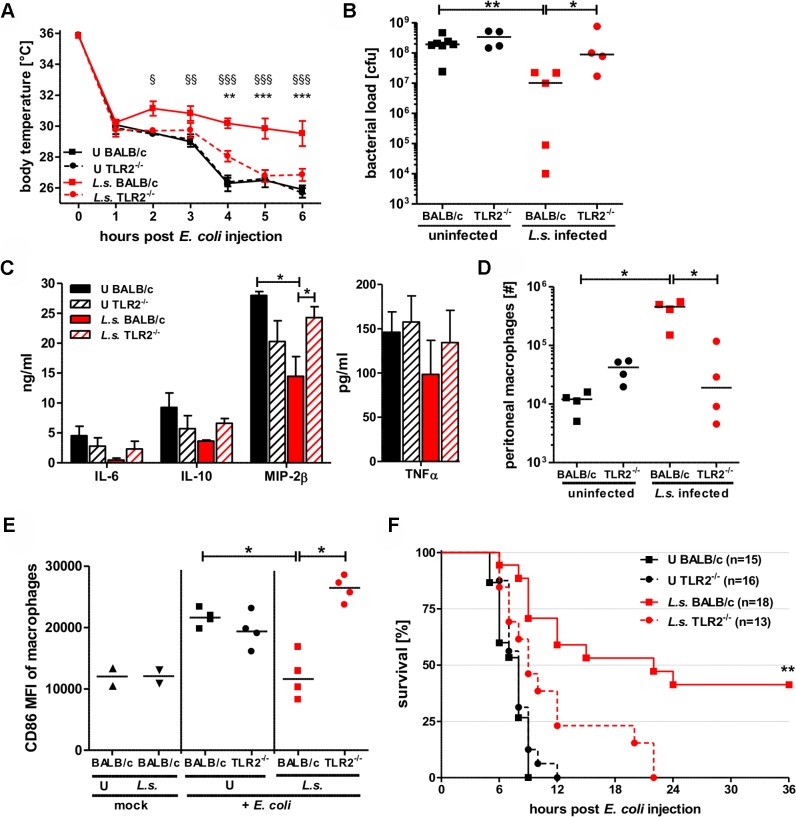
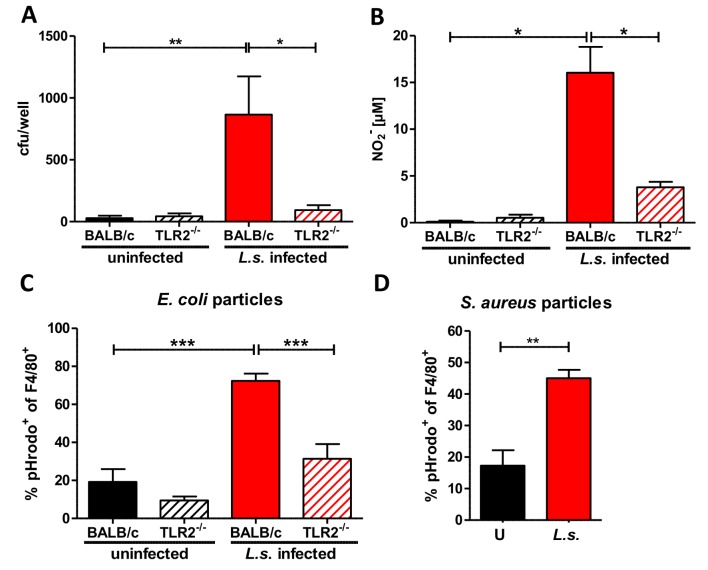
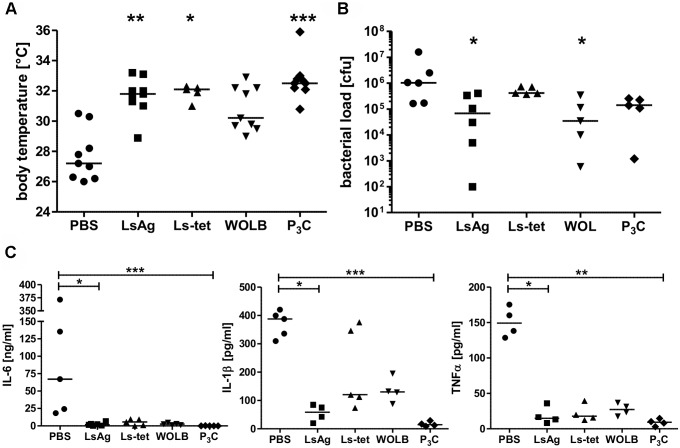
Helminths immunomodulate their hosts and induce a regulatory, anti-inflammatory milieu that prevents allergies and autoimmune diseases. Helminth immunomodulation may benefit sepsis outcome by preventing exacerbated inflammation and severe pathology, but the influence on bacterial clearance remains unclear. To address this, mice were chronically infected with the filarial nematode Litomosoides sigmodontis (L.s.) and the outcome of acute systemic inflammation caused by i.p. Escherichia coli injection was determined. L.s. infection significantly improved E. coli-induced hypothermia, bacterial clearance and sepsis survival and correlated with reduced concentrations of associated pro-inflammatory cytokines/chemokines and a less pronounced pro-inflammatory macrophage gene expression profile. Improved sepsis outcome in L.s.-infected animals was mediated by macrophages, but independent of the alternatively activated macrophage subset. Endosymbiotic Wolbachia bacteria that are present in most human pathogenic filariae, as well as L.s., signal via TLR2 and modulate macrophage function. Here, gene expression profiles of peritoneal macrophages from L.s.-infected mice revealed a downregulation of genes involved in TLR signaling, and pulsing of macrophages in vitro with L.s. extract reduced LPS-triggered activation. Subsequent transfer improved sepsis outcome in naïve mice in a Wolbachia- and TLR2-dependent manner. In vivo, phagocytosis was increased in macrophages from L.s.-infected wild type, but not TLR2-deficient animals. In association, L.s. infection neither improved bacterial clearance in TLR2-deficient animals nor ameliorated E. coli-induced hypothermia and sepsis survival. These results indicate that chronic L.s. infection has a dual beneficial effect on bacterial sepsis, reducing pro-inflammatory immune responses and improving bacterial control. Thus, helminths and their antigens may not only improve the outcome of autoimmune and allergic diseases, but may also present new therapeutic approaches for acute inflammatory diseases that do not impair bacterial control.
蠕虫可调节宿主的免疫功能,诱导产生一种调节性的抗炎环境,从而预防过敏和自身免疫性疾病。蠕虫的免疫调节作用可能通过预防炎症加剧和严重病理变化而改善脓毒症的预后,但其对细菌清除的影响尚不清楚。为了解决这个问题,研究人员用丝状线虫巴西日圆线虫(L.s.)对小鼠进行慢性感染,并测定腹腔注射大肠杆菌引起的急性全身炎症的结果。L.s.感染显著改善了大肠杆菌诱导的体温过低、细菌清除和脓毒症存活率,并与相关促炎细胞因子/趋化因子浓度降低以及不太明显的促炎巨噬细胞基因表达谱相关。L.s.感染动物脓毒症预后的改善是由巨噬细胞介导的,但与交替激活的巨噬细胞亚群无关。大多数人类致病性丝虫以及L.s.中存在的内共生沃尔巴克氏体细菌通过TLR2发出信号并调节巨噬细胞功能。在这里,来自L.s.感染小鼠的腹腔巨噬细胞的基因表达谱显示参与TLR信号传导的基因下调,并且用L.s.提取物在体外刺激巨噬细胞可降低LPS触发的激活。随后的转移以沃尔巴克氏体和TLR2依赖的方式改善了未感染小鼠的脓毒症预后。在体内,L.s.感染的野生型小鼠巨噬细胞的吞噬作用增加,但TLR2缺陷动物的巨噬细胞吞噬作用未增加。此外,L.s.感染既没有改善TLR2缺陷动物的细菌清除,也没有改善大肠杆菌诱导的体温过低和脓毒症存活率。这些结果表明,慢性L.s.感染对细菌性脓毒症具有双重有益作用,可降低促炎免疫反应并改善细菌控制。因此,蠕虫及其抗原不仅可以改善自身免疫性和过敏性疾病的预后,还可能为不损害细菌控制的急性炎症性疾病提供新的治疗方法。