Calamaras Timothy D, Lee Charlie, Lan Fan, Ido Yasuo, Siwik Deborah A, Colucci Wilson S
Myocardial Biology Unit, Cardiovascular Medicine, and Diabetes and Metabolism Research Unit, Section of Endocrinology, Department of Medicine, Boston University School of Medicine, Boston, MA 02118, USA.
Brigham and Women׳s Hospital, Boston, MA 02115, USA.
Free Radic Biol Med. 2015 May;82:137-46. doi: 10.1016/j.freeradbiomed.2015.01.007. Epub 2015 Jan 21.
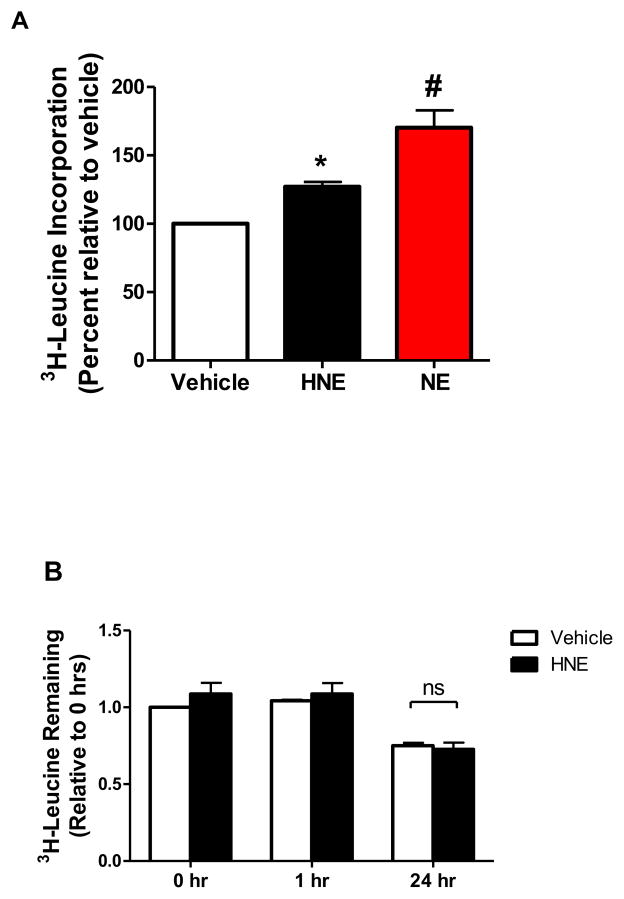
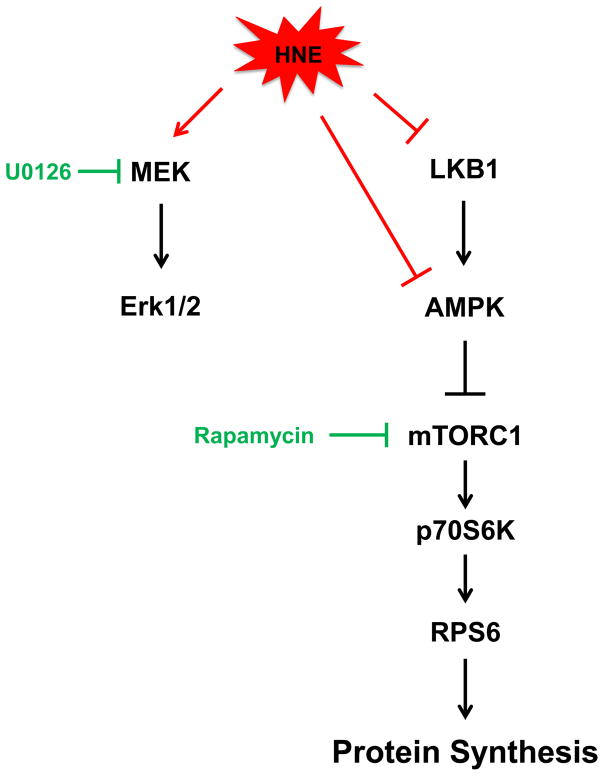
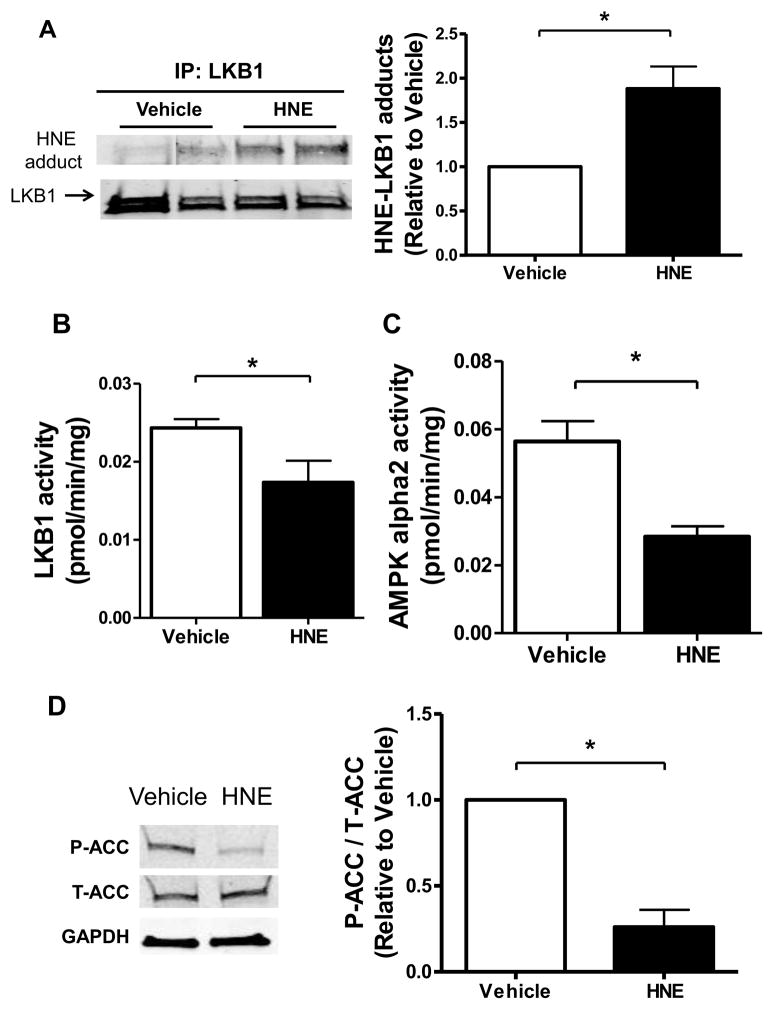
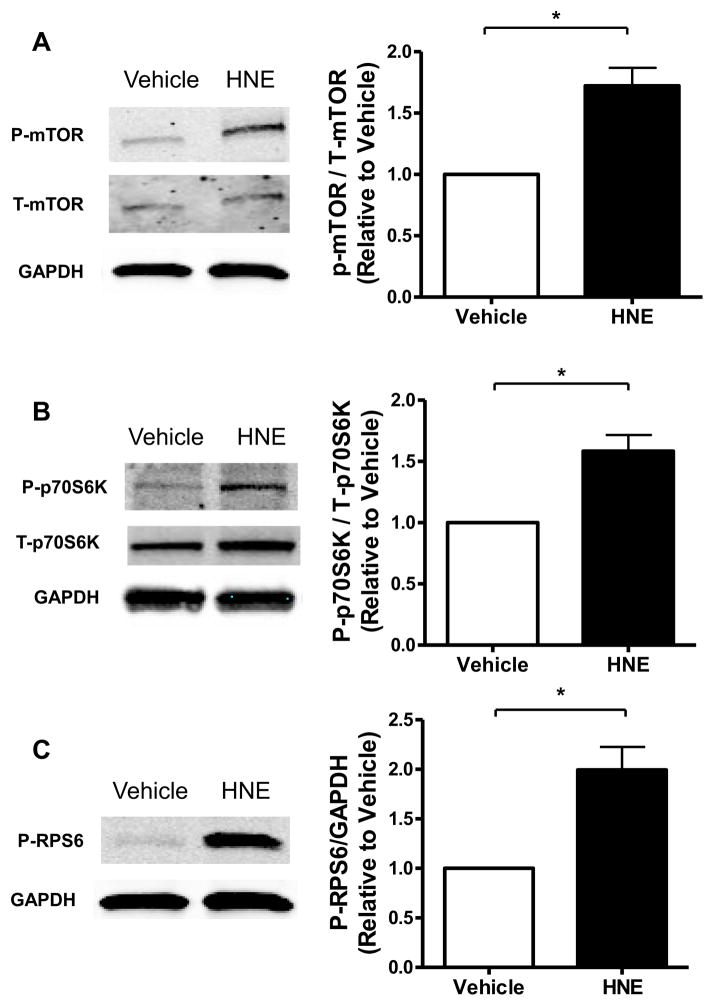
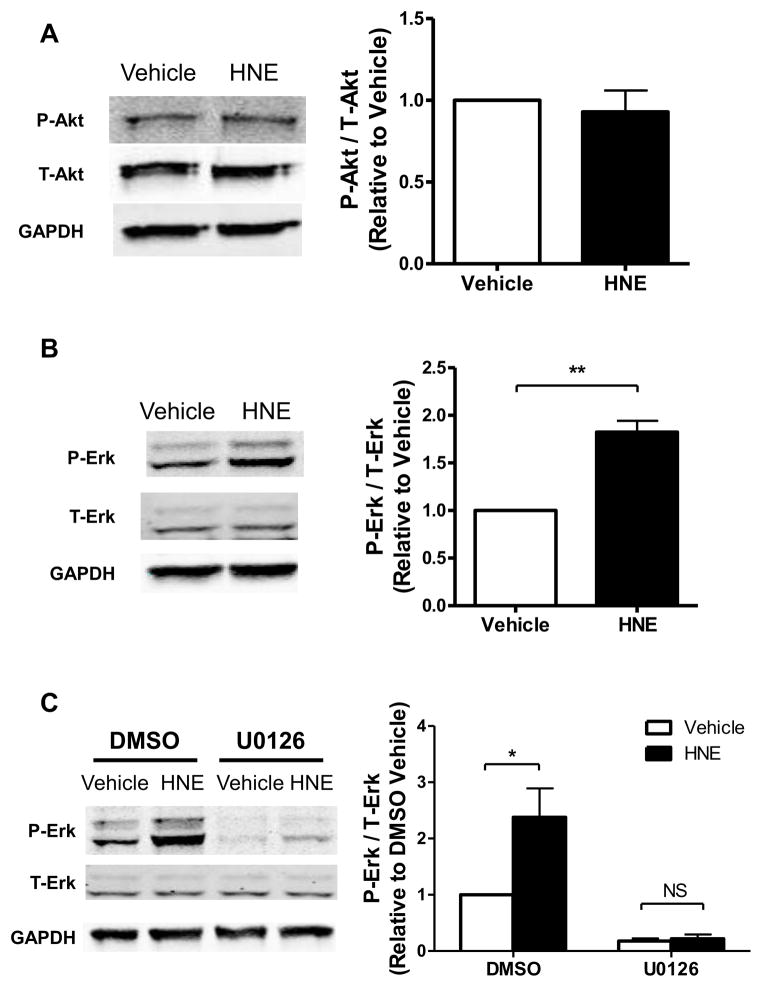
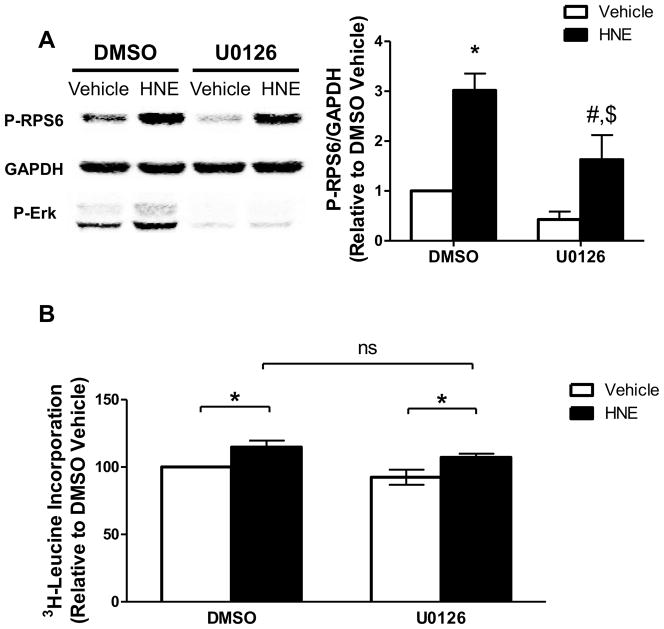
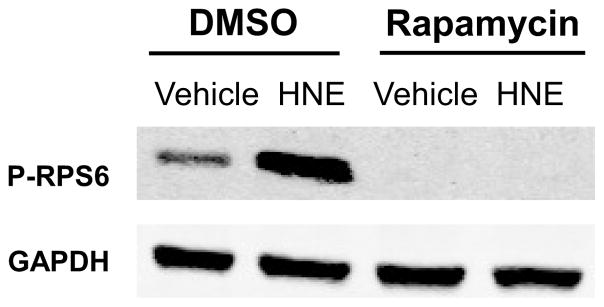
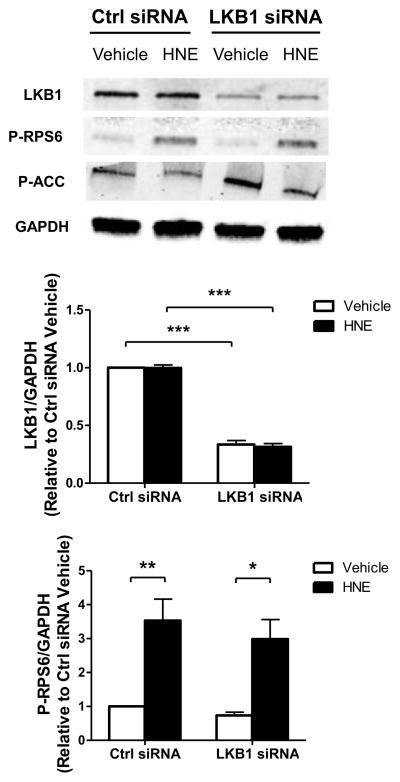
Reactive oxygen species (ROS) are elevated in the heart in response to hemodynamic and metabolic stress and promote hypertrophic signaling. ROS also mediate the formation of lipid peroxidation-derived aldehydes that may promote myocardial hypertrophy. One lipid peroxidation by-product, 4-hydroxy-trans-2-nonenal (HNE), is a reactive aldehyde that covalently modifies proteins thereby altering their function. HNE adducts directly inhibit the activity of LKB1, a serine/threonine kinase involved in regulating cellular growth in part through its interaction with the AMP-activated protein kinase (AMPK), but whether this drives myocardial growth is unclear. We tested the hypothesis that HNE promotes myocardial protein synthesis and if this effect is associated with impaired LKB1-AMPK signaling. In adult rat ventricular cardiomyocytes, exposure to HNE (10 μM for 1h) caused HNE-LKB1 adduct formation and inhibited LKB1 activity. HNE inhibited the downstream kinase AMPK, increased hypertrophic mTOR-p70S6K-RPS6 signaling, and stimulated protein synthesis by 27.1 ± 3.5%. HNE also stimulated Erk1/2 signaling, which contributed to RPS6 activation but was not required for HNE-stimulated protein synthesis. HNE-stimulated RPS6 phosphorylation was completely blocked using the mTOR inhibitor rapamycin. To evaluate if LKB1 inhibition by itself could promote the hypertrophic signaling changes observed with HNE, LKB1 was depleted in adult rat ventricular myocytes using siRNA. LKB1 knockdown did not replicate the effect of HNE on hypertrophic signaling or affect HNE-stimulated RPS6 phosphorylation. Thus, in adult cardiac myocytes HNE stimulates protein synthesis by activation of mTORC1-p70S6K-RPS6 signaling most likely mediated by direct inhibition of AMPK. Because HNE in the myocardium is commonly increased by stimuli that cause pathologic hypertrophy, these findings suggest that therapies that prevent activation of mTORC1-p70S6K-RPS6 signaling may be of therapeutic value.
在血流动力学和代谢应激反应中,心脏中的活性氧(ROS)水平升高,并促进肥大信号传导。ROS还介导脂质过氧化衍生醛的形成,这些醛可能促进心肌肥大。一种脂质过氧化副产物,4-羟基反式-2-壬烯醛(HNE),是一种反应性醛,可与蛋白质共价修饰,从而改变其功能。HNE加合物直接抑制LKB1的活性,LKB1是一种丝氨酸/苏氨酸激酶,部分通过与AMP激活的蛋白激酶(AMPK)相互作用参与调节细胞生长,但这是否驱动心肌生长尚不清楚。我们测试了HNE促进心肌蛋白合成的假设,以及这种效应是否与LKB1-AMPK信号受损有关。在成年大鼠心室心肌细胞中,暴露于HNE(10μM,1小时)导致HNE-LKB1加合物形成并抑制LKB1活性。HNE抑制下游激酶AMPK,增加肥大的mTOR-p70S6K-RPS6信号传导,并刺激蛋白质合成增加27.1±3.5%。HNE还刺激Erk1/2信号传导,这有助于RPS6激活,但不是HNE刺激的蛋白质合成所必需的。使用mTOR抑制剂雷帕霉素可完全阻断HNE刺激的RPS6磷酸化。为了评估LKB1自身抑制是否能促进观察到的HNE引起的肥大信号变化,使用siRNA在成年大鼠心室肌细胞中耗尽LKB1。LKB1敲低未复制HNE对肥大信号的影响,也未影响HNE刺激的RPS6磷酸化。因此,在成年心肌细胞中,HNE通过激活mTORC1-p70S6K-RPS6信号传导刺激蛋白质合成,这很可能是由直接抑制AMPK介导的。由于心肌中的HNE通常会因引起病理性肥大的刺激而增加,这些发现表明,预防mTORC1-p70S6K-RPS6信号传导激活的疗法可能具有治疗价值。