Alnajjar Fady, Itkonen Matti, Berenz Vincent, Tournier Maxime, Nagai Chikara, Shimoda Shingo
Intelligent Behavior Control Unit, Brain Science Institute-TOYOTA Collaboration Center of RIKEN Nagoya, Japan.
Front Neurosci. 2015 Jan 13;8:436. doi: 10.3389/fnins.2014.00436. eCollection 2014.
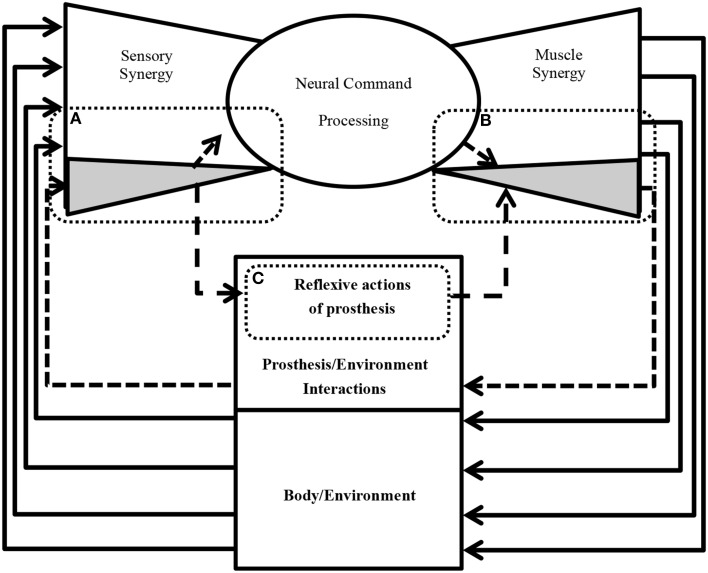
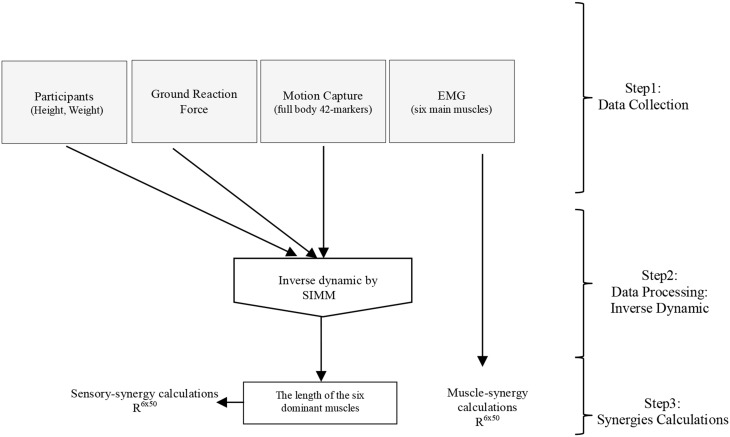
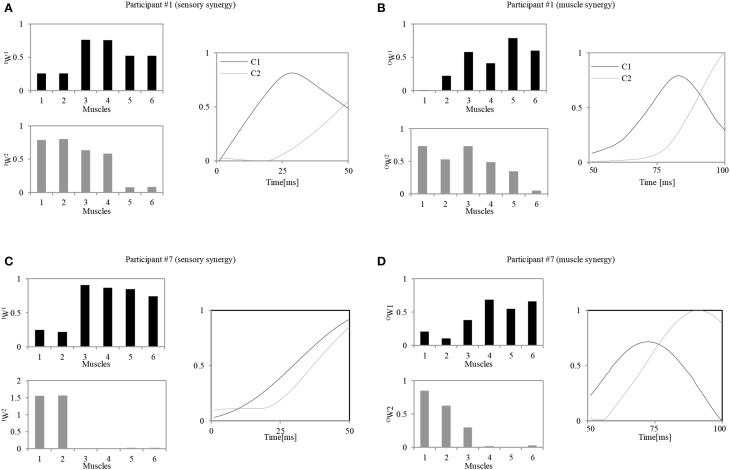
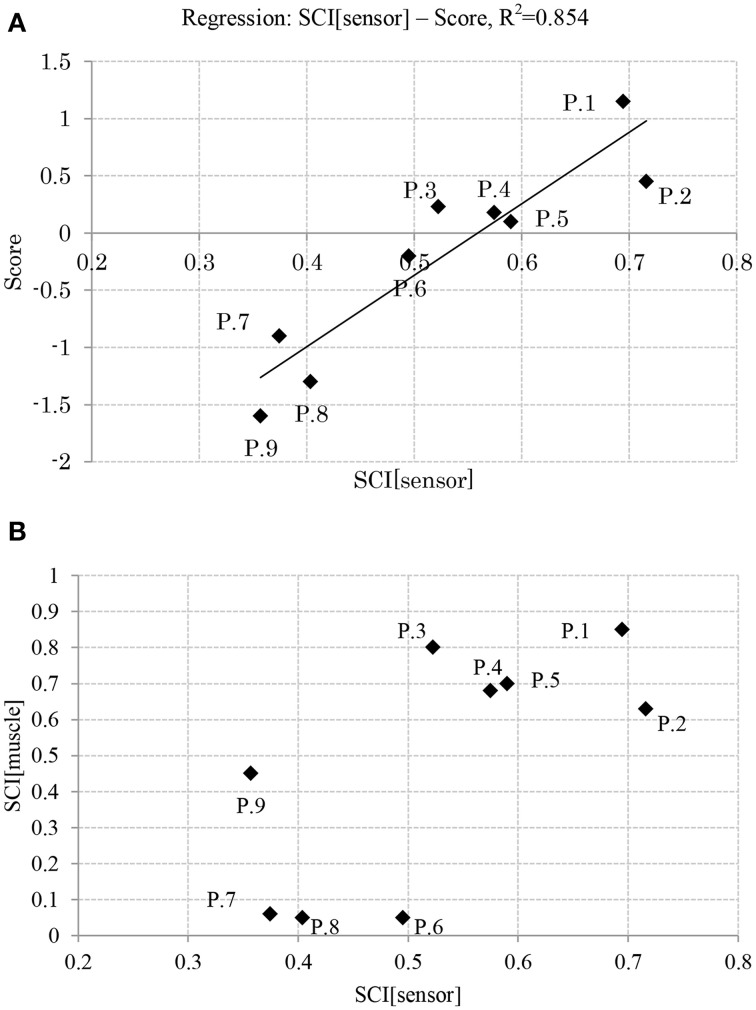
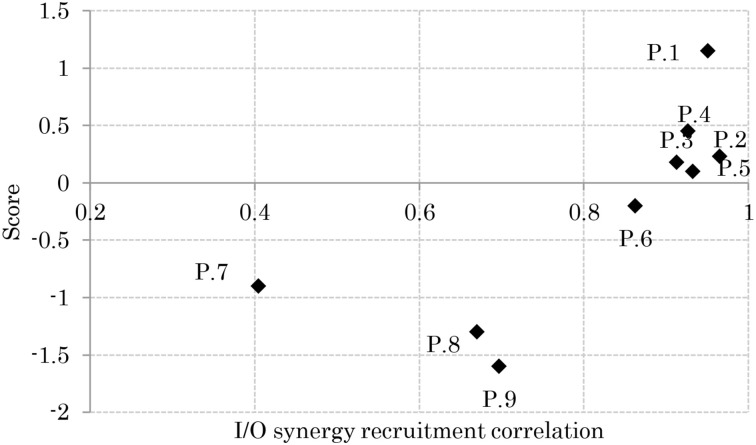
The development of a method to feed proper environmental inputs back to the central nervous system (CNS) remains one of the challenges in achieving natural movement when part of the body is replaced with an artificial device. Muscle synergies are widely accepted as a biologically plausible interpretation of the neural dynamics between the CNS and the muscular system. Yet the sensorineural dynamics of environmental feedback to the CNS has not been investigated in detail. In this study, we address this issue by exploring the concept of sensory synergy. In contrast to muscle synergy, we hypothesize that sensory synergy plays an essential role in integrating the overall environmental inputs to provide low-dimensional information to the CNS. We assume that sensor synergy and muscle synergy communicate using these low-dimensional signals. To examine our hypothesis, we conducted posture control experiments involving lateral disturbance with nine healthy participants. Proprioceptive information represented by the changes on muscle lengths were estimated by using the musculoskeletal model analysis software SIMM. Changes on muscles lengths were then used to compute sensory synergies. The experimental results indicate that the environmental inputs were translated into the two dimensional signals and used to move the upper limb to the desired position immediately after the lateral disturbance. Participants who showed high skill in posture control were found to be likely to have a strong correlation between sensory and muscle signaling as well as high coordination between the utilized sensory synergies. These results suggest the importance of integrating environmental inputs into suitable low-dimensional signals before providing them to the CNS. This mechanism should be essential when designing the prosthesis' sensory system to make the controller simpler.
当身体的一部分被人工装置替代时,开发一种将适当的环境输入反馈到中枢神经系统(CNS)的方法仍然是实现自然运动的挑战之一。肌肉协同作用被广泛认为是对中枢神经系统和肌肉系统之间神经动力学的一种生物学上合理的解释。然而,环境反馈到中枢神经系统的感觉神经动力学尚未得到详细研究。在本研究中,我们通过探索感觉协同作用的概念来解决这个问题。与肌肉协同作用相反,我们假设感觉协同作用在整合整体环境输入以向中枢神经系统提供低维信息方面起着至关重要的作用。我们假设感觉协同作用和肌肉协同作用利用这些低维信号进行通信。为了检验我们的假设,我们对九名健康参与者进行了涉及横向干扰的姿势控制实验。通过使用肌肉骨骼模型分析软件SIMM估计由肌肉长度变化表示的本体感觉信息。然后使用肌肉长度的变化来计算感觉协同作用。实验结果表明,环境输入被转换为二维信号,并在横向干扰后立即用于将上肢移动到期望位置。发现姿势控制技能高的参与者在感觉和肌肉信号之间可能具有很强的相关性,并且在利用的感觉协同作用之间具有高度协调性。这些结果表明在将环境输入提供给中枢神经系统之前将其整合为合适的低维信号的重要性。在设计假体的感觉系统以使控制器更简单时,这种机制应该是必不可少的。