Gao Hui-Juan, Yang Hong-Yu, Bai Jiang-Ping, Liang Xin-Yue, Lou Yan, Zhang Jun-Lian, Wang Di, Zhang Jin-Lin, Niu Shu-Qi, Chen Ying-Long
Gansu Key Laboratories of Crop Genetic and Germplasm Enhancement and Aridland Crop Science, College of Agronomy, Gansu Agricultural University Lanzhou, China.
Department of Chemistry, School of Chemistry and Chemical Engineering, Nanjing University Nanjing, China.
Front Plant Sci. 2015 Jan 13;5:787. doi: 10.3389/fpls.2014.00787. eCollection 2014.
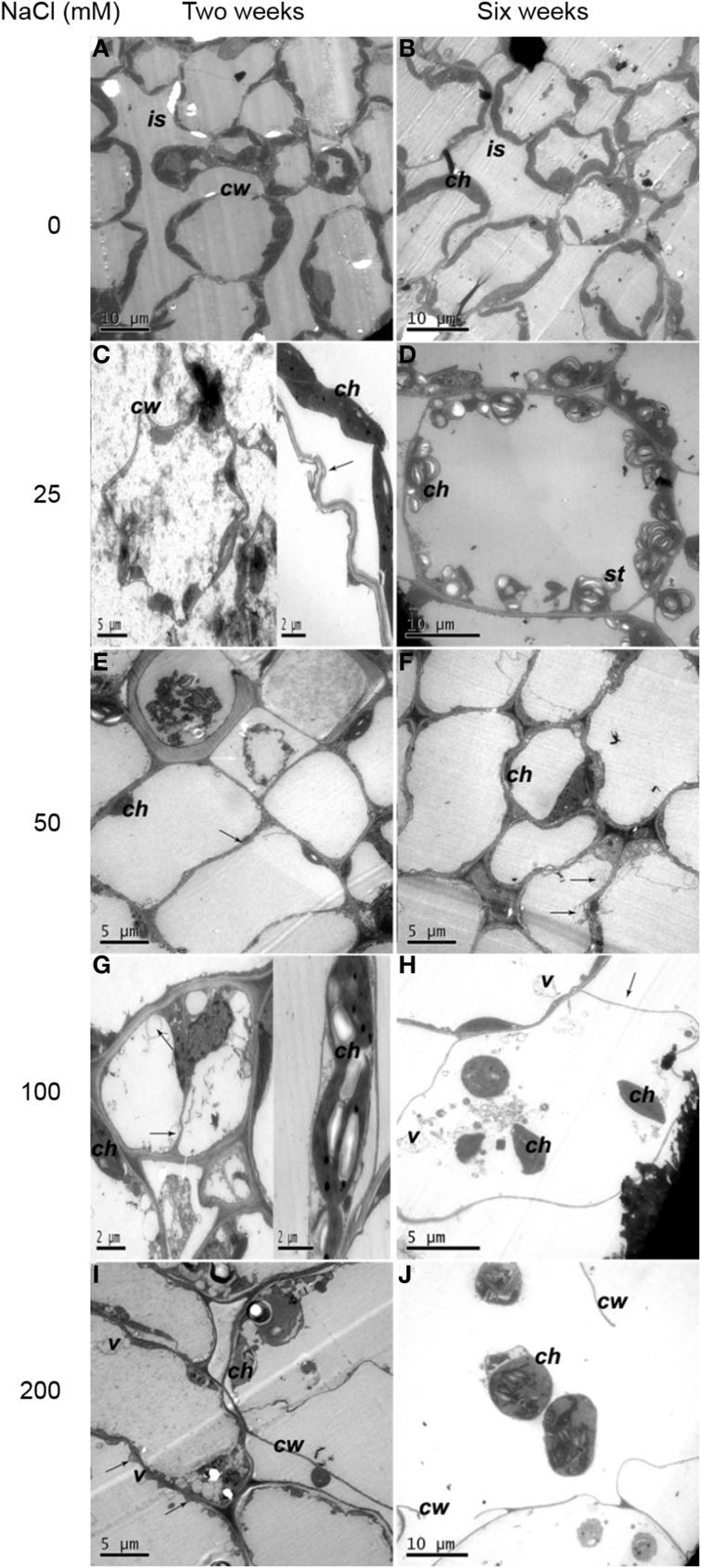
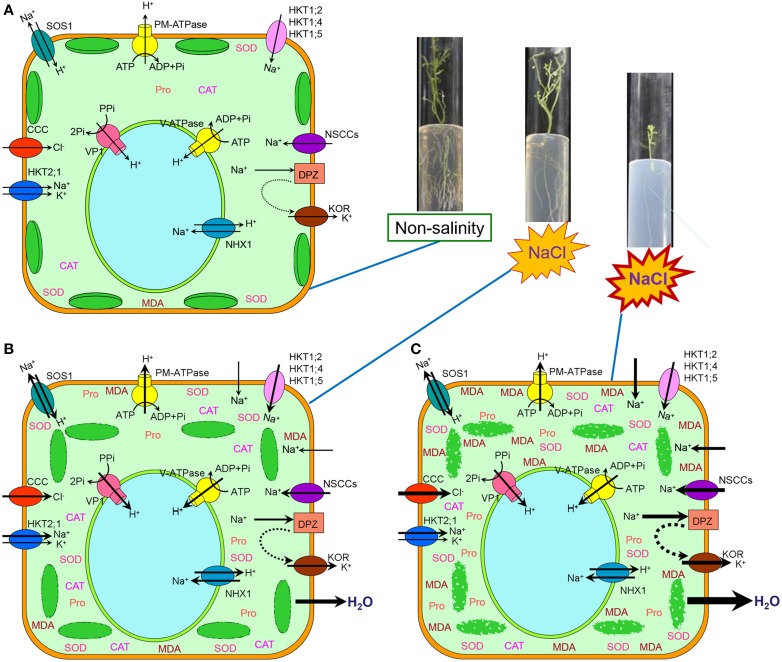
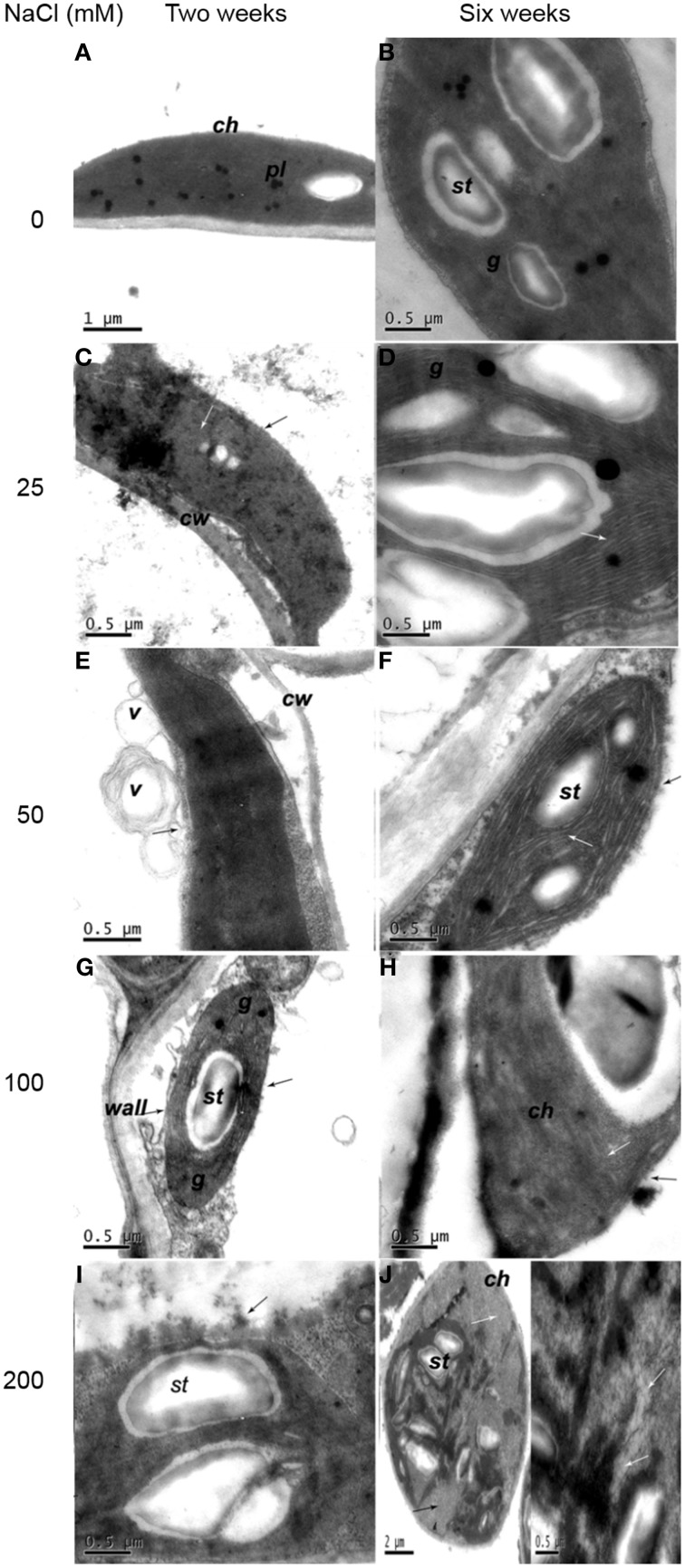
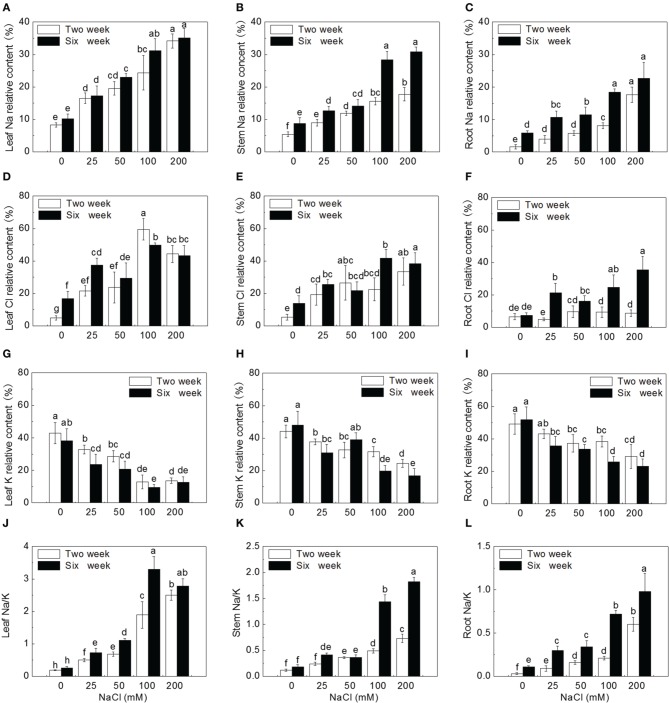
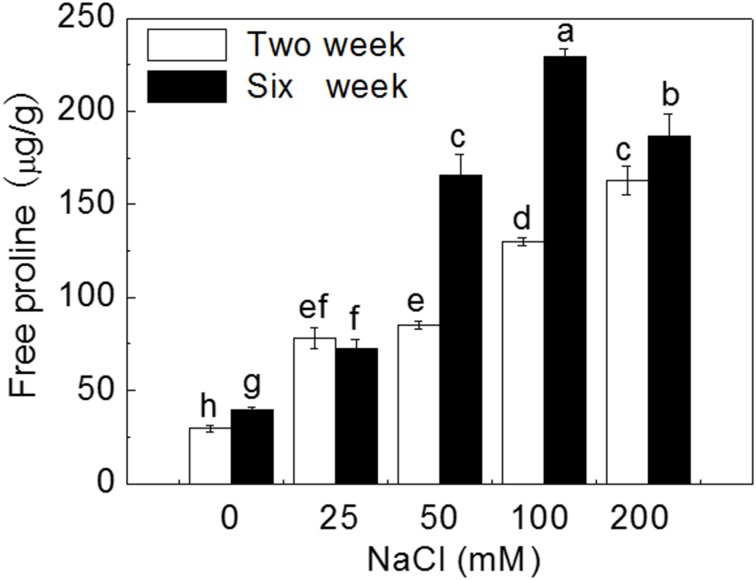
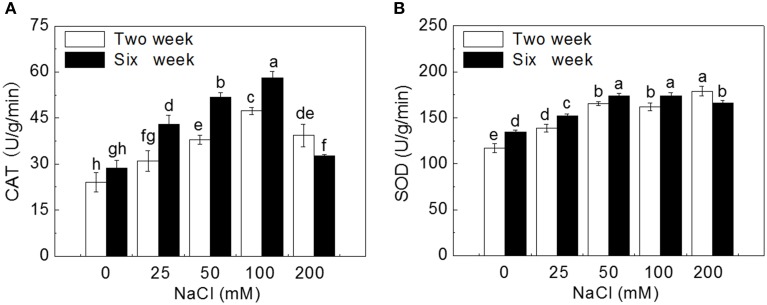
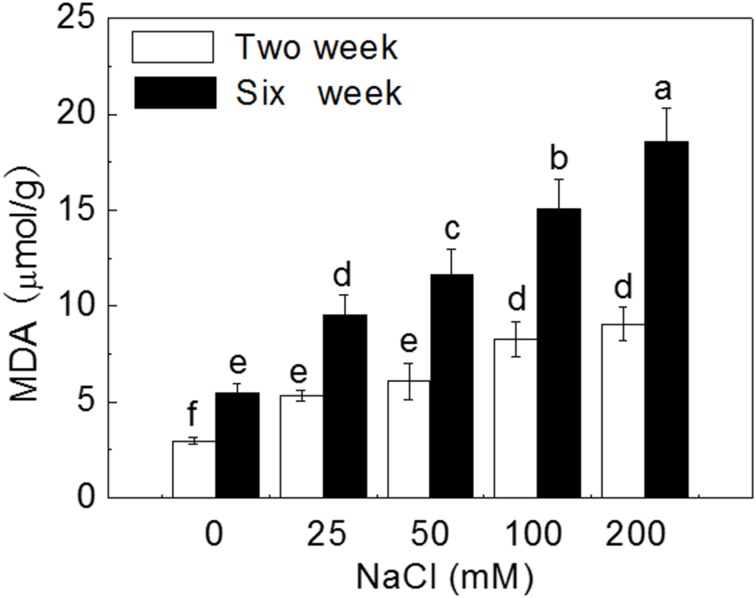
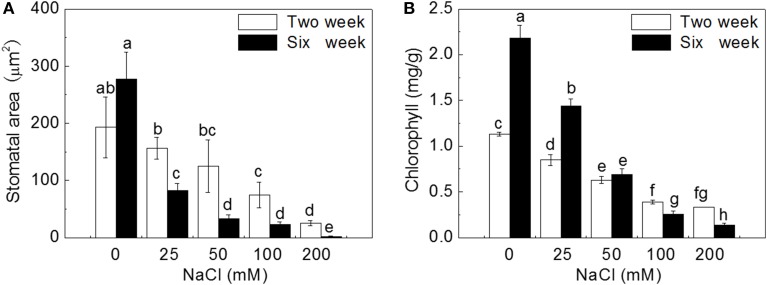
Salinity is one of the major abiotic stresses that impacts plant growth and reduces the productivity of field crops. Compared to field plants, test tube plantlets offer a direct and fast approach to investigate the mechanism of salt tolerance. Here we examined the ultrastructural and physiological responses of potato (Solanum tuberosum L. c.v. "Longshu No. 3") plantlets to gradient saline stress (0, 25, 50, 100, and 200 mM NaCl) with two consequent observations (2 and 6 weeks, respectively). The results showed that, with the increase of external NaCl concentration and the duration of treatments, (1) the number of chloroplasts and cell intercellular spaces markedly decreased, (2) cell walls were thickened and even ruptured, (3) mesophyll cells and chloroplasts were gradually damaged to a complete disorganization containing more starch, (4) leaf Na and Cl contents increased while leaf K content decreased, (5) leaf proline content and the activities of catalase (CAT) and superoxide dismutase (SOD) increased significantly, and (6) leaf malondialdehyde (MDA) content increased significantly and stomatal area and chlorophyll content decline were also detected. Severe salt stress (200 mM NaCl) inhibited plantlet growth. These results indicated that potato plantlets adapt to salt stress to some extent through accumulating osmoprotectants, such as proline, increasing the activities of antioxidant enzymes, such as CAT and SOD. The outcomes of this study provide ultrastructural and physiological insights into characterizing potential damages induced by salt stress for selecting salt-tolerant potato cultivars.
盐度是影响植物生长并降低大田作物产量的主要非生物胁迫之一。与大田植物相比,试管苗为研究耐盐机制提供了一种直接且快速的方法。在此,我们研究了马铃薯(Solanum tuberosum L. c.v. “陇薯3号”)试管苗对梯度盐胁迫(0、25、50、100和200 mM NaCl)的超微结构和生理响应,并进行了两个连续的观察期(分别为2周和6周)。结果表明,随着外部NaCl浓度的增加和处理时间的延长,(1)叶绿体数量和细胞间隙显著减少;(2)细胞壁增厚甚至破裂;(3)叶肉细胞和叶绿体逐渐受损直至完全解体,且含有更多淀粉;(4)叶片Na和Cl含量增加而K含量降低;(5)叶片脯氨酸含量以及过氧化氢酶(CAT)和超氧化物歧化酶(SOD)的活性显著增加;(6)叶片丙二醛(MDA)含量显著增加,同时还检测到气孔面积减小和叶绿素含量下降。严重盐胁迫(200 mM NaCl)抑制了试管苗生长。这些结果表明,马铃薯试管苗通过积累渗透保护剂(如脯氨酸)、提高抗氧化酶(如CAT和SOD)的活性在一定程度上适应盐胁迫。本研究结果为表征盐胁迫诱导的潜在损伤以选择耐盐马铃薯品种提供了超微结构和生理学方面的见解。