Vineeth T V, Krishna G K, Pandesha P H, Sathee L, Thomas S, James D, Ravikiran K T, Taria S, John C, Vinaykumar N M, Lokeshkumar B M, Jat H S, Bose J, Camus D, Rathor S, Krishnamurthy S L, Sharma P C
Indian Council of Agricultural Research-Central Soil Salinity Research Institute (ICAR-CSSRI), Regional Research Station (RRS), 392 012 Bharuch, Gujarat, India.
Indian Council of Agricultural Research-Central Soil Salinity Research Institute (ICAR-CSSRI), 132 001 Karnal, Haryana, India.
Photosynthetica. 2023 Mar 14;61(1):73-93. doi: 10.32615/ps.2023.002. eCollection 2023.
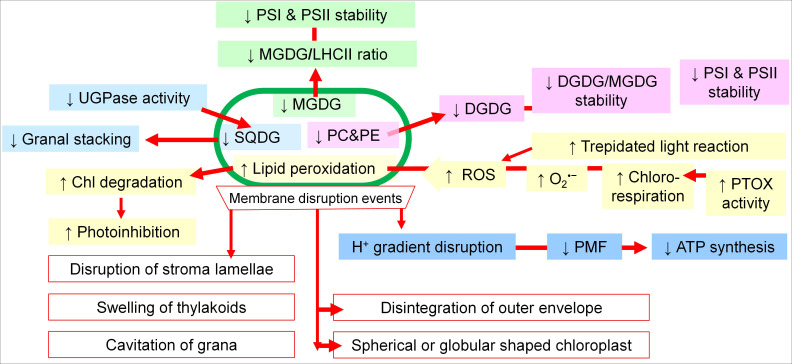
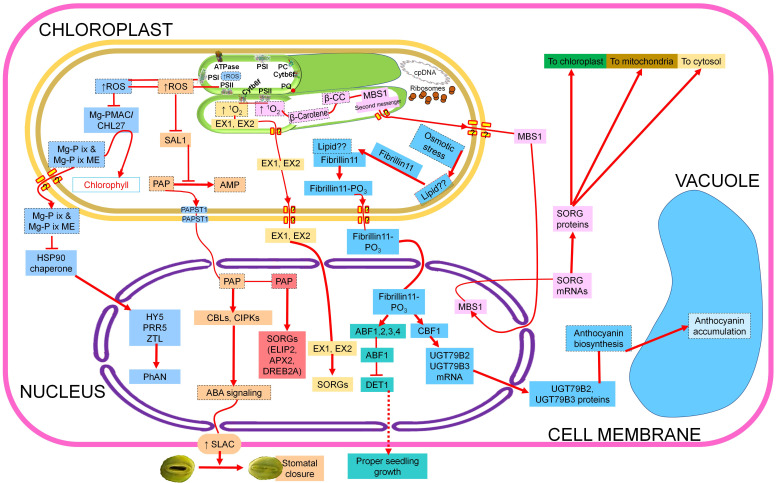
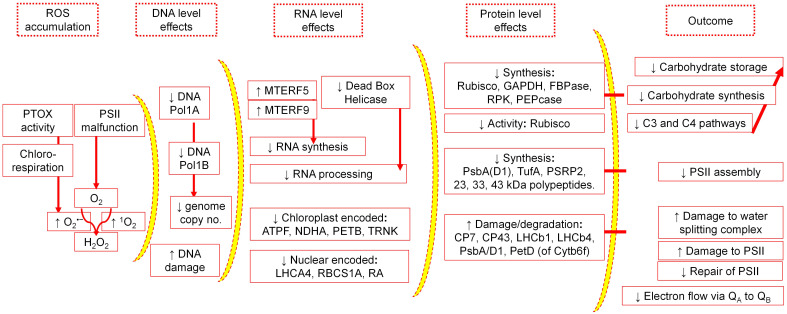
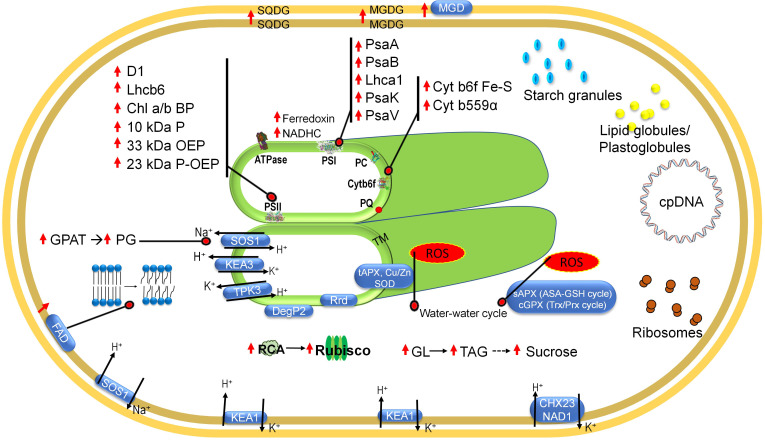
Chloroplasts and photosynthesis are the physiologically fateful arenas of salinity stress. Morphological and anatomical alterations in the leaf tissue, ultrastructural changes in the chloroplast, compromise in the integrity of the three-layered chloroplast membrane system, and defects in the light and dark reactions during the osmotic, ionic, and oxidative phases of salt stress are conversed in detail to bring the salinity-mediated physiological alterations in the chloroplast on to a single platform. Chloroplasts of salt-tolerant plants have evolved highly regulated salt-responsive pathways. Thylakoid membrane remodeling, ion homeostasis, osmoprotection, upregulation of chloroplast membrane and stromal proteins, chloroplast ROS scavenging, efficient retrograde signalling, and differential gene and metabolite abundance are the key attributes of optimal photosynthesis in tolerant species. This review throws light into the comparative mechanism of chloroplast and photosynthetic response to salinity in sensitive and tolerant plant species.
叶绿体和光合作用是盐胁迫生理上的关键作用场所。叶片组织的形态和解剖学改变、叶绿体的超微结构变化、三层叶绿体膜系统完整性的损害,以及盐胁迫渗透、离子和氧化阶段光反应和暗反应中的缺陷,都被详细讨论,以便将盐度介导的叶绿体生理变化整合到一个统一的框架中。耐盐植物的叶绿体已经进化出高度调控的盐响应途径。类囊体膜重塑、离子稳态、渗透保护、叶绿体膜和基质蛋白的上调、叶绿体活性氧清除、有效的逆行信号传导,以及基因和代谢物丰度的差异,是耐盐物种中最佳光合作用的关键特征。本综述揭示了敏感和耐盐植物物种中叶绿体对盐度响应及光合作用的比较机制。