Gardin Chiara, Ferroni Letizia, Bressan Eriberto, Calvo-Guirado José L, Degidi Marco, Piattelli Adriano, Zavan Barbara
Department of Biomedical Sciences, University of Padua, Padua, Italy.
Department of Neurosciences, University of Padua, Padua, Italy.
Int J Mol Cell Med. 2014 Fall;3(4):225-36.
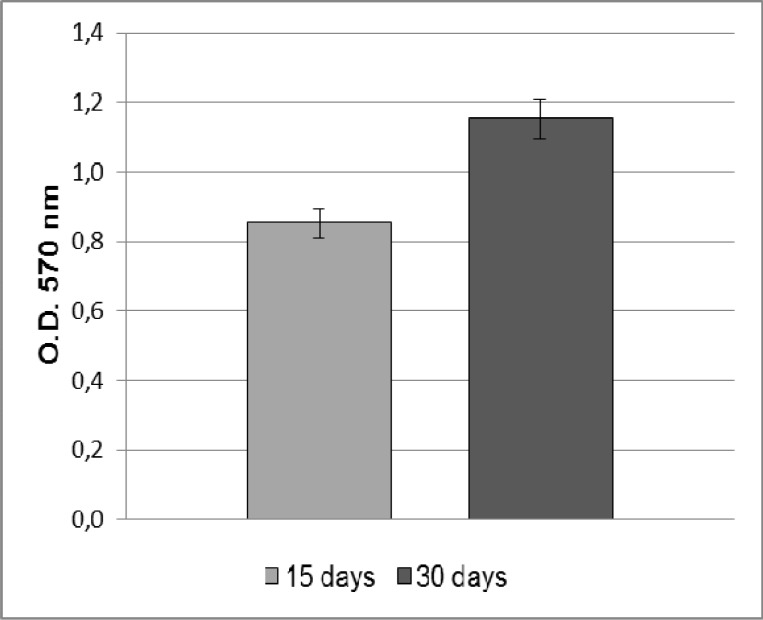
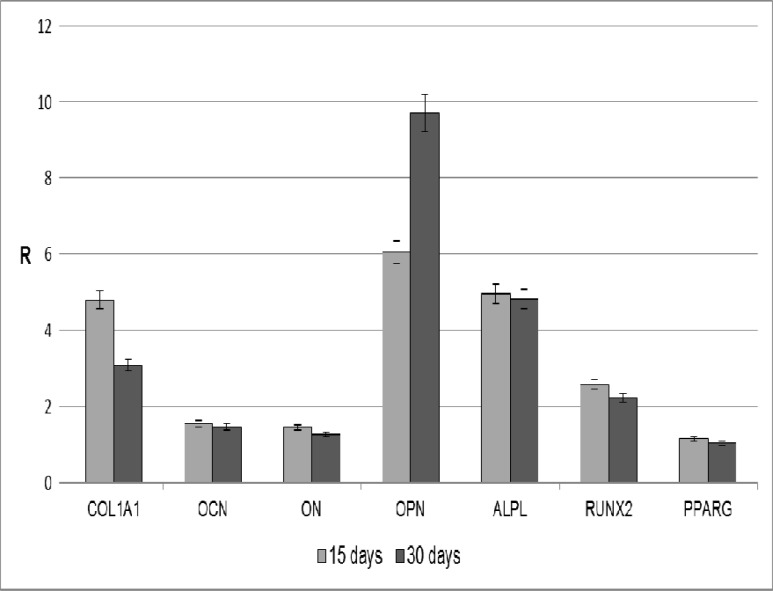
Titanium (Ti) is one of the most widely used biomaterials for manufacturing dental implants. The implant surface properties strongly influence osseointegration. The aim of the present study was to in vitro investigate the characteristics of Ti dental implants in terms of mutagenicity, hemocompatibility, biocompatibility, osteoinductivity and biological safety. The Ames test was used to test the mutagenicity of the Ti dental implants, and the hemolysis assay for evaluating their hemocompatibility. Human adipose - derived stem cells (ADSCs) were then seeded onto these implants in order to evaluate their cytotoxicity. Gene expression analyzing with real-time PCR was carried out to investigate the osteoinductivity of the biomaterials. Finally, the genetic stability of the cells cultured onto dental implants was determined by karyotyping. Our results demonstrated that Ti dental implants are not mutagenic, do not cause hemolysis, and are biocompatible. The MTT assay revealed that ADSCs, seeded on Ti dental implants, proliferate up to 30 days in culture. Moreover, ADSCs loaded on Ti dental implants show a substantial expression of some osteoblast specific markers, such as COL1A1, OPN, ALPL, and RUNX2, as well as chromosomal stability after 30 days of culture in a medium without osteogenic factors. In conclusion, the grit-blasted and acid-etched treatment seems to favor the adhesion and proliferation of ADSCs and improve the osteoinductivity of Ti dental implant surfaces.
钛(Ti)是制造牙种植体应用最广泛的生物材料之一。种植体表面特性对骨结合有很大影响。本研究的目的是在体外研究钛牙种植体在致突变性、血液相容性、生物相容性、骨诱导性和生物安全性方面的特性。采用艾姆斯试验检测钛牙种植体的致突变性,采用溶血试验评估其血液相容性。然后将人脂肪来源干细胞(ADSCs)接种到这些种植体上,以评估其细胞毒性。通过实时PCR进行基因表达分析,以研究生物材料的骨诱导性。最后,通过核型分析确定接种在牙种植体上的细胞的遗传稳定性。我们的结果表明,钛牙种植体无致突变性,不引起溶血,具有生物相容性。MTT试验显示,接种在钛牙种植体上的ADSCs在培养30天内增殖。此外,接种在钛牙种植体上的ADSCs在无成骨因子的培养基中培养30天后,显示出一些成骨细胞特异性标志物的大量表达,如COL1A1、OPN、ALPL和RUNX2,以及染色体稳定性。总之,喷砂和酸蚀处理似乎有利于ADSCs的黏附和增殖,并改善钛牙种植体表面的骨诱导性。