Bouaziz Wafa, Funck-Brentano Thomas, Lin Hilène, Marty Caroline, Ea Hang-Korng, Hay Eric, Cohen-Solal Martine
Inserm U1132 and university Paris 7, hopital Lariboisiere, 2 rue Ambroise Pare, 75010, Paris, France.
Arthritis Res Ther. 2015 Feb 6;17(1):24. doi: 10.1186/s13075-015-0540-6.
Sclerostin is a Wnt inhibitor produced by osteocytes that regulates bone formation. Because bone tissue contributes to the development of osteoarthritis (OA), we investigated the role of sclerostin in bone and cartilage in a joint instability model in mice.
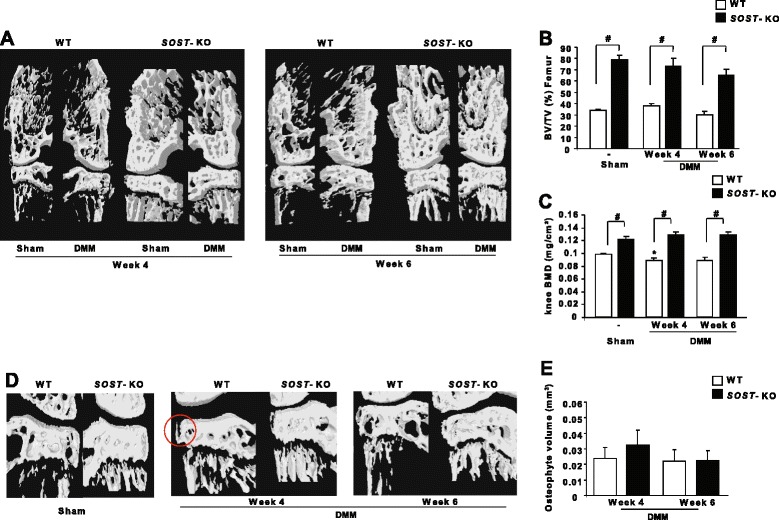
Ten-week-old SOST-knockout (SOST-KO) and wild-type (WT) mice underwent destabilization of the medial meniscus (DMM). We measured bone volume at the medial femoral condyle and osteophyte volume and determined the OA score and expression of matrix proteins. Primary murine chondrocytes were cultured with Wnt3a and sclerostin to assess the expression of matrix proteins, proteoglycan release and glycosaminoglycan accumulation.
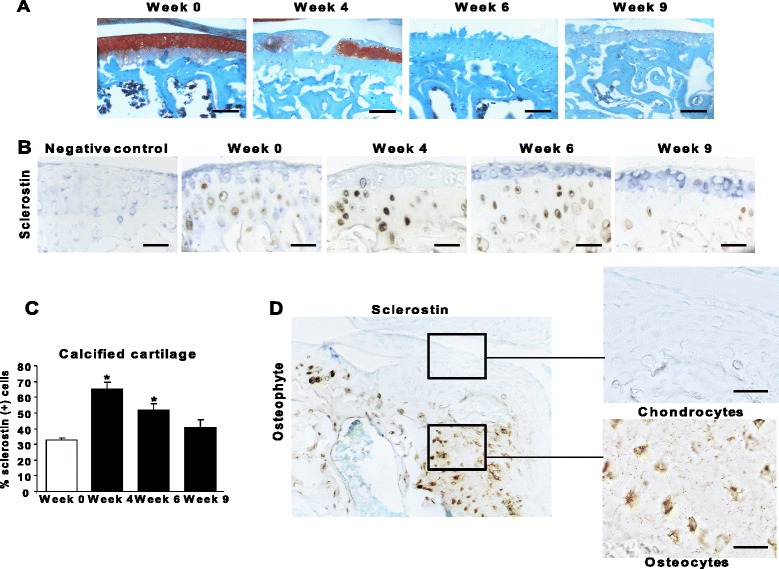
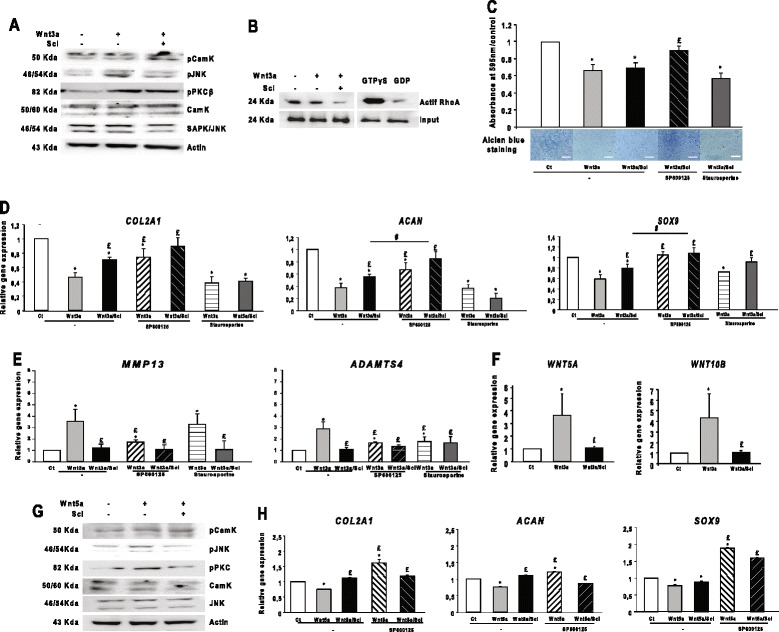
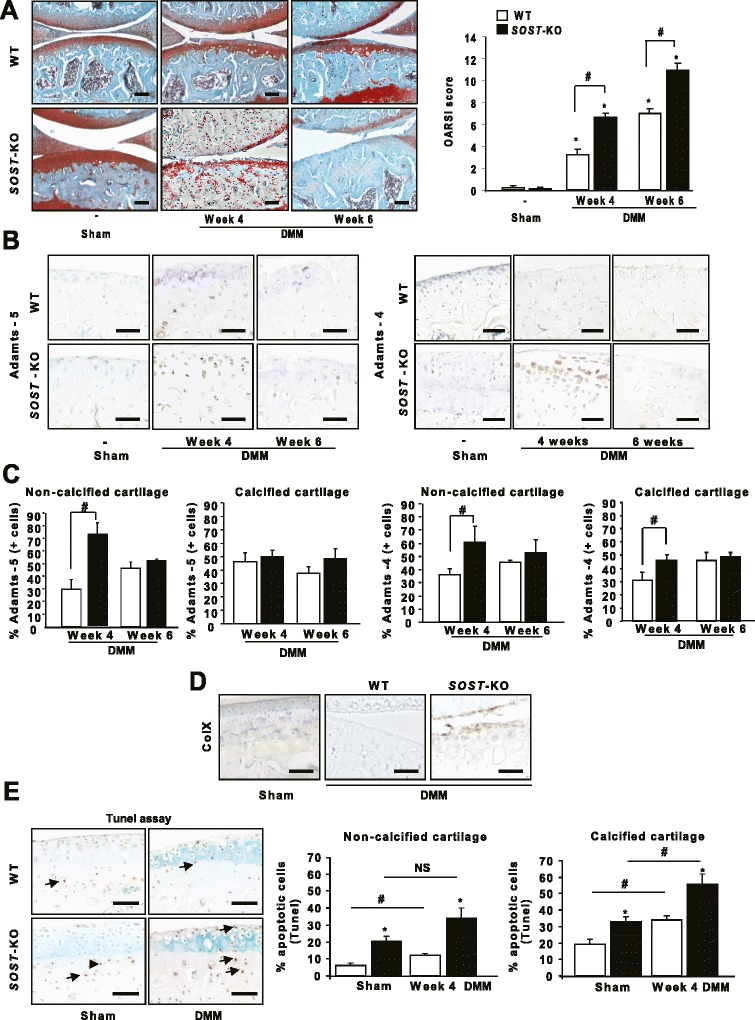
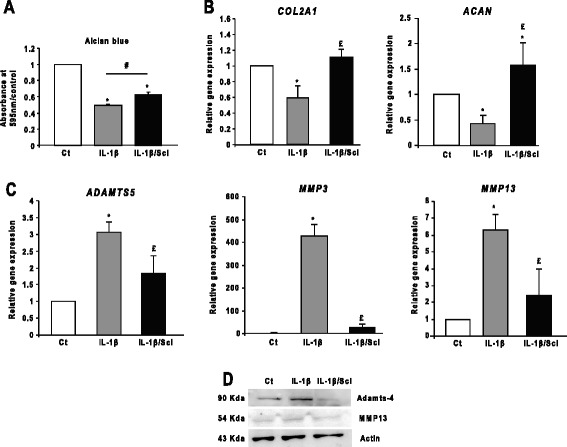
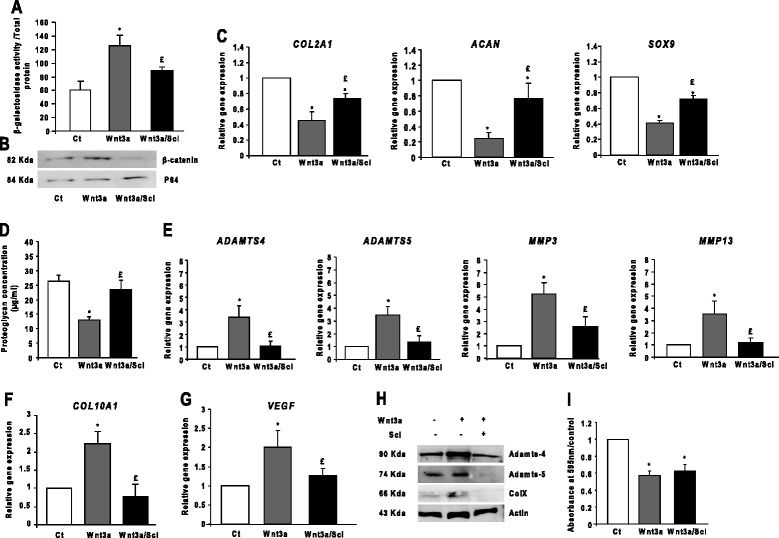
Sclerostin was expressed in calcified cartilage of WT mice with OA. In SOST-KO mice, cartilage was preserved despite high bone volume. However, SOST-KO mice with DMM had a high OA score, with increased expression of aggrecanases and type X collagen. Moreover, SOST-KO mice with OA showed disrupted anabolic-catabolic balance and cartilage damage. In primary chondrocytes, sclerostin addition abolished Wnt3a-increased expression of a disintegrin and metalloproteinase with thrombospondin motifs, matrix metalloproteinases and type X collagen by inhibiting the canonical Wnt pathway. Moreover, sclerostin inhibited Wnt-phosphorylated c-Jun N-terminal kinase (JNK) and rescued the expression of anabolic genes. Furthermore, sclerostin treatment inhibited both Wnt canonical and non-canonical JNK pathways in chondrocytes, thus preserving metabolism.
Sclerostin may play an important role in maintaining cartilage integrity in OA.
硬化蛋白是一种由骨细胞产生的Wnt抑制剂,可调节骨形成。由于骨组织参与骨关节炎(OA)的发展,我们在小鼠关节不稳定模型中研究了硬化蛋白在骨和软骨中的作用。
对10周龄的硬化蛋白基因敲除(SOST-KO)小鼠和野生型(WT)小鼠进行内侧半月板不稳定(DMM)手术。我们测量了股骨内侧髁的骨体积和骨赘体积,并确定了OA评分和基质蛋白的表达。将原代小鼠软骨细胞与Wnt3a和硬化蛋白一起培养,以评估基质蛋白的表达、蛋白聚糖释放和糖胺聚糖积累。
硬化蛋白在患有OA的WT小鼠的钙化软骨中表达。在SOST-KO小鼠中,尽管骨体积较高,但软骨得以保留。然而,患有DMM的SOST-KO小鼠OA评分较高,聚集蛋白聚糖酶和X型胶原的表达增加。此外,患有OA的SOST-KO小鼠显示出合成代谢-分解代谢平衡紊乱和软骨损伤。在原代软骨细胞中,添加硬化蛋白通过抑制经典Wnt途径,消除了Wnt3a诱导的具有血小板反应蛋白基序的解聚素和金属蛋白酶、基质金属蛋白酶和X型胶原的表达增加。此外,硬化蛋白抑制Wnt磷酸化的c-Jun氨基末端激酶(JNK),并挽救合成代谢基因的表达。此外,硬化蛋白处理抑制了软骨细胞中的Wnt经典和非经典JNK途径,从而维持了代谢。
硬化蛋白可能在维持OA中软骨完整性方面发挥重要作用。