Yoshinaga Marcos Y, Gagen Emma J, Wörmer Lars, Broda Nadine K, Meador Travis B, Wendt Jenny, Thomm Michael, Hinrichs Kai-Uwe
Organic Geochemistry Group, MARUM Center for Marine Environmental Sciences, University of Bremen Bremen, Germany.
Department of Microbiology and Archaea Center, University of Regensburg Regensburg, Germany.
Front Microbiol. 2015 Jan 22;6:5. doi: 10.3389/fmicb.2015.00005. eCollection 2015.
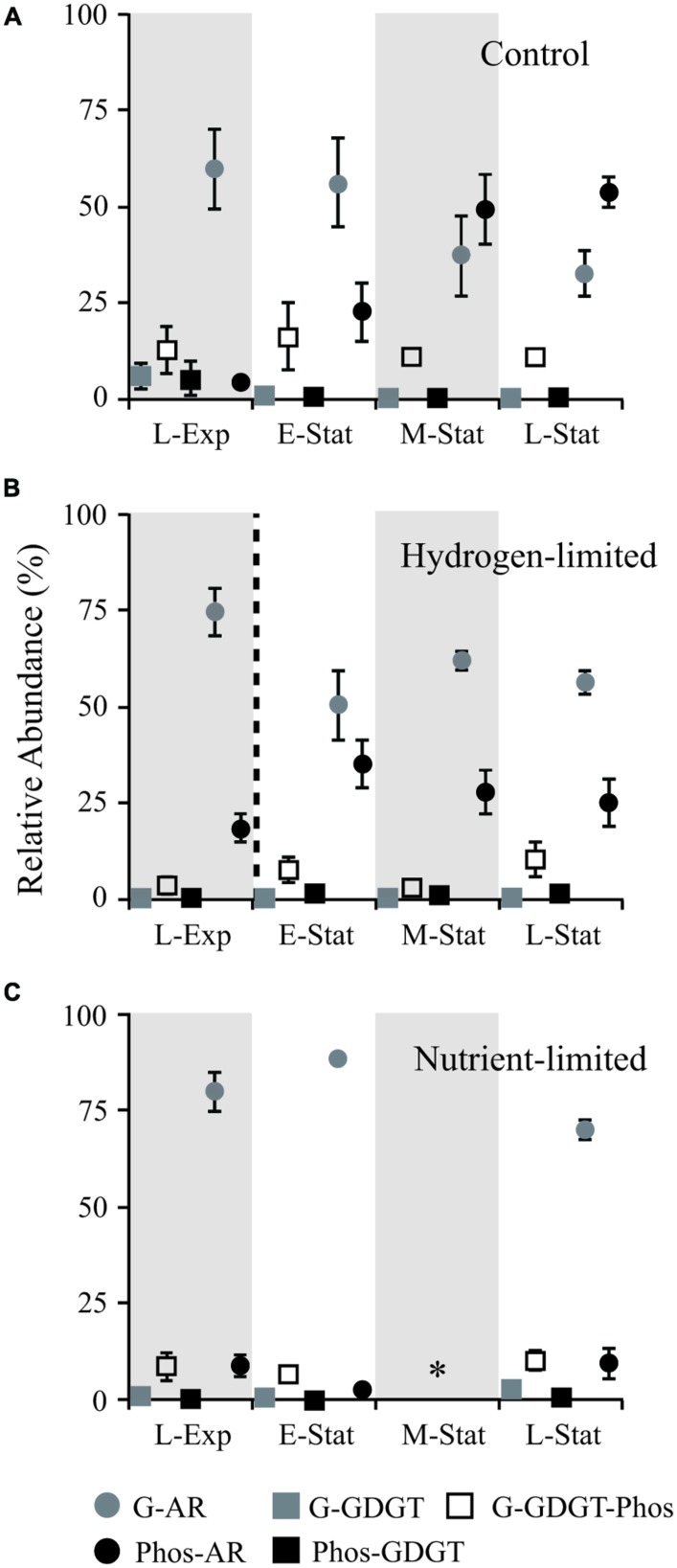
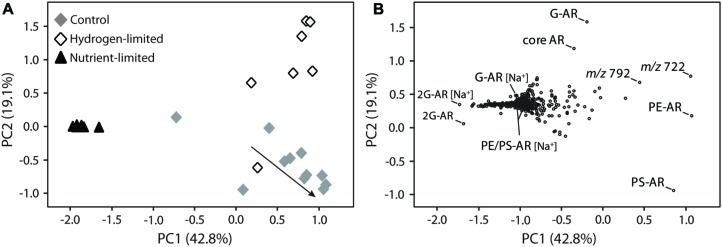
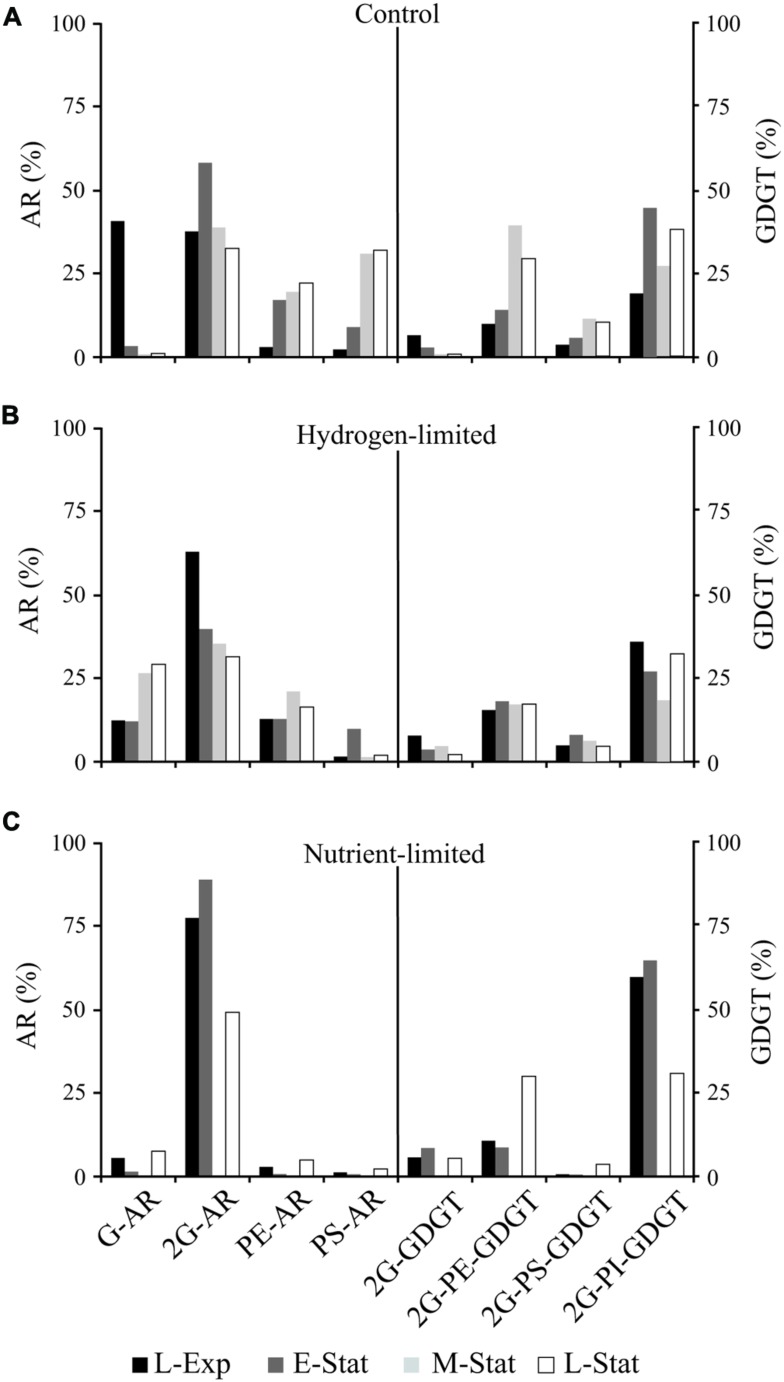
Methanothermobacter thermautotrophicus strain ΔH is a model hydrogenotrophic methanogen, for which extensive biochemical information, including the complete genome sequence, is available. Nevertheless, at the cell membrane lipid level, little is known about the responses of this archaeon to environmental stimuli. In this study, the lipid composition of M. thermautotrophicus was characterized to verify how this archaeon modulates its cell membrane components during growth phases and in response to hydrogen depletion and nutrient limitation (potassium and phosphate). As opposed to the higher abundance of phospholipids in the stationary phase of control experiments, cell membranes under nutrient, and energy stress were dominated by glycolipids that likely provided a more effective barrier against ion leakage. We also identified particular lipid regulatory mechanisms in M. thermautotrophicus, which included the accumulation of polyprenols under hydrogen-limited conditions and an increased content of sodiated adducts of lipids in nutrient-limited cells. These findings suggest that M. thermautotrophicus intensely modulates its cell membrane lipid composition to cope with energy and nutrient availability in dynamic environments.
嗜热自养甲烷杆菌ΔH菌株是一种典型的氢营养型产甲烷菌,目前已掌握了关于该菌的大量生化信息,包括其完整的基因组序列。然而,在细胞膜脂质层面,对于这种古菌如何响应环境刺激仍知之甚少。在本研究中,对嗜热自养甲烷杆菌的脂质组成进行了表征,以验证该古菌在生长阶段以及对氢气消耗和营养限制(钾和磷酸盐)的响应过程中是如何调节其细胞膜成分的。与对照实验稳定期磷脂丰度较高的情况相反,处于营养和能量应激状态下的细胞膜以糖脂为主,这些糖脂可能为防止离子泄漏提供了更有效的屏障。我们还在嗜热自养甲烷杆菌中鉴定出了特定的脂质调节机制,其中包括在氢气受限条件下聚戊烯醇的积累以及营养受限细胞中脂质钠化加合物含量的增加。这些发现表明,嗜热自养甲烷杆菌会强烈调节其细胞膜脂质组成,以应对动态环境中的能量和营养可利用性。