Yao Dengbing, Li Meiyuan, Shen Dingding, Ding Fei, Lu Shibi, Zhao Qin, Gu Xiaosong
Jiangsu Key Laboratory of Neuroregeneration, Nantong University, Nantong 226019, Jiangsu Province, China ; School of Life Sciences, Nantong University, Nantong 226019, Jiangsu Province, China.
Jiangsu Key Laboratory of Neuroregeneration, Nantong University, Nantong 226019, Jiangsu Province, China.
Neural Regen Res. 2012 Jun 15;7(17):1285-92. doi: 10.3969/j.issn.1673-5374.2012.17.001.
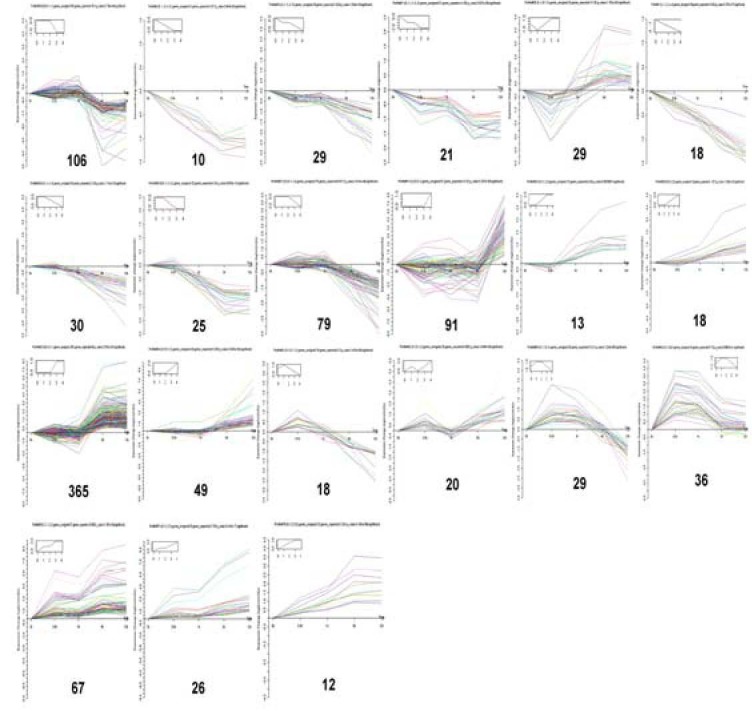
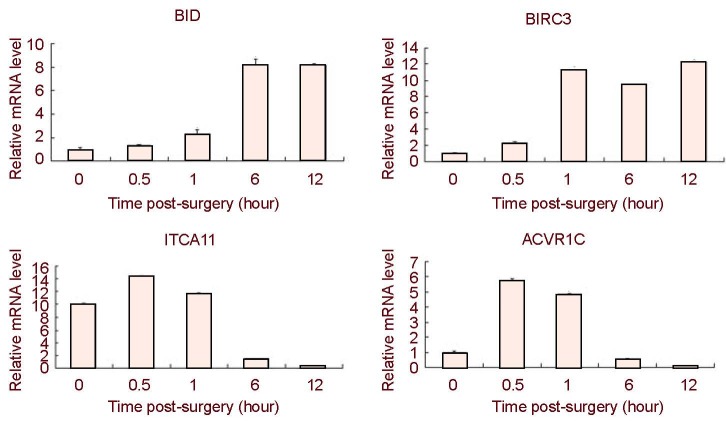
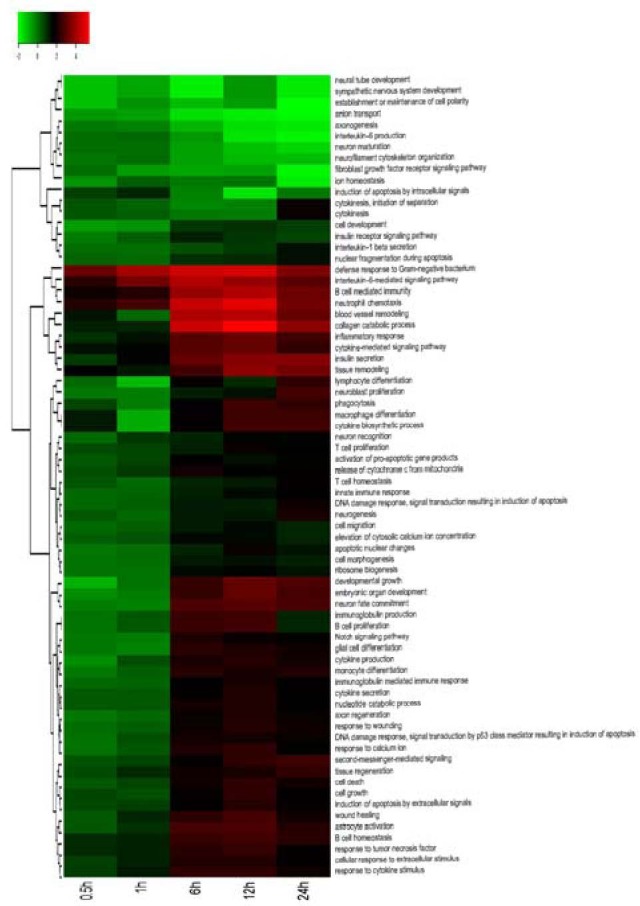
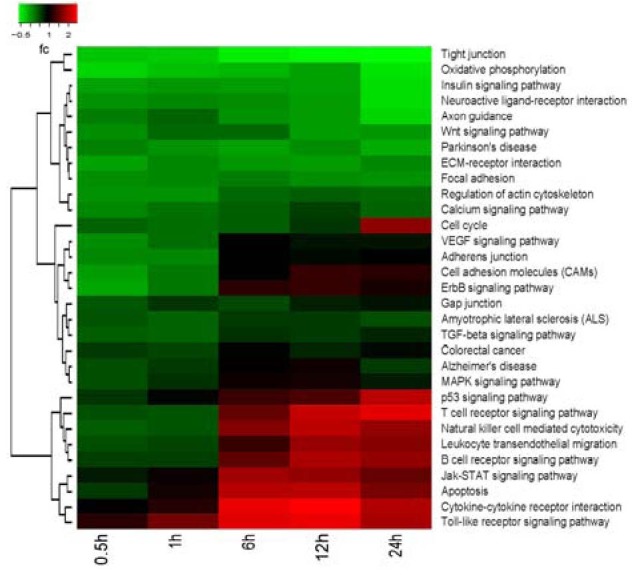
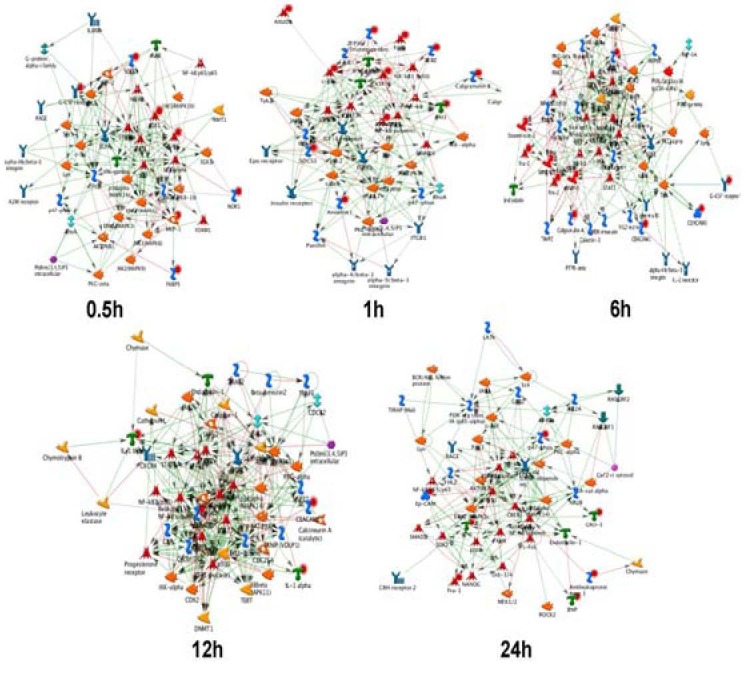
Wallerian degeneration is an important area of research in modern neuroscience. A large number of genes are differentially regulated in the various stages of Wallerian degeneration, especially during the early response. In this study, we analyzed gene expression in early Wallerian degeneration of the distal nerve stump at 0, 0.5, 1, 6, 12 and 24 hours after rat sciatic nerve injury using gene chip microarrays. We screened for differentially-expressed genes and gene expression patterns. We examined the data for Gene Ontology, and explored the Kyoto Encyclopedia of Genes and Genomes Pathway. This allowed us to identify key regulatory factors and recurrent network motifs. We identified 1 546 differentially-expressed genes and 21 distinct patterns of gene expression in early Wallerian degeneration, and an enrichment of genes associated with the immune response, acute inflammation, apoptosis, cell adhesion, ion transport and the extracellular matrix. Kyoto Encyclopedia of Genes and Genomes pathway analysis revealed components involved in the Jak-STAT, ErbB, transforming growth factor-β, T cell receptor and calcium signaling pathways. Key factors included interleukin-6, interleukin-1, integrin, c-sarcoma, carcinoembryonic antigen-related cell adhesion molecules, chemokine (C-C motif) ligand, matrix metalloproteinase, BH3 interacting domain death agonist, baculoviral IAP repeat-containing 3 and Rac. The data were validated with real-time quantitative PCR. This study provides a global view of gene expression profiles in early Wallerian degeneration of the rat sciatic nerve. Our findings provide insight into the molecular mechanisms underlying early Wallerian degeneration, and the regulation of nerve degeneration and regeneration.
沃勒变性是现代神经科学研究的一个重要领域。在沃勒变性的各个阶段,尤其是早期反应阶段,大量基因受到差异调节。在本研究中,我们使用基因芯片微阵列分析了大鼠坐骨神经损伤后0、0.5、1、6、12和24小时远端神经残端早期沃勒变性中的基因表达。我们筛选了差异表达基因和基因表达模式。我们检查了基因本体论数据,并探索了京都基因与基因组百科全书通路。这使我们能够识别关键调控因子和反复出现的网络基序。我们在早期沃勒变性中鉴定出1546个差异表达基因和21种不同的基因表达模式,以及与免疫反应、急性炎症、细胞凋亡、细胞黏附、离子转运和细胞外基质相关的基因富集。京都基因与基因组百科全书通路分析揭示了参与Jak-STAT、ErbB、转化生长因子-β、T细胞受体和钙信号通路的成分。关键因子包括白细胞介素-6、白细胞介素-1、整合素、c-肉瘤、癌胚抗原相关细胞黏附分子、趋化因子(C-C基序)配体、基质金属蛋白酶、BH3相互作用结构域死亡激动剂、含杆状病毒IAP重复序列3和Rac。数据通过实时定量PCR进行了验证。本研究提供了大鼠坐骨神经早期沃勒变性中基因表达谱的全景图。我们的发现为早期沃勒变性的分子机制以及神经变性和再生调控提供了见解。