Tropical Health Department, High Institute of Public Health, Alexandria University, Alexandria, Egypt.
J Adv Res. 2013 Sep;4(5):425-32. doi: 10.1016/j.jare.2012.07.003. Epub 2012 Sep 4.
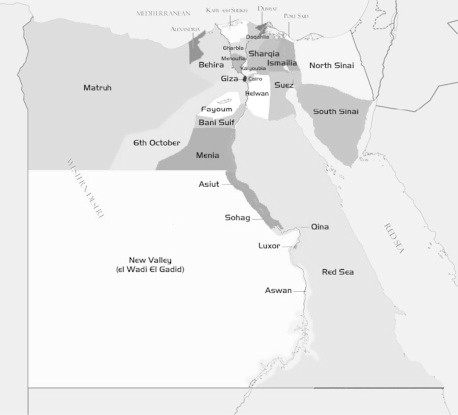
Schistosomiasis is a parasitic disease caused by blood flukes (Trematodes) of the genus Schistosoma (S.). It is well documented that schistosomiasis haematobium was endemic in Ancient Egypt. Infection was diagnosed in mummies 3000, 4000 and 5000 years old. Scott was the first to describe the pattern of schistosomiasis infection in Egypt. Schistosomiasis haematobium was highly prevalent (60%) both in the Nile Delta and Nile Valley South of Cairo in districts of perennial irrigation while it was low (6%) in districts of basin irrigation. Schistosoma mansoni infected 60% of the population in the Northern and Eastern parts of the Nile Delta and only 6% in the Southern part. Neither S. mansoni cases nor its snail intermediate host were found in the Nile Valley South of Cairo. The building of the Aswan High Dam -which was completed in 1967 - did not cause any increase in schistosomiasis prevalence. In 1990, a study conducted in nine governorates of Egypt confirmed the change in the pattern of schistosomiasis transmission in the Delta. There was an overall reduction in S. mansoni prevalence while Schistosoma haematobium had continued to disappear. In Middle and Upper Egypt there was consistent reduction in the prevalence of S. haematobium except in Sohag, Qena, and Aswan governorates. However, foci of S. mansoni were detected in Giza, Fayoum, Menya and Assiut. All schistosomiasis control projects implemented in Egypt from 1953 to 1985 adopted the strategy of transmission control and were based mainly on snail control supplemented by anti-bilharzial chemotherapy. In 1997, the National Schistosomiasis Control Program (NSCP) was launched in the Nile Delta. It adopted morbidity control strategy with Praziquantel mass treatment as the main component. In 1996, before the NSCP, 168 villages had S. mansoni prevalence >30%, 324 villages 20-30% and 654 villages 10-20%. By the end of 2010, in the whole country only 29 villages had prevalence >3% and none had more than 10%.
血吸虫病是一种由血吸虫属(吸虫)的血液吸虫引起的寄生虫病。有文献记载,埃及古时有血吸虫病流行。在 3000、4000 和 5000 年前的木乃伊中发现了这种感染。Scott 是第一个描述埃及血吸虫病感染模式的人。在尼罗河三角洲和开罗以南的尼罗河谷,常年灌溉地区血吸虫病的流行率很高(60%),而盆地灌溉地区的流行率很低(6%)。在尼罗河三角洲的北部和东部,有 60%的人口感染了曼氏血吸虫,而在南部只有 6%。在开罗以南的尼罗河谷,没有发现曼氏血吸虫病例或其中间宿主蜗牛。1967 年竣工的阿斯旺高坝建设并没有导致血吸虫病流行率的任何增加。1990 年,在埃及九个省进行的一项研究证实了三角洲血吸虫病传播模式的变化。曼氏血吸虫的流行率总体下降,而血吸虫病仍在继续消失。在上埃及和中埃及,除了索哈格、盖纳和阿斯旺三省外,血吸虫病的流行率持续下降。然而,在吉萨、法尤姆、门尼亚和阿西尤特发现了曼氏血吸虫病的焦点。从 1953 年到 1985 年,在埃及实施的所有血吸虫病控制项目都采用了传播控制策略,主要基于控制蜗牛,并辅以抗血吸虫化疗。1997 年,尼罗河三角洲启动了国家血吸虫病控制计划(NSCP)。它采用了以吡喹酮大规模治疗为主要组成部分的发病率控制策略。1996 年,在国家血吸虫病控制计划(NSCP)之前,有 168 个村庄的曼氏血吸虫病流行率>30%,324 个村庄的流行率为 20-30%,654 个村庄的流行率为 10-20%。到 2010 年底,全国只有 29 个村庄的流行率>3%,没有一个村庄的流行率超过 10%。