Rostro-García Susana, Kamler Jan F, Hunter Luke T B
Wildlife Conservation Research Unit, Department of Zoology, University of Oxford, The Recanati-Kaplan Centre, Tubney House, Abingdon Road, Tubney, Abingdon, United Kingdom.
Panthera, 8 West 40th Street, 18th Floor, New York, New York, United States of America.
PLoS One. 2015 Feb 18;10(2):e0117743. doi: 10.1371/journal.pone.0117743. eCollection 2015.
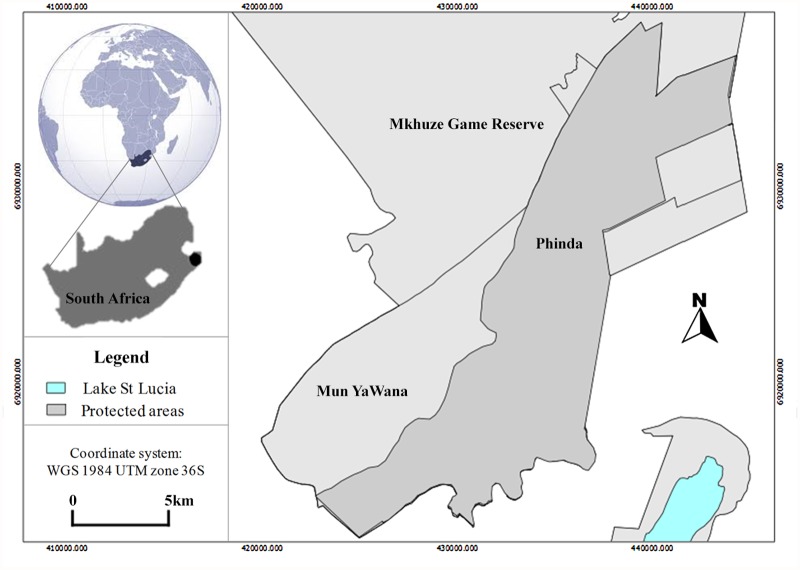
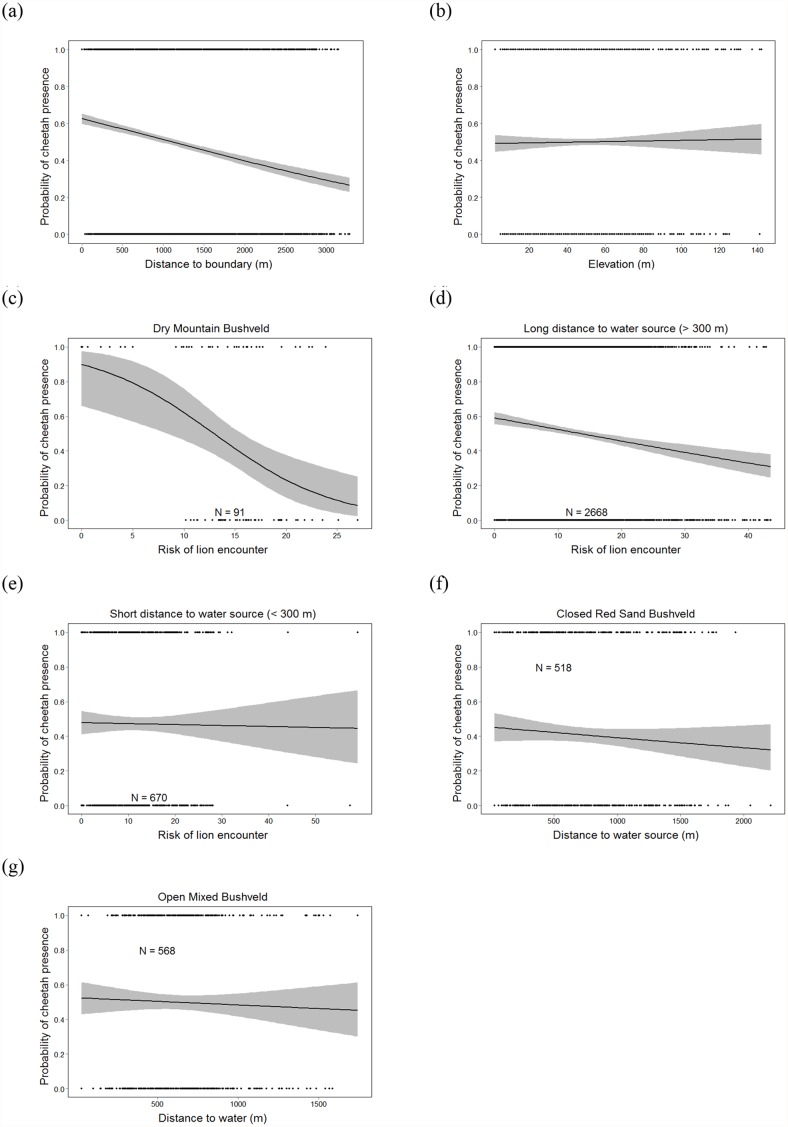
Understanding how animals utilize available space is important for their conservation, as it provides insight into the ecological needs of the species, including those related to habitat, prey and inter and intraspecific interactions. We used 28 months of radio telemetry data and information from 200 kill locations to assess habitat selection at the 3rd order (selection of habitats within home ranges) and 4th order (selection of kill sites within the habitats used) of a reintroduced population of cheetahs Acinonyx jubatus in Phinda Private Game Reserve, South Africa. Along with landscape characteristics, we investigated if lion Panthera leo presence affected habitat selection of cheetahs. Our results indicated that cheetah habitat selection was driven by a trade-off between resource acquisition and lion avoidance, and the balance of this trade-off varied with scale: more open habitats with high prey densities were positively selected within home ranges, whereas more closed habitats with low prey densities were positively selected for kill sites. We also showed that habitat selection, feeding ecology, and avoidance of lions differed depending on the sex and reproductive status of cheetahs. The results highlight the importance of scale when investigating a species' habitat selection. We conclude that the adaptability of cheetahs, together with the habitat heterogeneity found within Phinda, explained their success in this small fenced reserve. The results provide information for the conservation and management of this threatened species, especially with regards to reintroduction efforts in South Africa.
了解动物如何利用可用空间对其保护至关重要,因为这能深入了解物种的生态需求,包括与栖息地、猎物以及种间和种内相互作用相关的需求。我们利用了28个月的无线电遥测数据以及来自200个捕杀地点的信息,来评估南非菲达私人野生动物保护区重新引入的猎豹(Acinonyx jubatus)种群在第三层级(家域内栖息地的选择)和第四层级(所使用栖息地内捕杀地点的选择)的栖息地选择情况。除了景观特征外,我们还研究了狮子(Panthera leo)的存在是否会影响猎豹的栖息地选择。我们的结果表明,猎豹的栖息地选择是由资源获取和躲避狮子之间的权衡驱动的,这种权衡的平衡随尺度而变化:家域内积极选择猎物密度高的更开阔栖息地,而捕杀地点则积极选择猎物密度低的更封闭栖息地。我们还表明,猎豹的栖息地选择、觅食生态以及对狮子的躲避因性别和繁殖状态而异。结果突出了在研究物种栖息地选择时尺度的重要性。我们得出结论,猎豹的适应性以及菲达内发现的栖息地异质性解释了它们在这个小型围栏保护区取得成功的原因。这些结果为这种濒危物种的保护和管理提供了信息,特别是在南非的重新引入工作方面。