Selim Heba Sayed, Abaza Amani Farouk
Microbiology Department, High Institute of Public Health, Alexandria University, Alexandria, Egypt.
GMS Hyg Infect Control. 2015 Feb 2;10:Doc03. doi: 10.3205/dgkh000246. eCollection 2015.
This study aimed at investigating the microbial contamination of mobile phones in a hospital setting.
Swab samples were collected from 40 mobile phones of patients and health care workers at the Alexandria University Students' Hospital. They were tested for their bacterial contamination at the microbiology laboratory of the High Institute of Public Health. Quantification of bacteria was performed using both surface spread and pour plate methods. Isolated bacterial agents were identified using standard microbiological methods. Methicillin-resistant Staphylococcus aureus was identified by disk diffusion method described by Bauer and Kirby. Isolated Gram-negative bacilli were tested for being extended spectrum beta lactamase producers using the double disk diffusion method according to the Clinical and Laboratory Standards Institute recommendations.
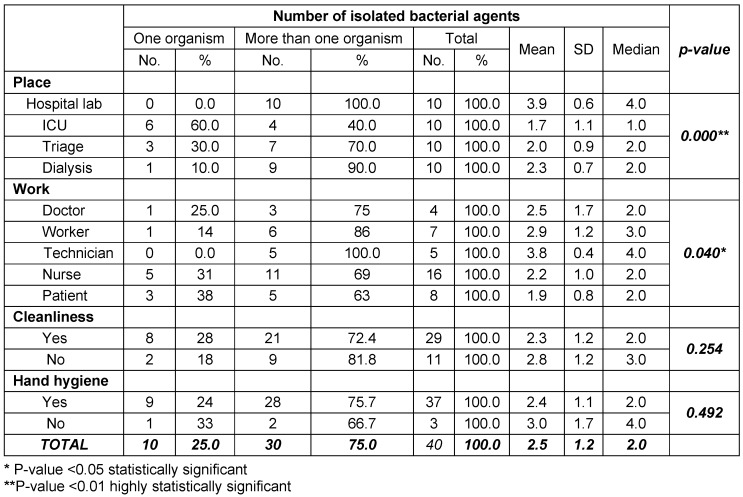
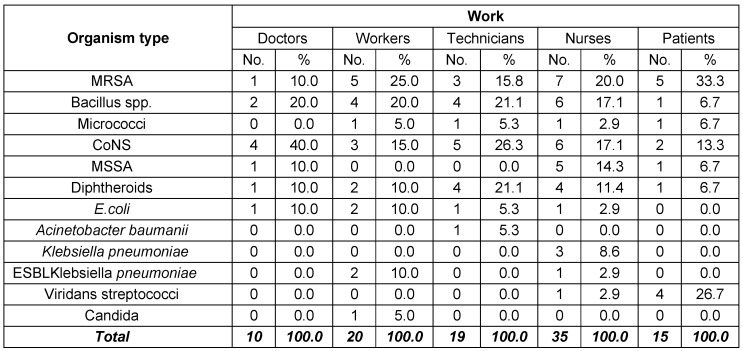
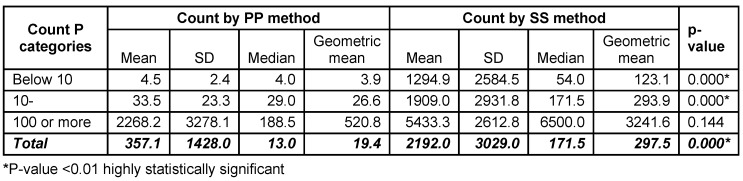
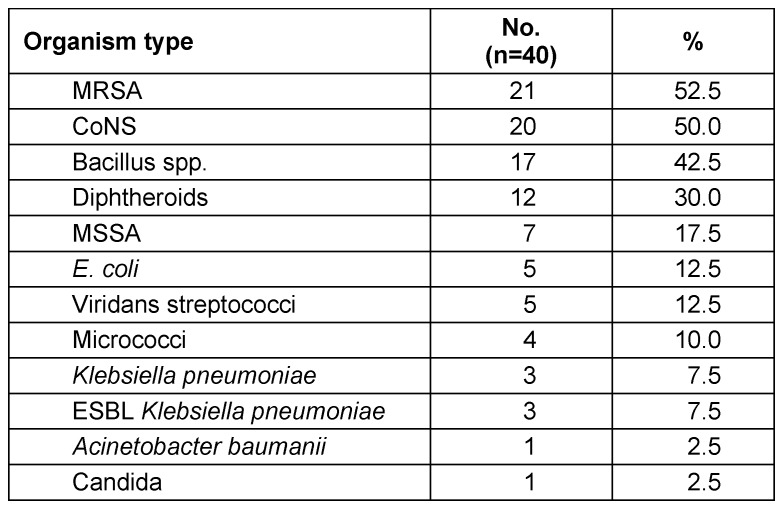
All of the tested mobile phones (100%) were contaminated with either single or mixed bacterial agents. The most prevalent bacterial contaminants were methicillin-resistant S. aureus and coagulase-negative staphylococci representing 53% and 50%, respectively. The mean bacterial count was 357 CFU/ml, while the median was 13 CFU/ml using the pour plate method. The corresponding figures were 2,192 and 1,720 organisms/phone using the surface spread method.
Mobile phones usage in hospital settings poses a risk of transmission of a variety of bacterial agents including multidrug-resistant pathogens as methicillin-resistant S. aureus. The surface spread method is an easy and useful tool for detection and estimation of bacterial contamination of mobile phones.
本研究旨在调查医院环境中手机的微生物污染情况。
从亚历山大大学学生医院的40部患者及医护人员的手机上采集拭子样本。这些样本在公共卫生高等研究所的微生物实验室进行细菌污染检测。使用表面涂布法和倾注平板法对细菌进行定量。采用标准微生物学方法鉴定分离出的细菌病原体。耐甲氧西林金黄色葡萄球菌通过鲍尔和柯比描述的纸片扩散法进行鉴定。根据临床和实验室标准协会的建议,使用双纸片扩散法对分离出的革兰氏阴性杆菌进行超广谱β-内酰胺酶产生菌检测。
所有检测的手机(100%)均被单一或混合细菌病原体污染。最常见的细菌污染物是耐甲氧西林金黄色葡萄球菌和凝固酶阴性葡萄球菌,分别占53%和50%。使用倾注平板法时,细菌平均计数为357 CFU/ml,中位数为13 CFU/ml。使用表面涂布法时,相应数字为每部手机2192个和1720个菌落形成单位。
在医院环境中使用手机存在传播多种细菌病原体的风险,包括耐甲氧西林金黄色葡萄球菌等多重耐药病原体。表面涂布法是检测和估计手机细菌污染的一种简便且有用的方法。