Schlaug Gottfried
Department of Neurology, Music and Neuroimaging Laboratory, and Neuroimaging, Stroke Recovery Laboratories, Division of Cerebrovascular Disease, Beth Israel Deaconess Medical Center, Harvard Medical School, Boston, MA, USA.
Prog Brain Res. 2015;217:37-55. doi: 10.1016/bs.pbr.2014.11.020. Epub 2015 Feb 11.
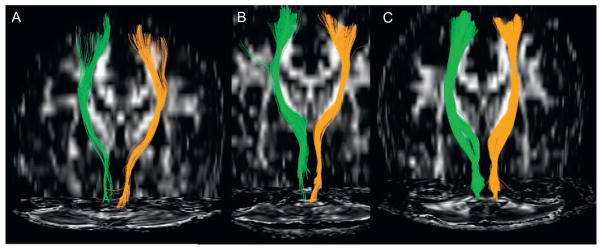
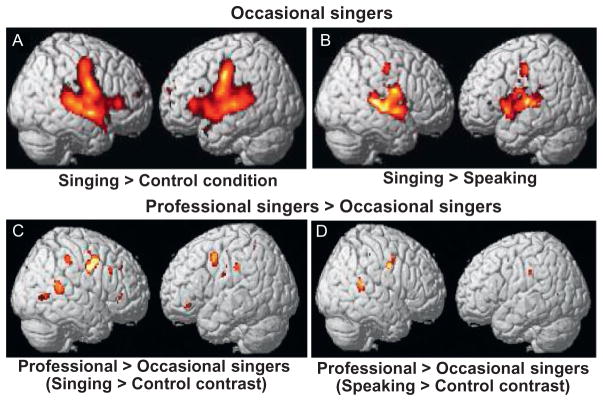
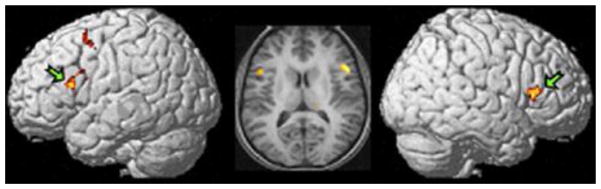
Playing a musical instrument is an intense, multisensory, and motor experience that usually commences at an early age and requires the acquisition and maintenance of a range of sensory and motor skills over the course of a musician's lifetime. Thus, musicians offer an excellent human model for studying behavioral-cognitive as well as brain effects of acquiring, practicing, and maintaining these specialized skills. Research has shown that repeatedly practicing the association of motor actions with specific sound and visual patterns (musical notation), while receiving continuous multisensory feedback will strengthen connections between auditory and motor regions (e.g., arcuate fasciculus) as well as multimodal integration regions. Plasticity in this network may explain some of the sensorimotor and cognitive enhancements that have been associated with music training. Furthermore, the plasticity of this system as a result of long term and intense interventions suggest the potential for music making activities (e.g., forms of singing) as an intervention for neurological and developmental disorders to learn and relearn associations between auditory and motor functions such as vocal motor functions.
演奏乐器是一种强烈的、多感官的和运动体验,通常始于幼年,并且在音乐家的一生中都需要获取和维持一系列感官和运动技能。因此,音乐家为研究获取、练习和维持这些专业技能的行为认知以及大脑影响提供了一个绝佳的人类模型。研究表明,在不断接收多感官反馈的同时,反复练习将运动动作与特定声音和视觉模式(乐谱)相联系,会加强听觉和运动区域(如弓状束)以及多模态整合区域之间的联系。该网络的可塑性可能解释了一些与音乐训练相关的感觉运动和认知增强现象。此外,由于长期且强烈的干预导致该系统具有可塑性,这表明音乐制作活动(如歌唱形式)作为一种针对神经和发育障碍的干预手段,有可能帮助学习和重新学习听觉和运动功能(如发声运动功能)之间的关联。