Jha Ashwani, Nachev Parashkev, Barnes Gareth, Husain Masud, Brown Peter, Litvak Vladimir
Sobell Department of Motor Neuroscience, UCL Institute of Neurology, London WC1N 3BG, UK Nuffield Department of Clinical Neurosciences, University of Oxford, Oxford OX3 9DU, UK.
Institute of Cognitive Neuroscience, UCL Institute of Neurology, London WC1N 3AR, UK.
Cereb Cortex. 2015 Nov;25(11):4392-406. doi: 10.1093/cercor/bhv027. Epub 2015 Mar 9.
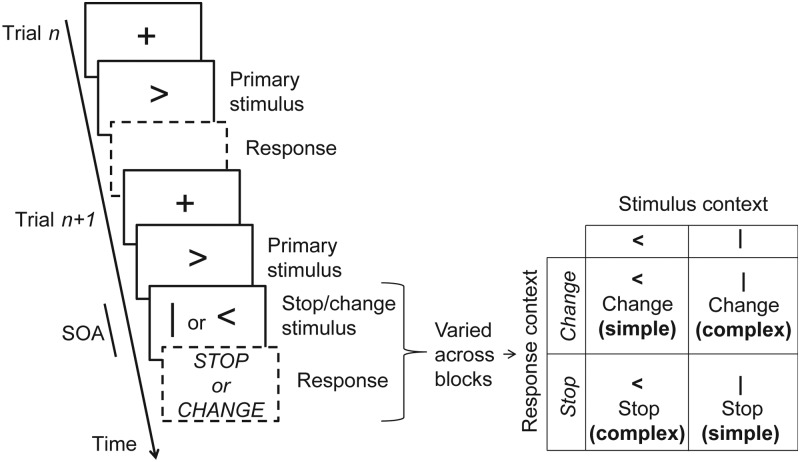
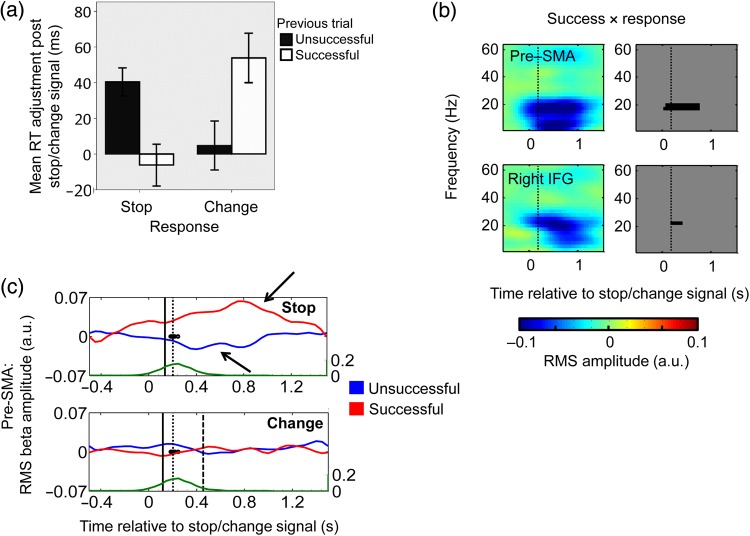
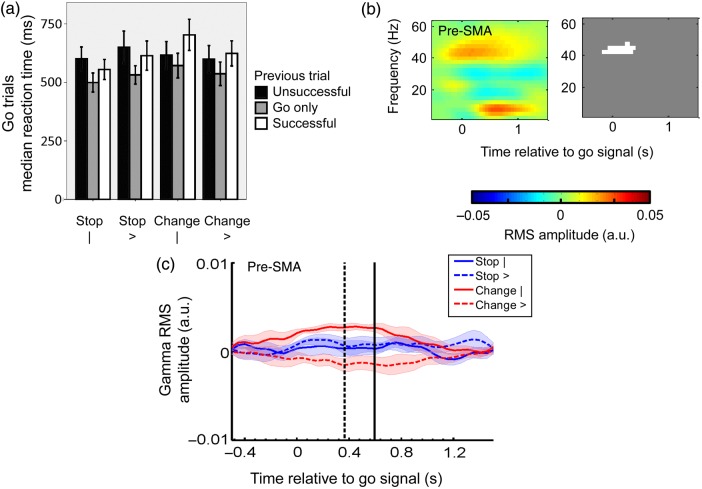
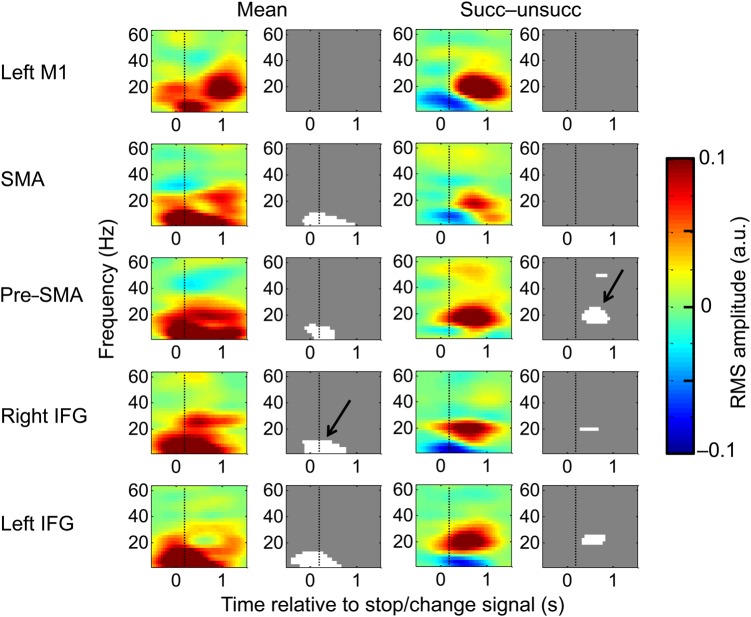
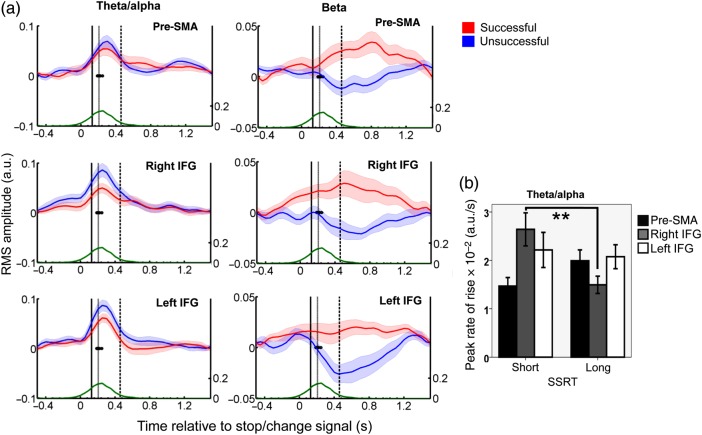
Stopping is a critical aspect of brain function. Like other voluntary actions, it is defined by its context as much as by its execution. Its neural substrate must therefore reflect both. Here, we distinguish those elements of the underlying brain circuit that preferentially reflect contextual aspects of stopping from those related to its execution. Contextual complexity of stopping was modulated using a novel "Stop/Change-signal" task, which also allowed us to parameterize the duration of the stopping process. Human magnetoencephalographic activity and behavioral responses were simultaneously recorded. Whereas theta/alpha frequency activity in the right inferior frontal gyrus was most closely associated with the duration of the stopping process, earlier gamma frequency activity in the pre-supplementary motor area was unique in showing contextual modulation. These results differentiate the roles of 2 key frontal regions involved in stopping, a crucial aspect of behavioral control.
停止是大脑功能的一个关键方面。与其他自主行为一样,它不仅由其执行过程定义,还由其所处情境定义。因此,其神经基础必须同时反映这两个方面。在此,我们区分了潜在脑回路中那些优先反映停止情境方面的元素与那些与停止执行相关的元素。通过一项新颖的“停止/改变信号”任务来调节停止的情境复杂性,该任务还使我们能够对停止过程的持续时间进行参数化。同时记录了人类脑磁图活动和行为反应。右侧额下回的θ/α频率活动与停止过程的持续时间最为密切相关,而补充运动前区较早出现的γ频率活动则在显示情境调节方面具有独特性。这些结果区分了参与停止这一行为控制关键方面的两个关键额叶区域的作用。