Zivkovic Aleksandar R, Schmidt Karsten, Sigl Annette, Decker Sebastian O, Brenner Thorsten, Hofer Stefan
Department of Anesthesiology, Heidelberg University Hospital, Im Neuenheimer Feld 110, 69120 Heidelberg, Germany.
Mediators Inflamm. 2015;2015:274607. doi: 10.1155/2015/274607. Epub 2015 Feb 11.
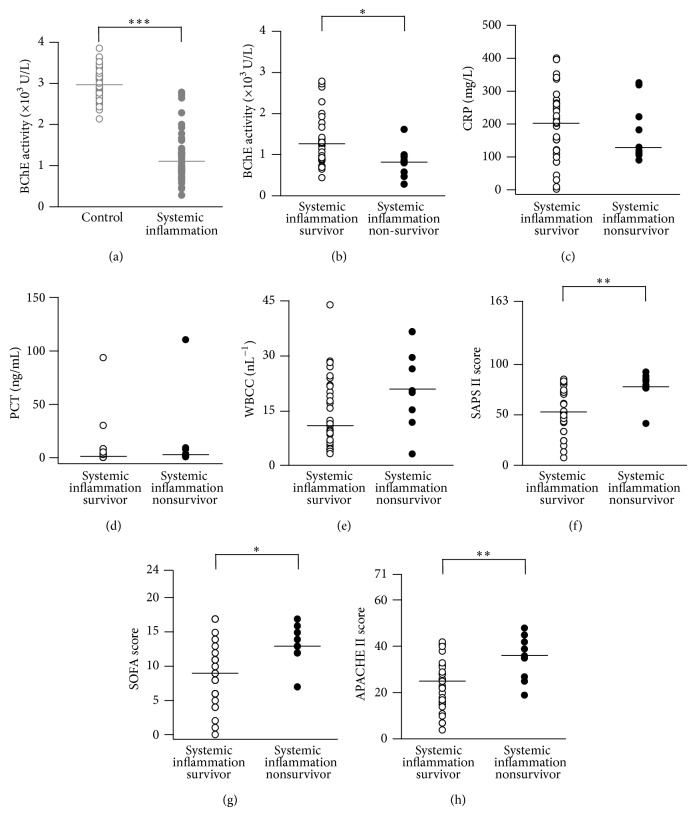
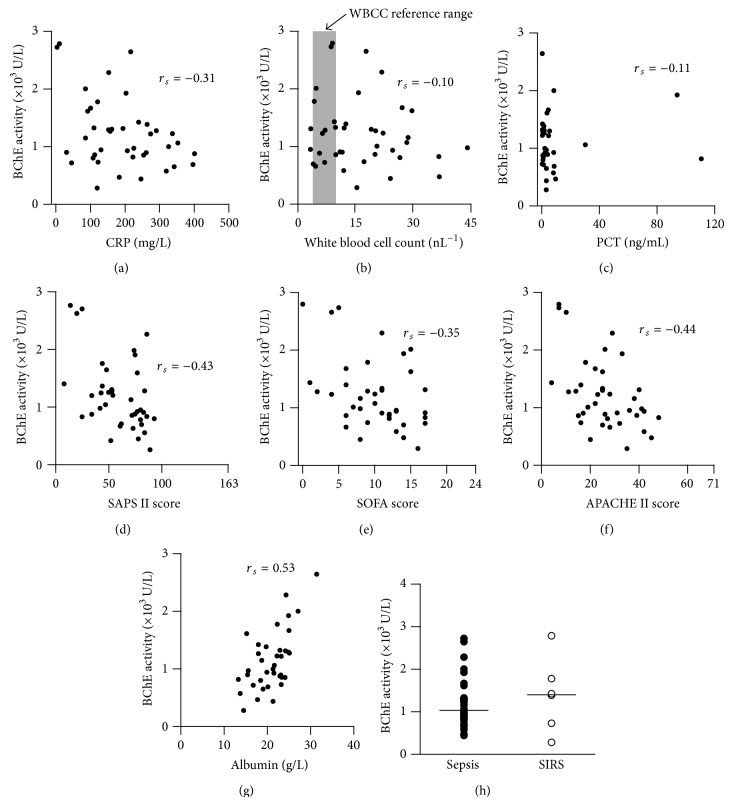
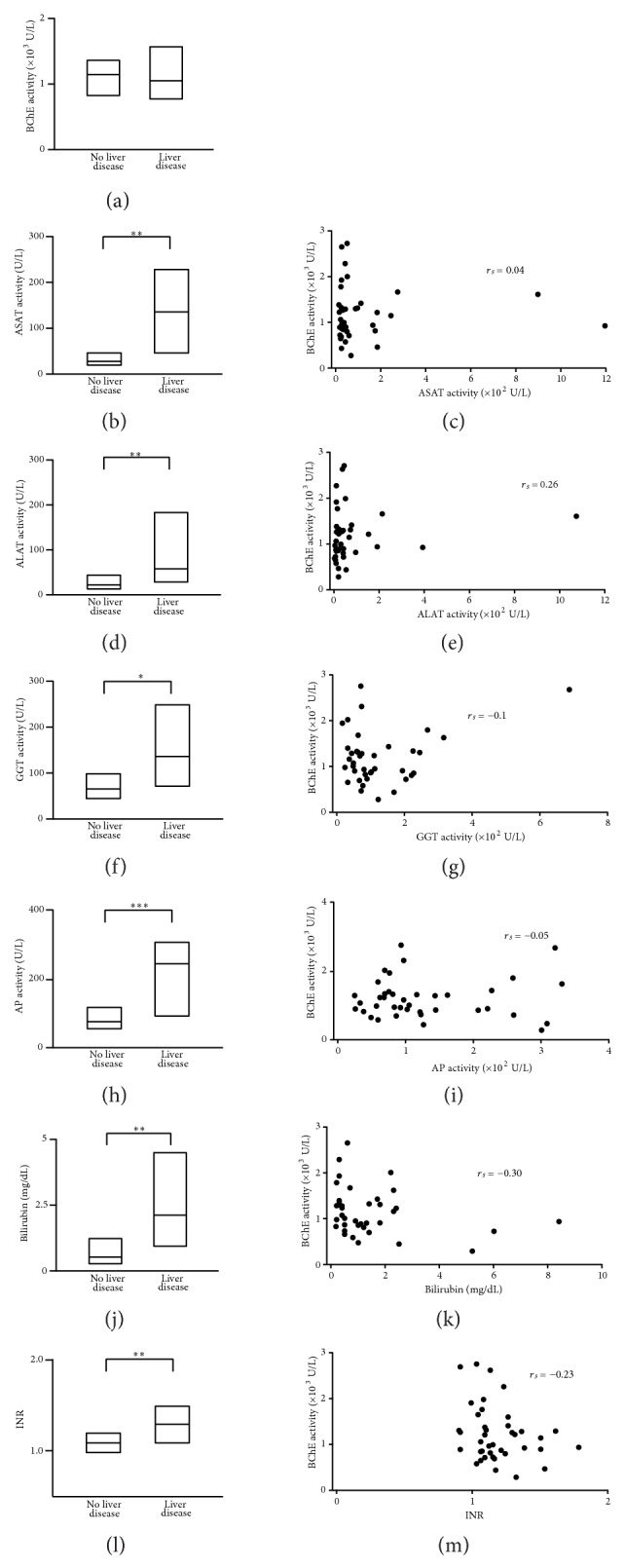
Systemic inflammation is an immune response to a nonspecific insult of either infectious or noninfectious origin and remains a challenge in the intensive care units with high mortality rate. Cholinergic neurotransmission plays an important role in the regulation of the immune response during inflammation. We hypothesized that the activity of butyrylcholinesterase (BChE) might serve as a marker to identify and prognose systemic inflammation. By using a point-of-care-testing (POCT) approach we measured BChE activity in patients with severe systemic inflammation and healthy volunteers. We observed a decreased BChE activity in patients with systemic inflammation, as compared to that of healthy individuals. Furthermore, BChE activity showed an inverse correlation with the severity of the disease. Although hepatic function has previously been found essential for BChE production, we show here that the reduced BChE activity associated with systemic inflammation occurs independently of and is thus not caused by any deficit in liver function in these patients. A POCT approach, used to assess butyrylcholinesterase activity, might further improve the therapy of the critically ill patients by minimizing time delays between the clinical assessment and treatment of the inflammatory process. Hence, assessing butyrylcholinesterase activity might help in early detection of inflammation.
全身炎症是机体对感染性或非感染性非特异性损伤的免疫反应,在死亡率较高的重症监护病房中仍然是一个挑战。胆碱能神经传递在炎症过程中免疫反应的调节中起重要作用。我们推测丁酰胆碱酯酶(BChE)的活性可能作为识别和预测全身炎症的一个标志物。通过采用即时检验(POCT)方法,我们测量了重症全身炎症患者和健康志愿者的BChE活性。我们观察到,与健康个体相比,全身炎症患者的BChE活性降低。此外,BChE活性与疾病严重程度呈负相关。虽然先前已发现肝功能对BChE的产生至关重要,但我们在此表明,与全身炎症相关的BChE活性降低是独立发生的,因此不是由这些患者的肝功能缺陷引起的。用于评估丁酰胆碱酯酶活性的POCT方法,可能通过尽量减少炎症过程临床评估和治疗之间的时间延迟,进一步改善重症患者的治疗。因此,评估丁酰胆碱酯酶活性可能有助于早期发现炎症。