CRCED, North-West University, and consultants to TEMM International (Pty) Ltd, P.O. Box 11207, Silver Lakes, 0054 South Africa.
Nutr Metab (Lond). 2015 Mar 8;12:6. doi: 10.1186/s12986-015-0001-x. eCollection 2015.
Diet has a significant relationship with the risk of coronary heart disease (CHD). Traditionally the effect of diet on CHD was measured with the biomarker for low-density lipoprotein (LDL) cholesterol. However, LDL is not the only or even the most important biomarker for CHD risk. A suitably integrated view of the mechanism by which diet influences the detailed CHD pathogenetic pathways is therefore needed in order to better understand CHD risk factors and help with better holistic CHD prevention and treatment decisions.
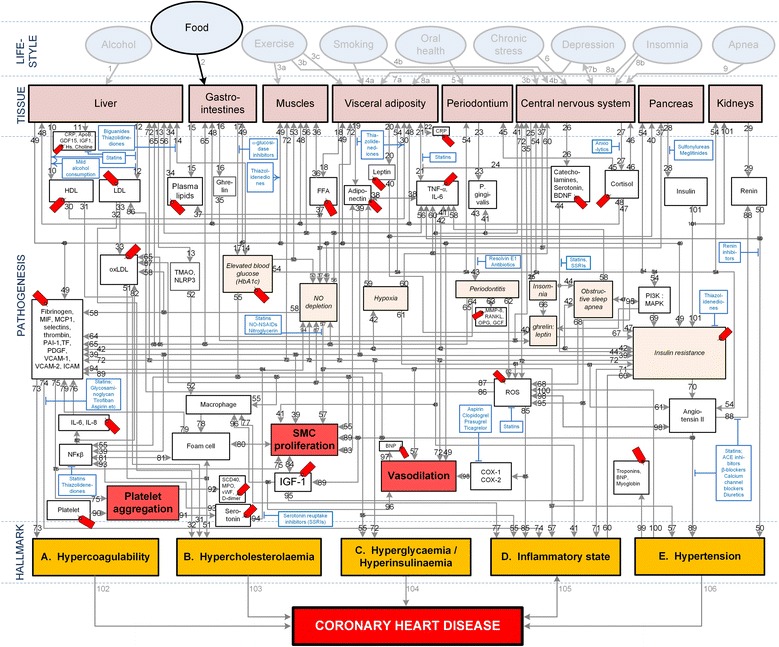
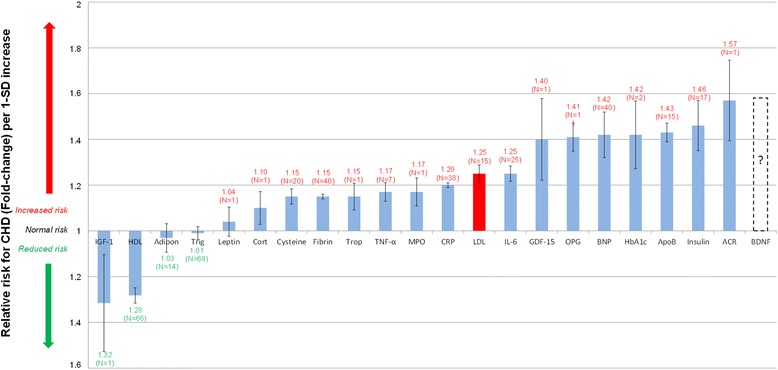
A systematic review of the existing literature was conducted. From this an integrated CHD pathogenetic pathway system was constructed. CHD biomarkers, which are found on these pathways, are the only measurable data to link diet with these CHD pathways. They were thus used to simplify the link between diet and the CHD mechanism. Data were systematically analysed from 294 cohort studies of CHD biomarkers constituting 1 187 350 patients.
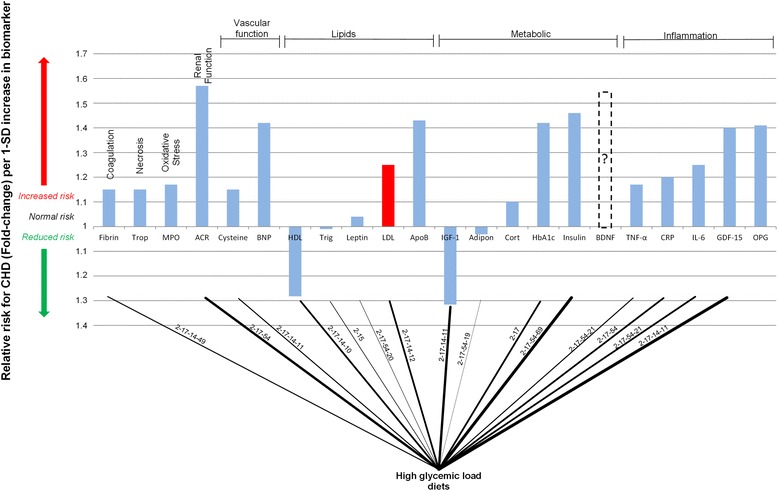
The resulting integrated analysis provides insight into the higher-order interactions underlying CHD and high-glycemic load (HGL) diets. A novel "connection graph" illustrates the measurable relationship between HGL diets and the relative risks attributed to the important CHD serological biomarkers. The "connection graph" vividly shows that HGL diets not only influence the lipid and metabolic biomarkers, but also the inflammation, coagulation and vascular function biomarkers in an important way.
A focus primarily on the low density lipoprotein cholesterol biomarker for CHD risk has led to the traditional guidelines of CHD dietary recommendations. This has however inadvertently led to HGL diets. The influence of HGL diets on the other CHD biomarkers is not always fully appreciated. Thus, new diets or other interventions which address the full integrated CHD impact, as shown in this paper, are required.
饮食与冠心病(CHD)风险密切相关。传统上,饮食对 CHD 的影响是通过低密度脂蛋白(LDL)胆固醇的生物标志物来衡量的。然而,LDL 并不是 CHD 风险的唯一甚至最重要的生物标志物。因此,需要对饮食影响详细 CHD 发病机制途径的机制进行适当的综合分析,以便更好地了解 CHD 危险因素,并有助于更好地进行整体 CHD 预防和治疗决策。
对现有文献进行了系统回顾。在此基础上构建了一个综合的 CHD 发病机制途径系统。这些途径上发现的 CHD 生物标志物是将饮食与这些 CHD 途径联系起来的唯一可衡量数据。因此,它们被用来简化饮食与 CHD 机制之间的联系。对 294 项 CHD 生物标志物队列研究进行了系统分析,这些研究共纳入了 1187350 名患者。
综合分析结果深入了解了 CHD 和高血糖负荷(HGL)饮食的潜在高级别相互作用。一个新的“连接图”说明了 HGL 饮食与归因于重要 CHD 血清生物标志物的相对风险之间的可衡量关系。“连接图”生动地表明,HGL 饮食不仅以重要方式影响脂质和代谢生物标志物,还影响炎症、凝血和血管功能生物标志物。
主要关注 LDL 胆固醇生物标志物对 CHD 风险的关注导致了传统的 CHD 饮食推荐指南。然而,这无意中导致了 HGL 饮食。HGL 饮食对其他 CHD 生物标志物的影响并不总是完全被认识到。因此,需要采用新的饮食或其他干预措施来全面解决本文所示的 CHD 综合影响。