Klein Holger J, Csordas Adam, Falk Volkmar, Slankamenac Ksenija, Rudiger Alain, Schönrath Felix, Rodriguez Cetina Biefer Hector, Starck Christoph T, Graf Rolf
Division of Cardiovascular Surgery, University Hospital Zurich, Zurich, Switzerland.
Department of Cardiology, University Heart Center Zurich, Zurich, Switzerland.
PLoS One. 2015 Mar 20;10(3):e0120276. doi: 10.1371/journal.pone.0120276. eCollection 2015.
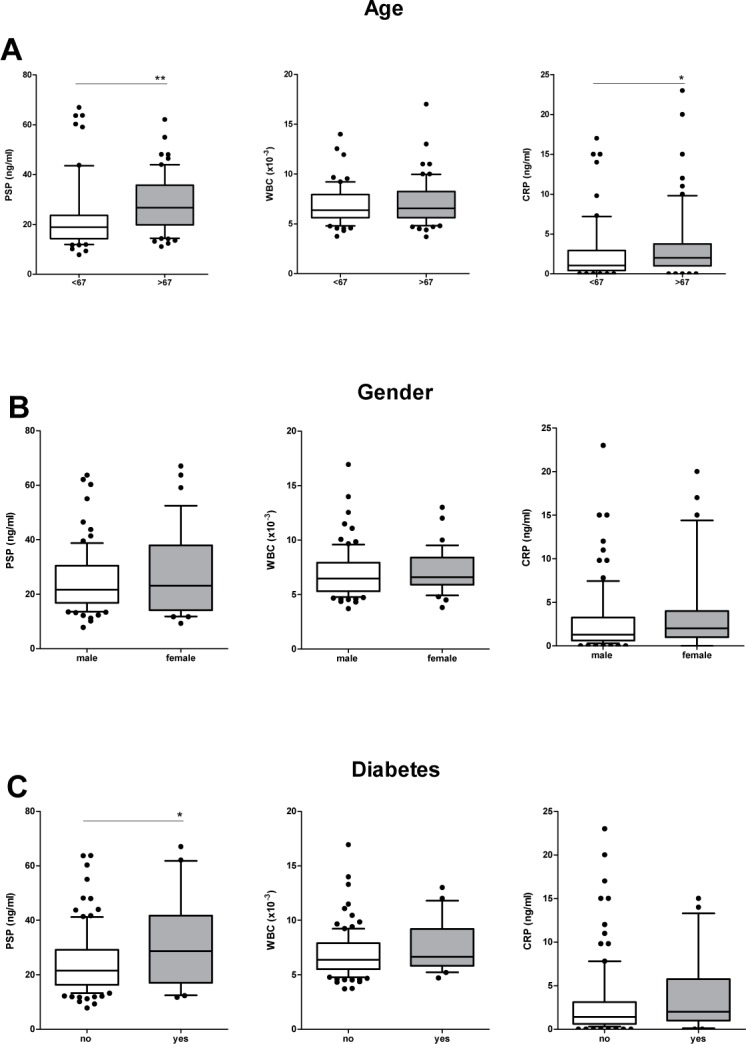
We investigated the role of pancreatic stone protein (PSP) in predicting the occurrence of infection in the postoperative course of cardiac surgery patients. Several biomarkers indicating the presence of inflammation and infection are available in the clinical routine; yet, their utility in the postoperative course of patients following cardiac surgery remains uncertain. Moreover, cardiopulmonary bypass, also referred to as "on-pump surgery", increases the susceptibility to an exaggerated inflammatory state. However, the impact of such extracorporeal circulation on circulating PSP levels remains poorly understood.
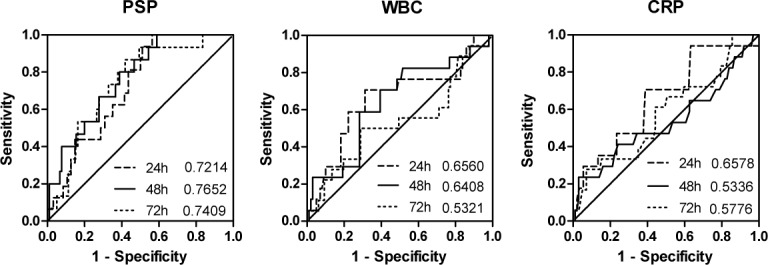
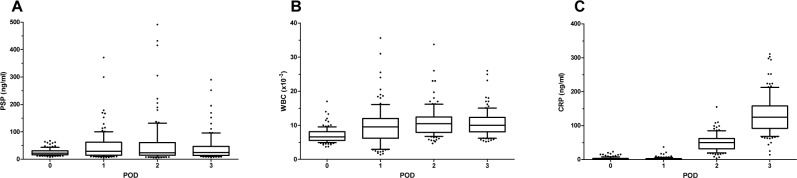
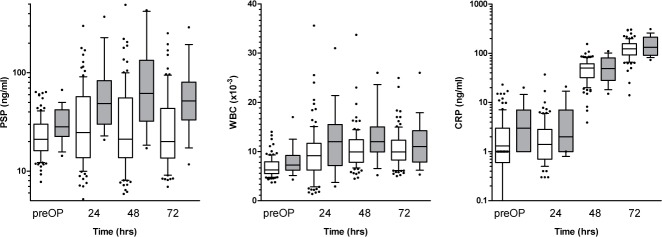
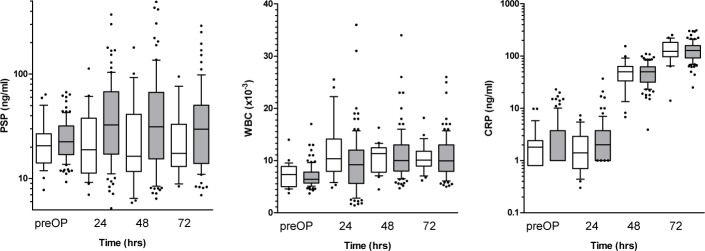
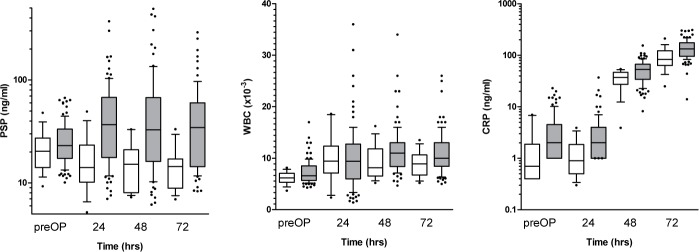
In a prospective cohort of unselected patients undergoing cardiac surgery, we set out to elucidate the diagnostic accuracy of serum PSP levels as opposed to canonical biomarkers (CRP, WBC) of inflammation to discriminate between the presence of infection and surgical trauma,. In addition, we investigated whether the biomarkers were influenced by the surgical technique employed, i.e. on-pump vs. off-pump and minimally invasive surgery vs. sternotomy. Levels of circulating PSP and routine inflammatory biomarkers (CRP, WBC) were measured in samples taken from 120 patients at baseline as well as at postoperative day 1-3.
Univariate analysis showed that among the biomarkers investigated, only PSP levels had discriminatory power to differentiate infection from surgical trauma in the postoperative course of the entire cohort of patients following cardiac surgery. With regard to cardiac surgical interventions, there was no significant association between the absence or presence of extracorporeal circulation and PSP levels. However, there was a significant difference in the slope of the rise of postoperative PSP between minimally invasive surgery as opposed to patients subjected to sternotomy.
In an unselected population of cardiac surgery patients, post-operative serum PSP levels were significantly associated with the presence of infection in both the on-pump and off-pump setting. Of note, the surgical technique employed (sternotomy vs. minimally invasive approach) had a significant impact on postoperative PSP levels.
我们研究了胰石蛋白(PSP)在预测心脏手术患者术后感染发生中的作用。临床常规中有几种指示炎症和感染存在的生物标志物;然而,它们在心脏手术后患者的术后过程中的效用仍不确定。此外,体外循环,也称为“心脏搭桥手术”,会增加发生过度炎症状态的易感性。然而,这种体外循环对循环中PSP水平的影响仍知之甚少。
在一组未经选择的接受心脏手术的患者的前瞻性队列中,我们着手阐明血清PSP水平相对于炎症的典型生物标志物(CRP、白细胞)在区分感染和手术创伤方面的诊断准确性。此外,我们研究了这些生物标志物是否受到所采用的手术技术的影响,即心脏搭桥手术与非体外循环心脏手术以及微创手术与胸骨切开术。在基线以及术后第1 - 3天从120名患者采集的样本中测量循环PSP和常规炎症生物标志物(CRP、白细胞)的水平。
单因素分析表明,在所研究的生物标志物中,只有PSP水平在整个心脏手术患者队列的术后过程中具有区分感染和手术创伤的鉴别能力。关于心脏手术干预,体外循环的有无与PSP水平之间没有显著关联。然而,与接受胸骨切开术的患者相比,微创手术后PSP升高的斜率存在显著差异。
在未经选择的心脏手术患者群体中,术后血清PSP水平在心脏搭桥手术和非体外循环心脏手术情况下均与感染的存在显著相关。值得注意的是,所采用的手术技术(胸骨切开术与微创方法)对术后PSP水平有显著影响。